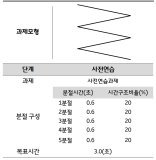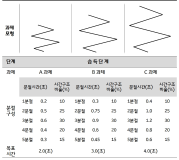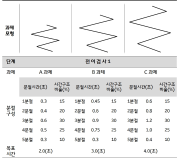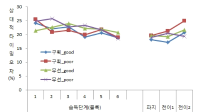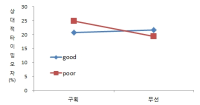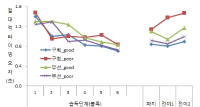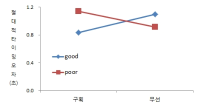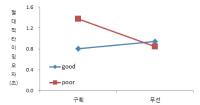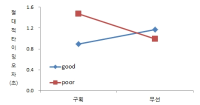
The present study was conducted to determine the effect of contextual interference (CI) and motivational properties (MP) of Knowledge of Result (KR) in learning on relative and absolute timing. Participants (N=48) were randomly assigned to one of four practice groups, which differed in practice structure on CI (blocked, random) and KR on MP (good trial, poor trial). They performed temporal timing tasks in pre-exercise and acquisition phase and went through a retention test and 2 transfer tests after approximately 24 hours. The main findings showed that first, for the relative timing error there was no significant main effect of CI and MP in the acquisition phase, retention, transfer1, and 2 test. However, there was a significant interaction effect between CI and MP in the transfer 2 test. Second, for the absolute timing error there was no significant main effect of CI and MP in the acquisition phase, retention, and transfer test 2 while there was in the transfer test 1. Moreover, there was a significant main effect between CI and MP in the retention, transfer 1, and 2 test. The findings indicated that 1) there was a significant learning effect of absolute timing between KR_good group and KR_poor group on blocked practice in the retention test, 2) random practice schedule and KR_good condition resulted in enhanced absolute timing performance relative to blocked practice and KR_poor respectively at transfer test 1, 3) there was a significant learning effect of absolute timing between KR_good group and KR_poor group on blocked practice at transfer test, 4) KR_good condition could be an useful relative timing learning strategy relative to KR_poor on blocked practice schedule at transfer test 2, effector transfer test. KR-good condition resulted in learning superior to KR_poor group on blocked practice schedule as well. However, there was no significant difference between two conditions on random practice, and 5) there was no difference in the learning effect of absolute timing error between KR_good and KR-poor group in the blocked practice, while there was not in the random practice. It indicated that motivational properties would influence the learning effect of timing in the blocked practice.