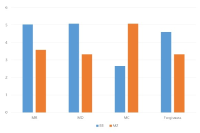
PURPOSE This study aimed to test the impact of sport consumers‘ self-construal levels on their responses toward an athlete scandal by conducting a cross-cultural experimental study. In particular, it focused on sport consumers’ subsequent responses toward an athlete scandal, such as the perceived target of responsibility and perceived the main agent for the public apology. METHODS Participants (total=151; KOREA=75, USA=76) were selected for a cross-national comparative study. MANCOVA and Descriptive Statistical Analysis were conducted using the SPSS Windows program version 26.0 to validate the research hypothesis. RESULTS The results indicate that sport consumers’ responses to an athlete scandal vary across the countries. Participants from Korea reported perceived responsibility to the athlete, team, and league. Conversely, those from the United States reported perceived responsibility only to the athlete. CONCLUSIONS There are cultural differences in sport consumers’ subsequent perceptions of an athlete scandal. The present study's findings are expected to provide stakeholders such as teams and leagues with practical implications to understand better sport consumers’ responses to athlete scandals in the globalized sports industry.
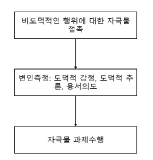
Purpose Drawing on Socioemotional Selectivity Theory, the present research aims to investigate how sport consumers’ moral reasoning strategies and forgiveness intent toward a sport organization’s misconduct depending on the consumers’ different time perspectives(expansive vs. limited). Methods An experimental study (total n = 129; Baby Boomer generation = 62, generation MZ = 67) was conducted by utilizing a fictitious scenario depicting a sport organization’s misconduct. The proposed hypotheses were tested by conducting T-test, correction analysis, and multiple regression analysis using SPSS 21.0. Results There were significant differences in moral reasoning and forgiveness based on different time perspective. Baby Boomer(MZ) group showed higher(lower) levels of moral rationalization, moral decoupling, and intent of forgiveness compared to MZ(Baby Bommer) group, while showing lower(higher) level of moral coupling. A result also revealed that negative moral emotions had moderating effect between a limited time perspective and moral coupling among MZ participants. Conclusion The results of this study indicated that sport consumers’ time perspective has a predictive function on moral reasoning strategies. Thus, it is necessary for sport organizations to establish strategies focusing on the consumers’ time perspective to effectively respond to an unexpected crisis.