Purpose The purpose of this study was to examine the effects of 16 weeks’ combined exercise training on insulin resistance, inflammatory markers, oxidative stress, leukocyte telomere length, body composition, and daily living fitness in elderly women with type 2 diabetes mellitus (DM). Methods Twenty-eight participants were randomly assigned into one of two groups, i.e., exercise training group (EX: n=14) and control group (CON: n=14). Subjects in EX participated in 3 sessions of 60 min-combined exercise for 16 weeks, whereas subjects in CON were asked to maintain their normal life pattern during the same period. The variables regarding insulin resistance, inflammatory markers, oxidative stress, leukocyte telomere length, body composition, and daily living fitness were measured and compared between two groups as well as between pre-post test utilizing a repeated two-way ANOVA. Results Main results were as follows: 1) Fasting plasma insulin and HOMA-IR tended to decrease in EX, whereas increased significantly in CON. 2) IL-6, TNF-α, hs-CRP decreased in EX, but the changes were not statistically significant. 3) MDA increased significantly and GPx decreased significantly in both EX and CON. 4) Leukocyte telomere length increased significantly in EX. 5) Fat-free mass increased in EX, whereas fat mass and percent body fat decreased significantly in EX. 6) Arm curl, chair stand, sit & reach, tandem test, 10m walking speed, and up & go improved significantly in EX. Conclusion It was concluded that the combined exercise for 16 weeks had a positive effect on improving insulin resistance, increasing leukocyte telomere length, as well as enhancing body composition and daily living fitness in elderly women with type 2 diabetes.

Purpose The study examined the effects of a 12-week high intensity circuit training (HICT) on abdominal fat, physical fitness, blood lipids, and insulin resistance in middle-aged obese women. Methods Thirty obese women, aged 32-48 yrs, were recruited and randomly assigned to either HICT group (TR; n = 15) or control group (CON; n = 15). Subjects in the TR group participated in HICT of which resistance exercise and aerobic exercise were performed with a duration of 40 min/session and 3 sessions/wk for 12 weeks, whereas subjects in the CON group were asked to maintain their normal life patterns. Dependent variables included abdominal fat area, body composition, physical fitness, blood lipids profiles, and insulin resistance index. Analysis of variance with repeated measures with Bonferroni corrections was used to compare the outcomes between two groups. Results Main findings of the present study were as follows: 1) compared to the CON group, the TR group had significant reductions in overall (i.e., body mass index and percent body fat) and abdominal obesity (i.e., waist circumference, total abdominal fat area, visceral fat area, subcutaneous fat area, and visceral fat area-subcutaneous fat area ratio), 2) compared to the CON group, the TR group had significant improvements in health-related physical fitness (i.e., muscular strength, muscular endurance, muscle power, flexibility, balance, and cardiorespiratory endurance), and 3) compared to the CON group, the TR group had significant improvements in fasting lipids, glucose, insulin, and insulin resistance. Conclusions The current findings of the study suggested that HICT would be an effective exercise intervention to improve metabolic complications associated with obesity and poor physical fitness in obese middle-aged women.


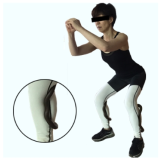
Purpose This study was designed to investigate the effects of weight-bearing exercise and CareRing treatment on cardiovascular responses, popliteal vein functions, and vascular elasticity of 30-40s women who had worked longer than eight hours a day in a standing position. Methods Thirteen subjects participated in 30 min of standing up treatment (STAND), weight-bearing exercise treatment (EX), and weight-bearing exercise with CareRing treatment (EX+RING). Each subject took part in the three trials repeatedly in a counter-balanced order and proceeded with a wash-out period of at least one week between the respective trials. Results The main results were as follows: 1) Significant reduction in EDV, no change in the diameter of popliteal vein, trend of reduction in blood flow of popliteal vein, and increased baPWV, indicating reduction of vascular elasticity of whole body, were shown in the STAND. 2) CO and EF increased significantly, and TPR decreased significantly in the EX. Blood flow velocity and blood flow volume of popliteal vein increased significantly, and baPWV decreased significantly from immediately after the treatment throughout the recovery phase in the EX. 3) HR, CO, and EF increased significantly in the EX+RING. Blood flow velocity and blood flow volume increased significantly in the EX+RING. Diameter of popliteal vein increased significantly immediately after the treatment and decreased significantly at 40 minutes of recovery. TPR and baPWV decreased significantly immediately after treatment compared to the STAND. Conclusions It was concluded that weight-bearing exercises would be effective in preventing venous or cardiovascular diseases occurred due to long-standing in 30-40s women, who are at high risk for such diseases. Furthermore, it would be more effective to combine pressure treatment with CareRing during weight-bearing exercises.
