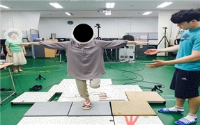
Purpose The purpose of the study was to investigate the effect of vibratory stimulus on the static postural control of 8 healty senior adults. Methods To achieve this goal, all subjects participated in two different kinds of static postural control tasks. Task 1 was a static postural control task, where both-legs stand on the ground. Second task was an unstable static postural control task using only single leg stance. As they maintain their balance, 6 different vibratory stimulus were provided on the sole of their feet(personal threshold 0%, 80%, 90%, 100%, 110%, 120%). Results The results of the study were as follows: First, there was no significant differences in postural control ability according to different types of vibrator intensity. Second, there was a significant difference in single-leg postural control ability according to vibrator intensity. Third, there was a significant difference in anterio-posterior stability according to the different types of vibrator intensity. Conclusion Stochastic resonance using vibratory stimulus was more effective in the single leg stance task, rather than the double leg stance task. Moreover, sub-threshold vibratory stimulus(80%, 90%) intensity were more effective than higher vibratory stimulus(100%, 110%, 120%).



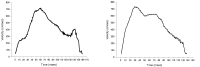
Purpose The purpose of this study was to investigate the effects of coupled high frequency rTMS and prism illusion in elderly stroke patients, based on the result of previous studies which discovered the effect of bilateral training, mirror rehabilitation treatment, and rTMS. Methods This is a case study of 4 stroke patients who were homogeneous on the basis of selection criteria such as brain injury area, duration of onset, degree of upper limb movement function. A total of 24 rehabilitation sessions were conducted three times a week during the training period, and TMS(transcranial magnetic stimulator), EMG, motion analysis system, and prism optical glasses were used for apparatus. Results The results of the study were as follows: Combined rehabilitation exercises were found to be beneficial to restore upper limb function in stroke patients. Particularly, the maximum speed of stretching and JTT(Jebsen-taylor Test) performance showed improvement after training. The amount of total map volume and MEP(megnetic evoked potential) increased in evaluation of neurophysiology. Conclusion The upper limb dysfunction of stroke patients could be restored by combine rehabilitation exercises.