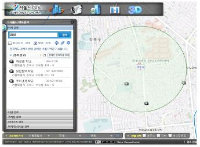
This study measured the accessibility of public exercise facilities within a residental area of a metropolitan community and examined how the accessibility can affect physical activity participation of residents. Initially, a total of 639 residents, who were aged between 19-70, visited Metabolic Syndrome Management Center of the Community Public Health Center, and registered for a Obesity Clinic Program, was listed as potential subjects. And those who responded to Physical Activity Questionnaire were selected for the analyses (n=92, 14.3% of 639). The relationships between physical activity level and accessibility to public exercise facilities were analyzed. Objective distance to public facility was related to ‘volume of participation to vigorous physical activity(r=.209)’, 'total volume of participation to physical activity(r=.206)’. And perceived distance to public facility was related to ‘volume of participation to vigorous-intensity physical activity(r=.235)’. perceived transport time to public facility was related to ‘duration of participation to vigorous-intensity physical activity(r=.239)’, ’volume of participation to vigorous-intensity physical activity(r=.306)’, and ‘volume of participation to total physical activity(r=.273)’. In contrast, the difference between objective distance to public facility and perceived subjective distance to the facility was negatively related to ‘duration of participation to moderate-intensity physical activity(r=-.221)’. The perceived numbers of public facility was positively related to ‘frequency of participation to vigorous-intensity physical activity(r=.237)’, ‘frequency of participation to walking(r=.273)’, ‘volume of participation to walking(r=.251)’ and 'total volume of participation to physical activity(r=.252)’. The predictor of 'total volume of participation to physical activity was perceived numbers of public facility(R2=.153, p=.046). The results revealed that the subjective accessibility to public health facilities was more influential to physical activity participation than the objective accessibility. Further research was warranted while using diverse populations as well as considering a inclusion of environmental factors.

