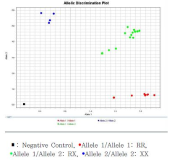
The ACTN3 R577X polymorphism has been associated with an elite athletes status. Several studies have determined that the R allele is connected with power-oriented athletic performance, whereas the nonfunctional XX genotype may give some beneficial effect for endurance performance. The main aim of the study was to determine the possible interaction between the ACTN3 R577X polymorphism and an power-oriented athlete status in Korean elite athletes(wrestling 31, judo 13, boxing 16, fencing 6, cycle 16, ≤400m athlete 18). Each athletes performed a 30-second WAPtest with a resistance equal to 7.5% for male and 5% for female body weight. Genotyping for the ACTN3 R577X (rs1815739) polymorphism was performed using the TaqMan approach. The ACTN3 R577X genotypes exhibited a HardyWeinberg equilibrium distribution in our population. The relative and absolute average power results of the 30-second Wingate test did not differ significantly among the genotypes. However, the relative peak power result of the Wingate test was significantly higher in the R-allele- dominant model groups than in the XX group in male but not female athletes. These results suggest that the ACTN3 R allele is associated with the relative peak power during the Wingate test in male Korean elite athletes.

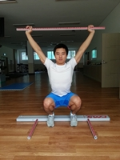
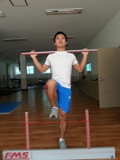
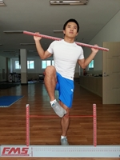
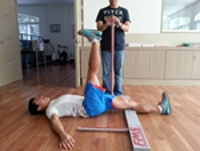
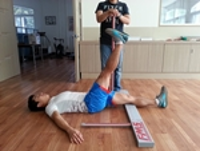
The purpose of this study was to examine the effect of the functional movement improvement training program on the score of high-school baseball players’ functional movement screen (FMSTM) test. After 16-weeks treatment period, a significant increase of Deep Squat, Hurdle Step, In-Line Lunge, Shoulder Mobility, Active Straight Leg Raise, Rotary Stability, and total score was found only in treatment group. There was decrease on the number of players in treatment group whose total score is less than 14; the criteria vulnerable being injured. The results of this study suggested that applying functional movement improvement training program on high-school baseball players can be effective to prevent injuries.







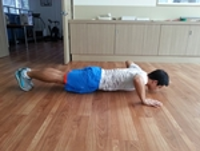

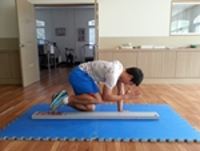


The purpose of this study was to examine the relationship of obesity index, fitness and cardiovascular risk index in middle and high school students. Obesity index, fitness score and cardiovascular risk index were measured from 1,044 middle and high school students. The results of relation between obesity index and fitness showed that the higher obesity index had significantly lower fitness score for both boys and girls (boys: p<0.001, girl: p<0.05) The results of relation between obesity index and cardiovascular risk index indicated that the higher obesity index had significantly higher cardiovascular risk index for both boys and girls (boys: p<0.001, girl: p<0.001). Moreover, The lower fitness index showed significantly higher cardiovascular risk index regardless of gender in middle school students (boys: p<0.001, girl: p<0.01). Therefore, the results of this study indicated that obese adolescents had the lower fitness level and high possibility of cardiovascular risk.
Purpose The purpose of this study was to investigate the differences in physique and physical fitness according to maturity between primary and middle school baseball players. Methods Participants were 112 elite youth baseball players (49 primary school; 63 middle school). Skeletal age estimated maturity. Physique (height, arm span, thigh volume), body composition (weight, muscle mass and body fat), physical fitness (strength, power, agility, flexibility, coordination, anaerobic power and aerobic power) were measured. An independent sample t-test was used to conduct verify the difference between physique and physical fitness according to maturity. Results The results of analyzing physical and physical fitness according to maturity showed that there was a significant difference (p<.05) between the early maturation group and on-time group in primary school baseball players, body fat percentage, muscle mass percentage, sit-up, anaerobic power and reaction time. There was a significant difference between the early maturation group and the on-time group in the middle school baseball players, weight (p<.05), thigh volume (p<.05), fat mass (p<.05), muscle strength (p<.01), power (p<.05) and coordination (p<.05). Conclusions In conclusion, the maturity of a growing baseball player may be influenced by the performance, so maturity status should be considered when judging the performance of a growing baseball player, especially a middle school baseball player.
The purpose of this study was to investigate the effects of National Fitness Award program group exercise classes on daily fitness and balance-confidence among the elderly participants(n=496, 80.2% women). This study investigated body composition, daily fitness, and balance-confidence, and quality of life among the subjects who participated in the combined exercise program of improving physical fitness class for 8-week in the 10 national physical fitness certification centers by the demonstration project for the elderly of 2013 Korean National Fitness 100 project. Body composition and physical fitness for daily living were defined by Korean National Fitness 100 project for elderly, also the balance-confidence and health-related questionnaires were added. The following results were obtained by comparing the pre-test and post-test. In body composition body weight (p<.05), body mass index (p<.05), fat mass (p<.01), and percent body fat (p<.05) were significantly decreased, but muscle mass was not. Except for walking-around-two-cones-in-a-figure 8, all other daily fitness items such as relative grip strength (p<.001), chair sit to stand, two minutes place to walk, and sit-and-reach significantly increased (p<.01), and timed up and go were significantly decreased (p<.01). In balance confidence rating ABC tests (p<.001) were shown significantly increased. Although, quality of life measured by EQ-5D was not significantly improved, self-health status measured by EQ-VAS (p<.001) showed significant increase. Therefore, the group exercises of National Fitness Award program improved body composition, daily fitness and balance confidence in Korean elderly participants.
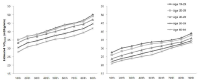
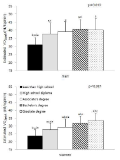
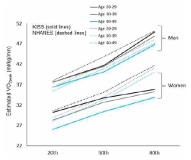
To provide the distribution of cardiorespiratory fitness including Bruce treadmill exercise time and estimated peak oxygen uptake (VO2peak) and investigate association with cardiorespiratory fitness and metabolic syndrome, sedentary lifestyle, or education level among Korean adults. Analysis of data on 2,006 adults (19-64 yr) who had completed a maximal grade treadmill exercise test, from the Sports Institute of Sports Science Fitness Standards (KISS FitS) project 2014-2015. The mean maximal exercise time was 11’26’‘, 11’18’‘, 11’06’‘, 10’03’‘ and 8’51’‘ (minutes and seconds) for men 19-29, 30-39, 40-49, 50-59 and 60-64 years of age, respectively, for women, it was 9’49’‘, 9’09’‘, 8’42’‘, 8’01’‘ and 7’33’‘ for the corresponding age groups. The mean peak oxygen uptake was estimated as 42.3, 41.8, 41.2, 37.6 and 33.6 ml/kg/minute for men 19-29, 30-39, 40-49, 50-59 and 60-64 years of age, respectively, For women, it was 34.0, 31.8, 30.3, 28.0 and 26.4 ml/kg/minute for the corresponding age groups. A positive association between cardiorespiratory fitness level and education level was observed for both men and women. Furthermore, participants with sedentary lifestyle had a significantly lower cardiorespiratory fitness than participants with activity lifestyle. Finally, Men with moderate and high fitness level had 50% and 87% lower odds for the metabolic syndrome, and women had 48% and 50% lower odds for the metabolic syndrome, respectively, than the ones with low fitness level after adjustment for age, smoking, alcohol intake, and sedentary lifestyle. These results can be used to track future Korean assessments and to evaluated interventions. The differences in fitness status by education level, sedentary lifestyle or metabolic syndrome can also be used to develop health policies, program and educational services.