PURPOSE This study aimed to examine the associations between accelerometer-measured physical activity and both cardiometabolic disease risk factors and metabolic syndrome in Korean adults. METHODS We performed a retrospective cohort study with age-sex matched case-control using data from the 2014-2016 Korea National Health and Nutrition Examination Survey, which was administered to South Korean adults (n=320). Individuals were categorized into quartiles based on accelerometer-measured moderate-to-vigorous physical activity (MVPA). Demographic and physical characteristics, waist circumference, visceral adiposity index, blood pressure, lipid profiles, and TG/HDL-C were observed. The associations between MVPA status and cardiometabolic disease risk factors as well as metabolic syndrome were determined using multiple logistic regression. RESULTS For the waist circumference, SBP, DBP, MBP, visceral adiposity, triglyceride, and a surrogate estimate of insulin resistance, the Q1 and Q2 groups had higher means compared with the Q3 and Q4 groups. HDL-C was higher in the Q3 and Q4 groups compared to the Q1 and Q2 groups. Odds ratios for cardiometabolic disease risk factors and metabolic syndrome decreased in a curvilinear manner with the increasing quartile of MVPA. CONCLUSIONS Adults with higher MVPA participation were strongly associated with cardiometabolic disease risk factors and metabolic syndrome.
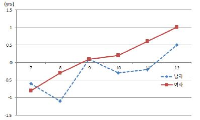
The aim of the study was to examine the tracking of body composition and physical fitness in boys and girls for 6 years. Thirty-seven boys and girls participated throughout the study. All measurements were performed annually. Body height, body weight, circumferences and skinfold thicknesses were measured and skeletal maturity was assessed. Body composition and bone mineral density were measured by DXA. Nine physical fitness tests were administered. Results of the study showed that there are significant interaction effects of time and group for body height(p<.01), waist circumference(p<.001), and skinfolds at triceps(p<.01), suprailiac(p<.01), thigh(p<.001) and medial calf(p<.01). All anthorpometric variables except skinfold thickness increased during the study period. Significant interaction effects of time and group were found for percent body fat(p<.05) and bone mineral density(p<.01). Percent body fat and fat tissue increased in boys from 7 to 11 years, then decreased in 12 years. Lean tissue(p<.001), bone mineral content(p<.001) and bone mineral density(p<.001) increased both in boys and girls throughout the study. There were significant interaction effect of time and group on sit and reach, standing long jump and sit-ups. In conclusion, percent body fat and fat tissue increased until 11 years, lean tissue and bone mineral density increased throughout the study both in boys and girls.
