Purpose The purpose of this study was to investigate characteristics of levels of physical activity in considering gender and different types of competition-oriented physical activity classes using three-dimensional accelerometers. Methods A total of 981 students(505 male students, 476 female students) in six different types of physical education classes were participated in this study. All of the six different types of physical education classes were competition-oriented classes, and levels of physical activity were accessed by three-dimensional accelerometers. Data were analyzed using t-test and ANOVA. Results First, descriptive analyses of participation time of levels of physical activity showed that MVPA of physical education classes is 10.26 mins (22.89%) on average, and, MVPA showed differently in different types of physical education classes in the order of T ball(14.61 mins), flying disk(12.61 mins), soccer(10.78 mins), volley ball(10.56 mins), basketball(9.64 mins), and table tennis(5.73 mins). Second, female students showed significantly lower levels of MVPA in all the different types of physical education classes. Third, post-hoc analyses showed that significantly higher levels of MVPA were found in T ball physical education classes and significantly lower levels of MVPA were found in table tennis physical education classes, compared to other types of physical education classes. Conclusions MVPA in physical education classes is not satisfied with recommended MVPA, and MVPA in Korean physical education classes is lower than MVPA in same types of physical education classes in other countries. In addition, significant mean differences of MVPA are found between male and female students, and new sports physical education classes show higher levels of MVPA compared to classic sports physical education classes. These results indicate that competition oriented physical education classes widely used in Korea need to find ways to increase MVPA and to overcome different levels of MVPA between male and female students.
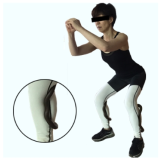
Purpose This study was designed to investigate the effects of weight-bearing exercise and CareRing treatment on cardiovascular responses, popliteal vein functions, and vascular elasticity of 30-40s women who had worked longer than eight hours a day in a standing position. Methods Thirteen subjects participated in 30 min of standing up treatment (STAND), weight-bearing exercise treatment (EX), and weight-bearing exercise with CareRing treatment (EX+RING). Each subject took part in the three trials repeatedly in a counter-balanced order and proceeded with a wash-out period of at least one week between the respective trials. Results The main results were as follows: 1) Significant reduction in EDV, no change in the diameter of popliteal vein, trend of reduction in blood flow of popliteal vein, and increased baPWV, indicating reduction of vascular elasticity of whole body, were shown in the STAND. 2) CO and EF increased significantly, and TPR decreased significantly in the EX. Blood flow velocity and blood flow volume of popliteal vein increased significantly, and baPWV decreased significantly from immediately after the treatment throughout the recovery phase in the EX. 3) HR, CO, and EF increased significantly in the EX+RING. Blood flow velocity and blood flow volume increased significantly in the EX+RING. Diameter of popliteal vein increased significantly immediately after the treatment and decreased significantly at 40 minutes of recovery. TPR and baPWV decreased significantly immediately after treatment compared to the STAND. Conclusions It was concluded that weight-bearing exercises would be effective in preventing venous or cardiovascular diseases occurred due to long-standing in 30-40s women, who are at high risk for such diseases. Furthermore, it would be more effective to combine pressure treatment with CareRing during weight-bearing exercises.
Purpose The purpose of the study was to determine difference of body composition, bone mineral density and health-related fitness by physical activity level in young women. Methods A total of 90 women aged 19-29 years participated in this study. The subjects were divided into three groups (low, middle, and high level) according to the physical activity level estimated by bone-specific physical activity questionnaire(BPAQ). Body height and weight were measured. Body composition parameters including four sites of bone mineral density(BMD) were estimated by DXA (Hologic, QDR-4500, USA). Health-related fitness tests was assessed using sit & reach, grip strength, sit-ups, and VO2max. Statistical analysis was performed using SAS version 9.4. All data were presented in terms of means and standard deviations. One-way ANOVA was applied to determine difference of dependent variables by physical activity level. Duncan's multiple range test was used as a post-hoc test. The statistical significance level was set at p < .05. Results There were significant differences on body weight(F = 4.867, p = .01), body mass index(F = 5.053, p = .008) and fat-free mass(F = 8.364, p = .0001) among the three groups. Significant differences were found on whole body BMD(F = 16.730, p = .0001), lumbar BMD(F = 11.480, p = .0001), femur BMD(F = 42.182, p = .0001) and forearm BMD(F = 5.560, p = .005) among the three groups. There were also significant differences on sit and reach(F = 11.433, p = .0001), sit-ups(F = 17.972, p = .0001), VO2max(F = 3.106, p = .05) and duration of GXT(F = 7.479, p = .001). Conclusions There were differences on body composition, bone mineral density and health-related physical fitness by physical activity levels. Nevertheless, the questionnaire used in this study was not able to judge participation in various exercise types including aerobic exercise or resistance exercise. Therefore, in the future study, longitudinal study considering various types of physical activity and dietary intake will be needed.
Purpose The aim of this study is to find how the pyruvate intake and aerobic exercise effect on the body composition, exercise performance ability, blood factor and obesity related hormone, and to verify the effect of pyruvate intake and aerobic exercise as an effective substance for obesity improvement. Methods This study selected 20 obese men in their twenties who has more BMI than 25kg/m2, and are applicable in 25% of the body fat, and randomly sampled group of 10 people for pyruvate intake and aerobic exercise (PYA), and 10 people for placebo intake and aerobic exercise (PLA). Intake of pyruvate and placebo was implemented for 10 weeks, 6 g a day, and aerobic exercise, treadmill exercise in the intensity of 50 ~ 60%’s target heart rate, was conducted for 10 weeks, 3 times a week, 60 minutes a day. To demonstrate the effect of pyruvate intake and aerobic exercise, all of the body composition, exercise performance ability, Lactate, and blood factor and hormone related to obesity were measured before and after the test in the same manner. Results The main results from this study are as follow; 1) In the case of body composition, in PYA, weight(p < .01), BMI(p < .05), body fat percentage(p < .01), and body weight without fat(p < .001) are reduced meaningfully. 2) In the exercise performance ability increased significantly in both PYA(p < .01) and PLA(p < .001) for V˙O2max, Also, in the case of distance during the exercise, PYA(p < .01) and PLA(p < .05) increased significantly in 15 minutes and PYA(p < .01) and PLA(p < .05) 30 minutes, but only in PYA from 45 minutes(p < .01) to 60 minutes(p < .05) 3) In case of Lactate, the significant decrease in PYA during stabilization and the significant increase in PYA after 30 minutes of exercise was not seen after 45 minutes 4) In the case of blood factor, HDL-C showed a meaningful decrease in PLA(p < .05) and Leptin showed a meaningful decrease in PYA(p < .001). Conclusions To sum up these results, it was more effective for the group of PYA which ingested pyruvate in improving obesity, even when the same aerobic exercise is conducted.
