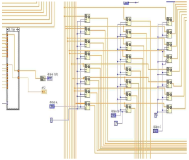
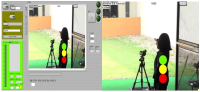
This study was to develop and to apply real-time neurofeedback system for psychological self-regulation of shooters. Neurofeedback system was developed with expert meetings consisting of 8 sport psychology, EEG, and sport engineering experts based on Labview program. Developed neurofeedback system was applied to 4 college shooters for 10 sessions(1 session/week, 30 mins/session). Collected EEG wave data were analyzed by paired sample t-test and independent sample t-test. The results were as follows: Firstly, based on user experience concept neurofeedback system was developed which easily perceived neurofeedback information as traffic lights with minimizing visual search activities. Secondly, after neurofeedback system application right brain activation level of shooters(except one shooter) were increased compared to left brain activation. Based on the results of this study, neurofeedback system can apply various sports and contribute to help athletes’ self-regulation and athletic performance enhancement in sport field.

PURPOSE The purpose of this study was to examine the effects of an eye movement exercise intervention on cognitive function and prefrontal cortex connectivity in the elderly with mild cognitive impairment. METHODS Ten older adults with mild cognitive impairment participated in eye movement exercise consisting of saccadic eye movement, pursuit eye movement, vestibular-ocular eye movement, and vergence eye movement for 4 weeks. Cognitive function (MoCA-K), reaction time during stroop task, and prefrontal cortex connectivity were measured using the functional near-infrared spectrometric analyzer (fNIRS) before and after the intervention. RESULTS First, cognitive function of the elderly with mild cognitive impairment showed significant improvement after the eye movement exercise (p < .05). Second, reaction time decreased significantly from 1.16 to 0.91 ms after eye movement exercise. Third, the strength of prefrontal cortex connectivity (left OFC - right FPC, right OFC - right FPC) increased after the intervention in the older adults with mild cognitive impairment. CONCLUSIONS The results of this study suggest that eye movement exercise is an effective intervention for improving cognitive function through improvement of brain functional connection in the elderly patients with mild cognitive impairment.
