PURPOSE The aim of this study was to investigate the effects of 12-week instrumental pilates exercise on isokinetic muscle function and body composition of healthy college women. METHODS Twenty-four college women (aged 21.6±1.3yrs) were recruited to the study. The participants were divided into two groups, as the instrumental pilates group (IPG, n=12) and the control group (CG, n=12). The springboard pilates exercise was conducted 3 times a week for 40~60 minutes during 12 weeks. RESULTS There was significant interaction effects in the right knee and left · right elbow extensor muscles (60°/sec) and left knee flexor and right elbow extensor · flexor muscles (180°/sec)(p<.05, p<.01). There was no significant interaction effects in the muscle mass of the total body, trunk, arms, and legs (NS) and also in the serum growth hormone, insulin-like growth factor-I and 25(OH)Vitamin D (NS). Serum creatine kinase was significantly increased (p<.05). There was also no significant interaction effects in weight, body fat, serum total cholesterol, triglycerides, low & high-density lipoprotein cholesterol (NS). CONCLUSIONS These results suggest that although prolonged instrumental pilates exercise of healthy college women might be improving isokinetic muscle function, there is no increasing effect of muscle mass.
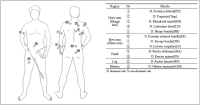
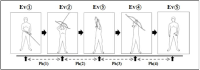
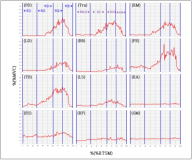
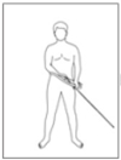
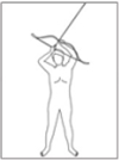
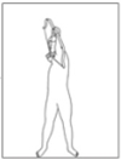
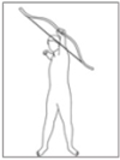
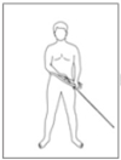
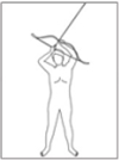
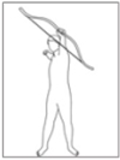
The past few decades has seen increasing kinematic studies using surface electoromyography (EMG) in archery, however there has been no such specific study in Korean traditional archery. The purpose of this study was to evaluate EMGs during archery shooting motion in Korean traditional archers. Ten men Korean traditional archers were participated, and divided into two groups according to the shooting stance; parallel stance group(PSG, n=5) and oblique stance group(OSG, n=5). The surface EMGs were measured 12 muscles during shooting motion of five events including Junbi(Set), Geogung(Set up), Manjak(Full draw), Balsi(Release), Machigi(Ending). At the result, muscle activity of posterior deltoid, trapezius, rhomboid major, latissimus dorsi, biceps brachii, forearm extensor bundle, triceps brachii, levator scapulae significantly increased at event of full draw and release, then significantly decreased again at event of ending, respectively(p<.01, p<.001). The muscle activity of erector spinae(ES) was also significantly increased at event of full draw and release(p<.01, p<.001), while no significant changes in muscles of rectus abdominis, rectus femoris(RF), gluteus maximus. As a result of comparing PSG and OSG, muscle activity of RF in OSG was higher than PSG at event of release(p<.05), it remained until event of ending(p<.05). On the other hand, the higher the tension of the bow, the higher the muscle activity of the draw arm at event of release(p<.05). These results suggest that when Korean traditional archery shooting, both side arm and back muscles are more activated than the abdomen, leg and hip muscles. The parallel stance might suppress the muscle activity of the lower extremities to twist the upper body. And the higher bowstring tension needs to increase of muscle strength in BB of draw arm.