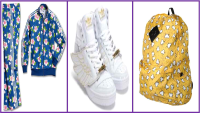
[Purpose] The present research aims to provide fundamental material required for establishing effective marketing strategies by analyzing purchasing experience of sports and art collaboration products and the determinants of purchasing intention. [Methods] Total of 370 survey questionnaires were distributed to undergraduate and graduate students in Seoul and Gyeonggi area and 331 questionnaires were analyzed as the final valid samples. For the data analysis, SPSS 18.0 version was used for frequency analysis, descriptive statistics analysis, exploratory factor analysis, reliability analysis, cross analysis, and logistics regression analysis. [Results] The study results are as follows. First, as a result of cross analysis on general characteristics, there was significant difference in age, monthly income and allowance, number of average purchases, considerations and major. Second, as a result of cross analysis on purchasing intention, there was significant difference in gender, monthly income and allowance, number of average purchases, considerations and major. Third, as a result of analyzing determinants of purchasing intention, there was significant difference in monthly income and allowance, number of average purchases, and sincerity. Fourth, as a result of analyzing determinants of purchasing intention, there was significant difference in gender, number of average purchases, considerations, major, creativity, aesthetics, interest and tenacity.
PURPOSE This study aimed to identify the decision-making process for consumers participating in sports centers based on an extended goal-directed behavior model (EMGB), and to provide empirical data for establishing effective operation strategies for sports centers, including additional risk perception of consumers during pandemic. METHODS A total of 446 surveys were used as the final sample. For data analysis, SPSS 21.0 and AMOS 21.0 were used for frequency analysis, correlation analysis, confirmatory factor analysis, and structural equation model analysis. RESULTS Except for hypothesis 2 and 9, all of the hypothesis were chosen. CONCLUSIONS The findings suggested that extended goal-oriented behavior models can increase consumers' cognitive and emotional factors through emotional aspirations, suggesting that a lower risk perception of COVID19 increases their desire to participate in sports centers, and provides academic fundamental data on how to increase and activate sports centers.
