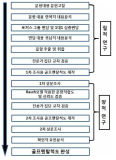
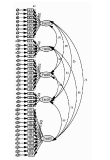
The purpose of present study is to develop the'Golf Mental Scale'that measures and assesses golf players' cognitive, emotional, behavioral response per golf mental factor experienced while competing in depth. In order to achieve this research purpose, Researcher collected raw data of golf mental question through literature review and interview with 8 members of Korean male national golf team and gathered questions per factor through Deductive-Inductive Content Analysis for the raw data. Then, Researcher conducted first and second questionnaire survey targeting 253 of elite & pro golf players and conducted Rasch Model and Confirmatory Factor Analysis for the data collected using SPSS 21.0, Winsteps Ver. 3.65 Program, AMOS 18. The conclusion reasoned out through these research process was as follows: First, golf players' psychological factor structure identified was revealed as Concentration, Self-confidence, Anxiety and Arousal control, Emotion control, Thought control. Total 37 questions were determined. Second, 5 point scale was revealed to be a good fit for Golf Mental Scale. Third, the result of Construct Validity Verification of CFA showed that Golf Mental Scale model was a good fit. Fourth, Reliability of Golf Mental Scale showed high level by recording Cronbach' α value .936. Fifth, Internal Consistency of Convergent Validity and Discriminant Validity was revealed to be satisfied. Eventually, Golf Mental Scale is expected to be used practically as a functional test tool that provides participant's response toward each situation-specific questions concretely and an objective evaluation of participant's golf mental ability per factor considering questions'level of difficulty and participants'characteristic.

Purpose: The purpose of the present study was to identify the difference of overall putting accuracy and/or distance control among three visual conditions; executing putt focusing vision on the near target(ball), focusing on the far target(hole), and with no vision. In order to satisfy ecological validity, the test was held not on the synthetic putting green in a laboratory, but on the outdoor real putting green. Methods: A putting green with slight slope and minimal break was selected as the test site. The test was held at 8.5m uphill, 13m uphill, 8.5m downhill, and 13m downhill. Twenty participants were asked to putt the ball as close to the target as possible. They were also asked to adhere to their own pre-putt routine having enough time of visual fixation toward the hole to get distance and direction cues. Each Participant putted a total of 12 balls putting 3 balls on each distance-slope experimental condition. Overall putting accuracy score represented actual distance (in meter) from the far target(hole) to the ball rest. Distance control score represented it from the near target(original ball position) to the ball rest. Repeated measure ANOVA was used to verify the raw data. Results: Putt from 8.5m uphill and putt from 13m downhill were revealed to have statistically significant difference only in distance control by visual focus conditions. Putt focusing vision on the ball was the best at 8.5m uphill. Putt focusing vision on the hole was the best at 13m downhill. However, there was no significant difference in overall putting accuracy by visual conditions. Discussion & Conclusion: The results of our study are interesting and valuable from two aspects. First, the presumption is that overall putting accuracy on the real putting green has no significant difference by visual conditions because it is affected by various factors, i.e. memory of distance, slope, break, turf condition, impact quality, body alignment, etc. Second, no consistent evidence was detected that specific visual condition, especially executing putt focusing vision on the hole, was the best for distance control.

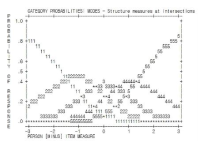
Sport Imagery Questionnaire of Hall et al.(1998) was developed to investigate the imagery type of athletes objectively. The purpose of this research is to verify validity and reliability of Korean SIQ by using Rasch Model, in order to make up for complement drawback of SIQ which was developed only using factorial analysis. This research conducted first and second questionnaire survey. Second survey was conducted targeting different study participants from those of first survey. The participants of first survey was 265 athletes of Chungcheong Province, and the participants of second survey was 169 athletes of Chungcheong Province. SPSS 21, Winstep 3.62, and AMOS 18 was used for date analysis. The result of Rasch Model verification for the data of first survey revealed that 8 items of SIQ were unfit. Thus, 5 factors and 22 items were determined. 7 point Likert scale was revealed to be a good fit. The result of Confirmatory Factor Analysis for the data of second survey revealed that Construct Validity of 5 factors and 22 items was valid and reliability was high by recording Cronbach’α value .954. External Validity was revealed to be high by showing that correlation between sport confidence and MG-M imagery was high.
