Purpose The study was designed to investigate the effects of 12 weeks of circuit training and L-tryptophan supplementation on physical fitness and metabolic syndrome. Methods Forty-one menopausal women were randomly assigned to one of three groups. i.e., combined circuit training and L-tryptophan supplementation group (CT+T: n=14), L-tryptophan supplementation group (T: n=14), and control group (CON: n=13). The subjects in CT+T exercised three sessions per week and took 3g of L-tryptophan per day for 12 weeks. The subjects in T took 3g of L-tryptophan per day for 12 weeks. The subjects in CON were asked to maintain their life pattern for the same period of intervention. Physical fitness and metabolic syndrome-related variables were measured at pre- and post-test. The data were compared by utilizing a repeated two-way ANOVA. Results Main results of the study were as follows: 1) Standing long jump, one leg standing with eyes closed, sit-and-reach, sit-up, and maximal oxygen uptake increased significantly in CT+T. 2) Body weight, body mass index, waist circumference, waist-hip ratio, fat mass, and percent body fat decreased significantly in CT+T. 3) Total cholesterol decreased significantly in CT+T. 4) Fasting plasma glucose (FPG), fasting plasma insulin, and HOMA-IR decreased significantly in CT+T. FPG and HOMA-IR decreased significantly in T. 5) Systolic blood pressure, diastolic blood pressure (DBP), mean arterial pressure (MAP), and rate pressure product decreased significantly in CT+T. DBP and MAP decreased significantly in T. 6) Number of metabolic syndrome risk factors decreased significantly in CT+T and T. Conclusion It was concluded that the circuit training and L-tryptophan supplementation would have positive effects on physical fitness and metabolic syndrome, and that L-Tryptophan supplementation would have positive effects on metabolic syndrome by improving insulin resistance and hypertension in menopausal women.
Purpose This study was designed to examine the effects of a single corrective exercise (CEX) and corrective kinesio taping (CKT) on gait patterns, plantar pressure, balance, and pain in 20~30s female patients with moderate hallux valgus. Methods Twenty-one participants (age: 30.1±5.1 yrs; height: 164.1±4.8 cm; body weight: 56.7±6.8 kg; body mass index: 21.2±5.7 kg·m-2; hallux valgus angle: 27.2±6.1°) with hallux valgus was recruited and participated in three trials, i.e., CEX trial, CKT trial, and combined CEX and CKT (CEX+CKT) trial, repeatedly in a counter-balanced order. One week of wash-out period was placed between the trials to minimize the effect of the previous treatment on the next treatment. Variables related to gait pattern, plantar pressure, balance, and pain were measured during each treatment. We carried out repeated two way ANOVA on measured variables. Results 1) Regarding gait patterns, CEX treatment and CEX+CKT treatments showed significant increases in the length of patients strides, the single support line during the stance phase, and significant reduction of the cadence. 2) Regarding gait cycle, CEX treatment and CEX+CKT treatments showed significant reductions in the contact times of forefoot, midfoot, and heel. There was a significant reduction of double stance phase in CEX treatment. 3) Regarding foot pressure on gait, CEX+CKT treatments significantly increased the maximum pressure of midfoot and heel. CEX treatments significantly increased the maximum pressure of forefoot. 4) Regarding balance, CEX treatment and CKT treatments significantly increased one leg standing with eyes closed. 5) Pain was significantly reduced in CKT treatment and CEX+CKT treatments. Conclusions According to the aforementioned results, it was concluded that a single CKT treatment was effective in reducing pain when walking and that plantar pressure, gait pattern, gait cycle, and balance were improved through a single bout of CEX treatments. Therefore, treatments by stage, starting with CKT treatments to reduce the pain, and then treating CEX to improve the gait pattern, gait cycle, foot pressure when walking, and balance ability, would be effective. Future research is warranted to identify the effects of long-term treatments.
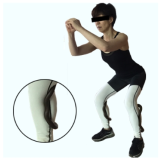
Purpose This study was designed to investigate the effects of weight-bearing exercise and CareRing treatment on cardiovascular responses, popliteal vein functions, and vascular elasticity of 30-40s women who had worked longer than eight hours a day in a standing position. Methods Thirteen subjects participated in 30 min of standing up treatment (STAND), weight-bearing exercise treatment (EX), and weight-bearing exercise with CareRing treatment (EX+RING). Each subject took part in the three trials repeatedly in a counter-balanced order and proceeded with a wash-out period of at least one week between the respective trials. Results The main results were as follows: 1) Significant reduction in EDV, no change in the diameter of popliteal vein, trend of reduction in blood flow of popliteal vein, and increased baPWV, indicating reduction of vascular elasticity of whole body, were shown in the STAND. 2) CO and EF increased significantly, and TPR decreased significantly in the EX. Blood flow velocity and blood flow volume of popliteal vein increased significantly, and baPWV decreased significantly from immediately after the treatment throughout the recovery phase in the EX. 3) HR, CO, and EF increased significantly in the EX+RING. Blood flow velocity and blood flow volume increased significantly in the EX+RING. Diameter of popliteal vein increased significantly immediately after the treatment and decreased significantly at 40 minutes of recovery. TPR and baPWV decreased significantly immediately after treatment compared to the STAND. Conclusions It was concluded that weight-bearing exercises would be effective in preventing venous or cardiovascular diseases occurred due to long-standing in 30-40s women, who are at high risk for such diseases. Furthermore, it would be more effective to combine pressure treatment with CareRing during weight-bearing exercises.
Purpose The purpose of this study was to examine the effects of 16 weeks’ combined exercise training on insulin resistance, inflammatory markers, oxidative stress, leukocyte telomere length, body composition, and daily living fitness in elderly women with type 2 diabetes mellitus (DM). Methods Twenty-eight participants were randomly assigned into one of two groups, i.e., exercise training group (EX: n=14) and control group (CON: n=14). Subjects in EX participated in 3 sessions of 60 min-combined exercise for 16 weeks, whereas subjects in CON were asked to maintain their normal life pattern during the same period. The variables regarding insulin resistance, inflammatory markers, oxidative stress, leukocyte telomere length, body composition, and daily living fitness were measured and compared between two groups as well as between pre-post test utilizing a repeated two-way ANOVA. Results Main results were as follows: 1) Fasting plasma insulin and HOMA-IR tended to decrease in EX, whereas increased significantly in CON. 2) IL-6, TNF-α, hs-CRP decreased in EX, but the changes were not statistically significant. 3) MDA increased significantly and GPx decreased significantly in both EX and CON. 4) Leukocyte telomere length increased significantly in EX. 5) Fat-free mass increased in EX, whereas fat mass and percent body fat decreased significantly in EX. 6) Arm curl, chair stand, sit & reach, tandem test, 10m walking speed, and up & go improved significantly in EX. Conclusion It was concluded that the combined exercise for 16 weeks had a positive effect on improving insulin resistance, increasing leukocyte telomere length, as well as enhancing body composition and daily living fitness in elderly women with type 2 diabetes.

Purpose The study examined the effects of a 12-week high intensity circuit training (HICT) on abdominal fat, physical fitness, blood lipids, and insulin resistance in middle-aged obese women. Methods Thirty obese women, aged 32-48 yrs, were recruited and randomly assigned to either HICT group (TR; n = 15) or control group (CON; n = 15). Subjects in the TR group participated in HICT of which resistance exercise and aerobic exercise were performed with a duration of 40 min/session and 3 sessions/wk for 12 weeks, whereas subjects in the CON group were asked to maintain their normal life patterns. Dependent variables included abdominal fat area, body composition, physical fitness, blood lipids profiles, and insulin resistance index. Analysis of variance with repeated measures with Bonferroni corrections was used to compare the outcomes between two groups. Results Main findings of the present study were as follows: 1) compared to the CON group, the TR group had significant reductions in overall (i.e., body mass index and percent body fat) and abdominal obesity (i.e., waist circumference, total abdominal fat area, visceral fat area, subcutaneous fat area, and visceral fat area-subcutaneous fat area ratio), 2) compared to the CON group, the TR group had significant improvements in health-related physical fitness (i.e., muscular strength, muscular endurance, muscle power, flexibility, balance, and cardiorespiratory endurance), and 3) compared to the CON group, the TR group had significant improvements in fasting lipids, glucose, insulin, and insulin resistance. Conclusions The current findings of the study suggested that HICT would be an effective exercise intervention to improve metabolic complications associated with obesity and poor physical fitness in obese middle-aged women.


Purpose The present study compared physical fitness, metabolic syndrome risk factors, and resting metabolic rate (RMR) according to body mass index (BMI) and percent body fat (%BF) in 20s females. Methods Fifty-one women in their 20s were recruited and assigned into three groups, i.e., normal group (n=18), normal weight obesity (NWO) group (n=18), and obesity group (n=15) according to BMI and %BF. Physical fitness, metabolic syndrome risk factors, and RMR were measured and compared among three groups. Results Main results were as follows: 1) Physical fitness were not significantly different among three groups. 2) Regarding 1-RM, arm curl and leg extension were significantly lower in normal group and NWO group than obesity group. Leg press was significantly lower in normal group than obesity group. 3) Regarding metabolic syndrome risk factors, there were significant differences in waist circumference, ordering from low to high such as normal, NWO, and obesity groups. Systolic blood pressure and diastolic blood pressure were significantly lower in normal group and NWO group than obesity group, while HDL-C was significantly higher in normal group than NWO group and obesity group. 4) Regarding RMR, absolute values of RMR such as VO2(㎖·min-1), RMR (Kcal·min-1), RMR (KJ·min-1), and RMR (Kcal·day-1) were significantly lower in normal group and NWO group than obesity group. On the other hand, relative value of RMR such as RMR (KJ·kg-1FW·h-1) was significantly higher in normal group than NWO group and obesity group. Conclusions It was concluded that obese women showed increased risk of metabolic syndrome and low relative RMR level, and NWO had similar problems. Active health management through physical activity and dietary control should be committed to NWO individuals because the NWO has possibility of high risk of metabolic syndrome and reduction of metabolic rate from 20s even though there was no problem in their external appearance.

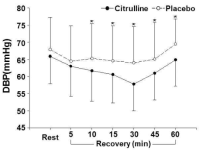
It has well known that post-exercise hypotension (PEH) after a bout of aerobic exercise was a major mechanism to reduce blood pressure though exercise training, and that citrulline supplementation reduced blood pressure by increasing nitric oxide in vivo. However, the effects of citrulline supplementation on PEH have not been fully elucidated yet. This study was designed to examine the effects of citrulline supplementation on PEH after a bout of aerobic exercise in prehypertensive and normotensive 20s males. The effects of a four-day citrulline or placebo treatment on blood pressure, cardiovascular function, and blood lactate concentration measured at rest and during recovery phase after a bout of exercise performed for 30 min at 70% VO2max were compared and analyzed. All subjects participated in a citrulline trial and a placebo trial repeatedly according to a counter-balanced order. Main results of the present study were as follows: 1) Systolic blood pressure, diastolic blood pressure, and mean arterial pressure measured at 10-60 min of recovery phase in citrulline trial were significantly lower than placebo trial. Rate-pressure product measured at 30 min and 45 min of the recovery phase in citrulline trial was significantly lower than placebo trial. 2) No significant differences were found in heart rate (HR), cardiac output (CO), and total peripheral resistance (TPR) measured during the recovery phase between two trials. There were significant differences in HR, stroke volume, CO, and TPR among times within a trial. 3) No significant difference was found in blood lactate concentration measured at rest and during the recovery phase between two trials. The results would be summarized that the PEH was augmented by the citrulline supplementation, and that burden to cardiac muscle as well as cardiovascular function were not affected by the citrulline supplementation. It was concluded that the short-term citrulline supplementation would be very effective to augment the PEH. A research investigating the effects of citrulline supplementation on the PEH in pre-hypertensive and/or hypertensive individuals would be warranted. In addition, a study examining the effects of citrulline supplementation during long-term exercise training on the blood pressure in hypertensive patients also would be warranted in near future.
The purpose of this study was to investigate the effects of 8 weeks of aerobic training and resveratrol supplementation on a body composition, physical fitness, insulin resistance, liver function, blood pressure, and heart rate. Fifty-one elderly women were randomly assigned to aerobic training group (EX: n=12), resveratrol supplementation group (R: n=13), combined aerobic training and resveratrol supplementation group (EX+R: n=12), and control group (CON: n=14). The subjects in EX group exercised three sessions per week, 40 minutes per session for 8 weeks, the subjects in R group took 500 mg of resveratrol per day for 8 weeks, and the subjects in EX+R group received both treatments. The subjects in CON group were asked to maintain normal daily life pattern without any treatment for the same period of intervention. Body composition, physical fitness, insulin resistance, liver function, blood pressure, and heart rate were measured at pre- and post-test and the data were compared among groups and between tests by utilizing two-way ANOVA with repeated measures. Main results of the present study were as follows: 1) Physique and body composition did not change significantly in all groups. 2) Muscular endurance increased significantly in EX+R group, whereas the other physical fitness-related variables showed no significant changes in all groups. 3) Fasting glucose, fasting insulin, HOMA-IR, and HbA1c tended to be improved in EX+R group. 4) AST, ALT, and γ·GT showed no significant changes in all groups. 5) Systolic blood pressure and diastolic blood pressure increased significantly in CON group. Heart rate tended to be decreased in EX+R group and EX group. It was concluded that the 8 weeks of aerobic training and resveratrol supplementation had positive effects on muscular endurance, insulin resistance, and blood pressure in T2DM elderly women. Research investigating the effects of a longer period of aerobic training and resveratrol supplementation on the same variables would be warranted in the future.
This study was designed to examine the effects of 12 weeks of resistance exercise training on physique, body composition, insulin resistance, and blood lipid profiles in 20s normal weight obese females. Sixteen females were randomized into one of following two groups: resistance training group (RT group; n=8) and control group (CON group; n=8). Subjects in RT group completed 12 weeks of resistance exercise training for three times/wk, and subjects in CON group were asked to maintain their normal life pattern during the same intervention period. Data were analyzed using two-way repeated measures ANOVA with post hoc test. Main results of the present study were as follows: 1) Body weight, BMI, waist circumference, hip circumference, WHR, and WHtR decreased significantly in RT group. 2) All variables regarding body composition did not change in both groups; however, fat mass was tended to decrease more in RT group than CON group. 3) Fasting plasma glucose decreased significantly in both groups, whereas other variables regarding insulin resistance did not change significantly in both groups. 4) All variables regarding blood lipids did not change significantly in both groups. Results indicate that 12 weeks of resistance exercise training was beneficial in physique and body composition; however, it was not beneficial in insulin resistance and blood lipid profiles in 20s normal weight obese females. Future research including normal weight obese subjects with higher age would be warranted to elucidate more clearly the effects of resistance exercise training on metabolic status.
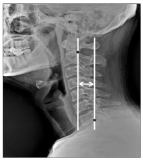
This study was designed to investigate the effects of combined treatment of chiropractic and PNF exercise on musculoskeletal function in forward head posture patients. Thirty patients volunteered to participate in the study as subjects, and they were divided into one of three groups, i.e., chiropractic group (n=10), PNF exercise group (n=10), and combined treatment of chiropractic and PNF exercise group (C+P group; n=10). Subjects in three groups went through each program for 25 min/session, three times/wk for eight weeks. Cervical alignment, cervical muscular strength and endurance, and cervical range of motion were measured and compared among groups and between pre- and post-test utilizing two-way ANOVA with repeated measures. Main results of the present study were as follows: 1) All variables regarding cervical alignment increased significantly in all three groups. The changes in C+P group were more significant than other two groups. 2) All variables regarding cervical muscular strength and endurance increased significantly in all three groups. 3) All variables regarding cervical range of motion increased significantly in all three groups. The changes in ROM regarding flexion and extension in C+P group were more significant than other two groups. It was concluded that all three treatments applied in this study would be effective for functional recovery of the musculoskeletal function in forward head posture patients. Especially, combination of chiropractic and PNF pattern exercise would be the most effective intervention for the patients.

