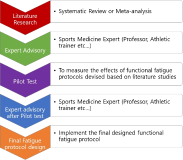
Purpose The purpose of this study was to investigate the effects of a functional fatigue protocol on lower extremity dynamic and static postural control. Methods A total of 20 physically active collegiate students participated in this study (ten males, ten females; age 22.5±2.7 years; mass 67.0±13.0 kg; height 168.0±8.9 cm). A unilateral stance with eyes closed for 10 seconds was performed to test static postural control using a balance force plate and single-leg drop landing on 30cm box was performed as a dynamic postural control test and captured using VICON motion analysis system. Results The results of this study showed an average heart rate of 176.3 beats/minute, an 18 rating on the perceived exertion scale, significant differences in blood lactate, and a static postural control deficit after fatigue as compared with before fatigue(p<.05). Dynamic postural control after fatigue changed landing strategy in the form of stiff landing. Knee flexion was decreased at initial contact and at peak vertical ground reaction force, also, both decreased valgus and internal rotation of knee joint. Conclusions This protocol may use for enhancing fatigue-endurance training as well as for inducing fatigue. Further, to ascertain a landing strategy, it is recommended to increase landing height to clearly observe changes in landing strategy.


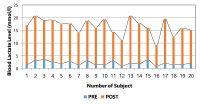
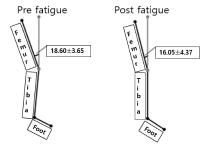

PURPOSE This study analyzed differences in ball speed and kinematic, kinetic characteristics according to stride length. METHODS Forty participants recruited for the study were divided into two groups based on stride length: an over stride group (overstride, OS) and an under stride group (understride, US). Independent sample t-tests were conducted to analyze differences in pelvis and trunk kinematics, ground reaction forces (GRF), and timing of pitch between groups. RESULTS Significant differences were found between groups in drive leg GRF impulse, pelvis, trunk closed angle and pelvic angular velocity (p<.05). Furthermore, the OS had statistically later pitching timings than the US at stride foot contact, maximal external rotation, and ball release phases (p<.05). CONCLUSIONS The maximized drive leg GRF impulse created a wider stride, significantly increasing the pelvis and trunk’s opening angles. Additionally, the OS displayed characteristics of later pitching timings compared to the US. However, since no significant differences in ball speed were observed between groups based on stride length, perhaps stride length does not contribute directly to ball speed. Future research should investigate optimal stride length tailored to individual flexibility and physical characteristics.
PURPOSE This study aimed to analyze the differences in ground reaction forces (GRF) and pelvis and trunk kinematic patterns between groups based on ball speed during pitching. METHODS Twenty-nine males were recruited for this study. Participants were categorized based on ball speed into high (HG), medium (MG), and low (LG) ball speed groups. Statistical analysis was performed using one-dimensional statistical parametric mapping (SPM1D) one-way analysis of variance to compare GRF and pelvis and trunk kinematic patterns, followed by Bonferroni post-hoc tests. RESULTS Drive leg anterior and resultant GRF were greater in the HG than in the LG (p<0.001). The posterior GRF of the stride leg in the HG was greater than in the LG (p<0.008). Additionally, the vertical GRF of the stride leg was greater in the HG than in the LG (p<0.003), as was the resultant GRF of the stride leg (p<0.003). CONCLUSIONS The GRF of the drive and stride legs was significantly related to ball speed, indicating that a pitching strategy to maximize the GRF of the drive and stride legs is required.
PURPOSE This study aimed to: 1) compare the differences in static lower-extremity alignment (SLEA) between female ballet dancers (BD) and non-ballet dancers (NBD); 2) investigate the differences among gesture leg (GL) and supporting leg (SL) in BD and dominant leg (DL) in NBD; and 3) compare limb asymmetry between groups. METHODS Twenty-nine female BD and 20 NBD were recruited for this study. The quadriceps, tibiofemoral, rearfoot, and genu-recurvatum angles, tibial torsion and varum, and navicular drop height were measured. An independent t-test was conducted to compare SLEA and limb asymmetry between groups. One-way analysis of variance with Bonferroni post-hoc tests were performed to determine the differences among the GL, SL and DL. RESULTS BD showed lower quadriceps and rearfoot angles, less tibial varum and navicular drop, and greater tibiofemoral angle (p<.005) than NBD. BD showed less quadriceps angle asymmetry but greater tibial torsion asymmetry (p<.01) than NBD. GL and SL in BD showed differences in quadriceps, tibiofemoral, rearfoot angle, tibial torsion and navicular drop compared to NBD. CONCLUSIONS Repetitive dance movements can transfer varying forces to the GL and SL, potentially contributing to SLEA asymmetry. An intervention strategy that can reduce SLEA asymmetry in BD is needed, as is the identification of elements of ballet training that contribute to maintaining a normal SLEA.
PURPOSE The purpose of this study was to investigate the characteristics of field and on-ice performances of ice-hockey players and the relationship of performance with subjective joint pain and dysfunction. METHODS A total of 25 male college icehockey players were evaluated for 19 items of performance. Pain and dysfunctions in the lower extremities and lower back were confirmed through the Foot and Ankle Outcome Score, Knee Injury and Osteoarthritis Outcome Score, Hip Dysfunction and Osteoarthritis Outcome Score, and Osweatry Disability Index questionnaire. Players with similar performance characteristics were classified through a cluster analysis, and differences in performance and patient-reported outcomes between clusters were analyzed with a one-way analysis of variance. RESULTS The ice-hockey players were classified into “lower muscular strength and performance (cluster 1),” “lower cardiorespiratory endurance (cluster 2),” and “high muscular strength and performance (cluster 3).” Players in cluster 1 had more frequent ankle and knee joint dysfunctions and pain compared to those in cluster 3. Several performance test items affected the subjective joint score, and the related performance items were more in the proximal joint than in the distal joint. CONCLUSIONS Ice hockey players should perform training to supplement their individual lack of on-ice and field performance. Since performance may be limited because of joint dysfunction and pain, a joint-specific intervention strategy should be applied to improve physical and athletic performances.
PURPOSE This study aimed to identify movement pattern differences in the running of youth soccer players with and without lateral ankle sprain (LAS) histories. METHODS A total of 12 participants were recruited and assigned to the LAS group or the control group. All participants were assessed for anthropometric data, and they filled in the subjective ankle function questionnaires. Then, reflective markers were attached to their bodies, and they were instructed to run at the preferred speed on the 9-m runway thrice. 3D joint angles for ankle, knee, and hip joints were exported, and their mean values and 95% confidence intervals were calculated. Ensemble curve analysis was conducted to compare running kinematics between the groups. RESULTS The LAS group exhibited fewer dorsiflexion angles and more inversion angles compared to the control group. Excluding the dorsiflexion deficits and more inverted ankles, there were no significant differences between the groups. CONCLUSIONS Although the ankle kinematic patterns found in this paper are not considered LAS risk factors, it will be able to identify precise LAS risk factors with prospective design (e.g., lower extremity movement patterns) as well as intrinsic risk factors.
