PURPOSE This study aims to investigate the problems posed by the new “Health Exercise Managers” qualification system implemented in 2015 and suggest a reformation plan for the qualification definition, written test, and practical–oral test. METHODS Eleven experts working in the academia and the exercise prescription field were selected as research participants using purposive sampling method (professors=5, director of sport science division in national research and development institute=1, head of national/private organization that issue Health Exercise Managers certificates=2, and health exercise managers working at university hospitals =3). The results were collected, examined and classified following numerous discussions among the authors. RESULTS First, the qualification definition should be based on “course completion” in the short term and “department certification” in the long term. Second, the written test can be reformed by identifying the core courses related to health exercise management and merging similar or overlapped courses. Also, the grades should be calculated for each question based on the knowledge gained in related courses. Third, the practical–oral test questions should be publicly available in advance to help candidates better prepare and learn practical skills, rather than set the standards for elimination. CONCLUSIONS An overall reformation of the qualification definition, written test, and practical–oral test will solve the problems posed on the quality of the “health exercise managers” qualification system.
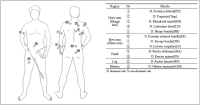
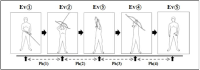
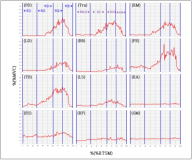
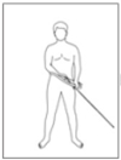
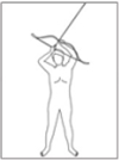
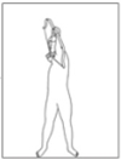
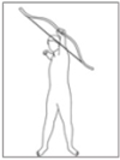
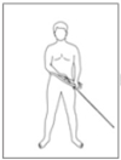
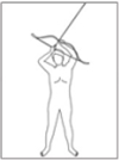
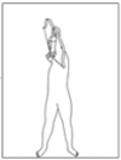
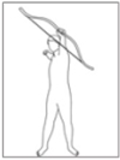
The past few decades has seen increasing kinematic studies using surface electoromyography (EMG) in archery, however there has been no such specific study in Korean traditional archery. The purpose of this study was to evaluate EMGs during archery shooting motion in Korean traditional archers. Ten men Korean traditional archers were participated, and divided into two groups according to the shooting stance; parallel stance group(PSG, n=5) and oblique stance group(OSG, n=5). The surface EMGs were measured 12 muscles during shooting motion of five events including Junbi(Set), Geogung(Set up), Manjak(Full draw), Balsi(Release), Machigi(Ending). At the result, muscle activity of posterior deltoid, trapezius, rhomboid major, latissimus dorsi, biceps brachii, forearm extensor bundle, triceps brachii, levator scapulae significantly increased at event of full draw and release, then significantly decreased again at event of ending, respectively(p<.01, p<.001). The muscle activity of erector spinae(ES) was also significantly increased at event of full draw and release(p<.01, p<.001), while no significant changes in muscles of rectus abdominis, rectus femoris(RF), gluteus maximus. As a result of comparing PSG and OSG, muscle activity of RF in OSG was higher than PSG at event of release(p<.05), it remained until event of ending(p<.05). On the other hand, the higher the tension of the bow, the higher the muscle activity of the draw arm at event of release(p<.05). These results suggest that when Korean traditional archery shooting, both side arm and back muscles are more activated than the abdomen, leg and hip muscles. The parallel stance might suppress the muscle activity of the lower extremities to twist the upper body. And the higher bowstring tension needs to increase of muscle strength in BB of draw arm.