Purpose This study is a phenomenological research which tries to describe the subjective experience and to analyze multi-layered meanings, and it finds out the men's training experience and meaning. The purpose of this study is to investigate why the men do Yoga and what the subjective meaning of Yoga experience, and the study examines critically whether Yoga experience especially focused on women is against gender performance and dominant body discourse. Methods For the study, 6 middle & young-old aged men who do Yoga more than 6 months every week are selected as participants. Results The meaning of Yoga for middle & young-old aged men in their lives is as follows. First, it is hard for men to experience Yoga because of social and cultural background. Finding Yoga class which takes men's membership is difficult. Second, middle & young-old aged men's physical feature(interest in their health and disease) and personal background(women friendly daily life) become specific motivation to overcome the barrier to do Yoga. Third, Yoga is 'alterative training', not a training. Yoga is considered as a training which replaces the feature of training called men's sports previously. Fourth, Yoga has a meaning of 'healing' to have our own time. Fifth, Yoga is changed by itself in Yoga culture which is focused on women even though middle & young-old aged men do Yoga for a long time. Sixth, middle & young-old aged men realize that the feature of Yoga is not 'for only women', and they thought it is 'neutral training that men can do too.' Conclusion Consequently, the reason why middle & young-old aged men do Yoga is started from the motivation regarding physical characteristics and personal background, and the main purpose is to cure and to heal our bodies and mind. For them, Yoga means 'alternative training to fit their bodies' and 'their own time'. Moreover, old male adult's training experience and meaning are against gender performance in that it cause a crack in stereotyped gender sports area, but it is notable that there is no intention to resist the dominant gender body discourse.

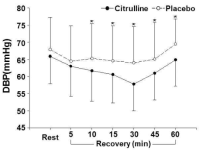
It has well known that post-exercise hypotension (PEH) after a bout of aerobic exercise was a major mechanism to reduce blood pressure though exercise training, and that citrulline supplementation reduced blood pressure by increasing nitric oxide in vivo. However, the effects of citrulline supplementation on PEH have not been fully elucidated yet. This study was designed to examine the effects of citrulline supplementation on PEH after a bout of aerobic exercise in prehypertensive and normotensive 20s males. The effects of a four-day citrulline or placebo treatment on blood pressure, cardiovascular function, and blood lactate concentration measured at rest and during recovery phase after a bout of exercise performed for 30 min at 70% VO2max were compared and analyzed. All subjects participated in a citrulline trial and a placebo trial repeatedly according to a counter-balanced order. Main results of the present study were as follows: 1) Systolic blood pressure, diastolic blood pressure, and mean arterial pressure measured at 10-60 min of recovery phase in citrulline trial were significantly lower than placebo trial. Rate-pressure product measured at 30 min and 45 min of the recovery phase in citrulline trial was significantly lower than placebo trial. 2) No significant differences were found in heart rate (HR), cardiac output (CO), and total peripheral resistance (TPR) measured during the recovery phase between two trials. There were significant differences in HR, stroke volume, CO, and TPR among times within a trial. 3) No significant difference was found in blood lactate concentration measured at rest and during the recovery phase between two trials. The results would be summarized that the PEH was augmented by the citrulline supplementation, and that burden to cardiac muscle as well as cardiovascular function were not affected by the citrulline supplementation. It was concluded that the short-term citrulline supplementation would be very effective to augment the PEH. A research investigating the effects of citrulline supplementation on the PEH in pre-hypertensive and/or hypertensive individuals would be warranted. In addition, a study examining the effects of citrulline supplementation during long-term exercise training on the blood pressure in hypertensive patients also would be warranted in near future.
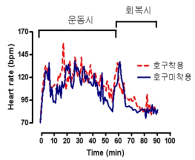
The purpose of this study was to investigate the effect of wearing of safeguard devices on various blood ions (i.e., Na+, K+, Ca2+) concentrations, gas parameters (PO2, PCO2, hematocrit [Hct], hemoglobin [Hb], Saturated [Sat] O2), and energy substrates (i.e., glucose, free fatty acid [FFA], lactate) concentrations during Kumdo training. Research scope extended to examine the heart rate changes during each exercise sessions. In order to achieve the research goal, 10 male elite Kumdo players, who play for G city in Gyeongsangbuk-do, were participated, and their mean maximum oxygen uptake level was 51.2(±6.1)mL· kg-1min-1. All subjects undertook Kumdo training sessions twice, which carefully pre-planned and consisted of routinely carrying out exercise program. Training period for each session was 80 min long including 10 min each for warm-up and warm-down period, but the conditions with wearing body protection devices were different following either with wearing complete set of safeguard devices or without wearing any safeguard devices except general training cloth. Heart rate was measured by every minute interval. K+ and Ca2+ showed interaction effect between the conditions with wearing safeguard devices and conditions with time of Kumdo training. Hct and Hb level significantly increased after 60 min Kumdo exercise regardless of wearing safeguard devices. Kumdo training induced dropping of blood pH independently with wearing safeguard device conditions, however the values and/or concentrations of PO2, Na+, glucose, lactate, Sat O2were significantly increased. Heart rate was maintained marginally higher values throughout exercise period when safeguard devices were worn. Based on these results, it was concluded that wearing the safeguard devices could possibly be causing a physiological metabolic changes, and this may be drawn by increased body fluid loss and energy expenditure. Further study should be undertaken to examine the effects of wearing safeguard devices on hitting intensity and hormone secretion and concentrations, that closely associated with body fluid and ion balance during Kumdo exercise and/or training.
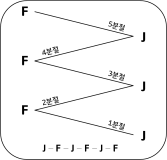
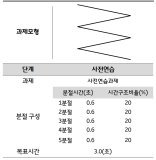
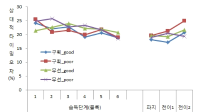
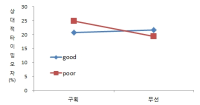
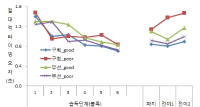
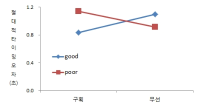
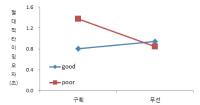
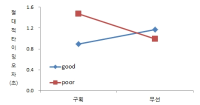
The present study was conducted to determine the effect of contextual interference (CI) and motivational properties (MP) of Knowledge of Result (KR) in learning on relative and absolute timing. Participants (N=48) were randomly assigned to one of four practice groups, which differed in practice structure on CI (blocked, random) and KR on MP (good trial, poor trial). They performed temporal timing tasks in pre-exercise and acquisition phase and went through a retention test and 2 transfer tests after approximately 24 hours. The main findings showed that first, for the relative timing error there was no significant main effect of CI and MP in the acquisition phase, retention, transfer1, and 2 test. However, there was a significant interaction effect between CI and MP in the transfer 2 test. Second, for the absolute timing error there was no significant main effect of CI and MP in the acquisition phase, retention, and transfer test 2 while there was in the transfer test 1. Moreover, there was a significant main effect between CI and MP in the retention, transfer 1, and 2 test. The findings indicated that 1) there was a significant learning effect of absolute timing between KR_good group and KR_poor group on blocked practice in the retention test, 2) random practice schedule and KR_good condition resulted in enhanced absolute timing performance relative to blocked practice and KR_poor respectively at transfer test 1, 3) there was a significant learning effect of absolute timing between KR_good group and KR_poor group on blocked practice at transfer test, 4) KR_good condition could be an useful relative timing learning strategy relative to KR_poor on blocked practice schedule at transfer test 2, effector transfer test. KR-good condition resulted in learning superior to KR_poor group on blocked practice schedule as well. However, there was no significant difference between two conditions on random practice, and 5) there was no difference in the learning effect of absolute timing error between KR_good and KR-poor group in the blocked practice, while there was not in the random practice. It indicated that motivational properties would influence the learning effect of timing in the blocked practice.

Although delayed heart rate recovery (HRR) and impaired autonomic nerve system (ANS) modulation after acute exercise are related with cause of cardiovascular disease (CVD) and mortality, studies evaluating ANS changes with local exercise are still unsatisfied. Thus, this study aimed at investigating the modulation of ANS-related parameters, followed by upper or lower body exercise. Eleven male without cardiovascular and orthopedic diseases measured basic body composition, resting blood pressure (BP), and heart rate variability (HRV). This study based on randomized cross-over design; AE composed with arm-ergometer, and LE involved with leg cycling. Participants had at least one week wash-out between each exercise, also there was no cool-down after exercise. All sessions were performed with intensity of 50 % target heart rate for 30 min. With measurement of Rating of perceived exertion (RPE) during every 10 min, HRV was measured Kubios HRV software using R-R intervals collected with Polar RS800CX in post-exercise recovery (for 30 min). As a result, heart rate (HR) and RPE were same (p > 0.05) through the experiment. As results of this study, SDNN and rMSSD in time domain on LE were higher than on AE during post-exercise recovery. When LE compared with AE used by Poincare plot, both parasympathetic reactivation (SD1) and autonomic nerve regulation (SD 2) on LE were higher than AE. Immediately after submaximal exercise, the high-frequency component on LE was significantly greater compared to AE. Also, the LF/HF ratio and LF nu reflecting sympathetic activity were higher on AE than LE. In contrast, the HF/TP ratio and HF nu reflecting vagal tone were greater on LE than AE. In conclusion, this study suggested regional lower body exercise recovers more sufficient than regional upper body exercise after submaximal aerobic exercise at same HR. Local exercise like leg cycling needs a careful approach to apply for accurate exercise prescription and effective training.
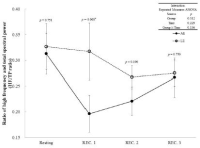
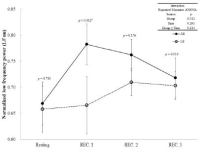
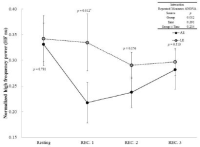
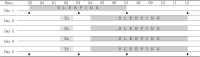
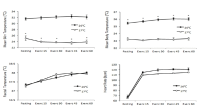
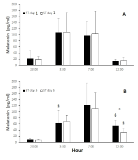
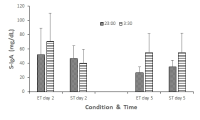
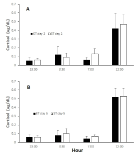
Whether a nocturnal exercise with concomitant increase of body temperature (Tb) would intensify circadian phase delay compare to exercise with a suppressed Tb increase was examined. Seven healthy men (20.57 ± 2.88 yrs, 174.43 ± 4.05 cm, 70.13 ± 6.07 kg, 10.74 ± 1.92% fat) participated in two tests. Each lasted 5-days. On the day of 1 of each test, subjects maintained habitual sleep time (23:00-07:00, 0.2 lux) in laboratory. From day 2 thru 5, they biked for 60 min at 55% of maximal capacity beginning at 01:30 (15 lux). Then they went to bed at 04:00 and woke at 12:00. During test, they exercised either at 26℃ with elevating Tb (ET) or at 17℃ with cooling devices for suppressing Tb (ST). Two tests were counter balanced and separated by 2 weeks. During exercise, rectal (Tre) and skin (Tsk) temperatures, and heart rate were continuously recorded. Body weight changes during exercise were measured. Urine volume and saliva sample were collected. Blood samples were taken at 23:00, 03:30, 07:00, and 12:00 on day 1 and 5 of tests and analyzed for melatonin. The average weight loss for 4 days of exercise in ET and ST was 0.62 ± 0.09 and 0.22 ± 0.07 kg, respectively (p<.001). Tre increased during exercise but not different between conditions. Tsk maintained at 32℃ in ET and 24℃ in ST (p<.001). Tb were higher in ET than ST during exercise (p<.05). The average total urine volume passed was 0.07 ± 0.07 in ET and 0.11 ± 0.07 liter in ST (p<.05). The melatonin concentration at day 1 was 23 ± 26, 107 ± 45, 98 ± 46, and 14 ± 5 in ET and 18 ± 10, 108 ± 65, 103 ± 75, and 14 ± 12 pg/ml in ST for each time period. At day 5, it was 9 ± 3, 64 ± 41, 122 ± 73, and 54.1 ± 17.8 in ET and 8 ± 1, 68 ± 21, 111 ± 52, and 32 ± 14 pg/ml in ST. Differences of melatonin between ET and ST at day 5 of 12:00 as well as between day 1 and 5 at 12:00 of both conditions were noticed (p<.05). Salivary cortisol and immunoglobulin-A were not different. A nocturnal exercise induced a circadian phase delay in both conditions. However, body temperature increase during exercise intensified the shift indicating the importance of thermal load during exercise for circadian shift.
The purpose of the study was to determine relationship of abdominal fat, adipocytokine, bone mineral density, and bone turnover markers in obese male adolescents. Twenty four male adolescents (obese: 12, normal: 12) volunteered to participate in the study. Anthropometry and skeletal maturity were measured. Body composition and bone mineral density were estimated by DXA (Hologic, QDR-4500, USA). Abdominal fat with total adipose tissue (TAT), visceral adipose tissue (VAT), subcutaneous adipose tissue (SAT), and visceral adipose tissue to subcutaneous adipose tissue ratio (VSR) were estimated by computed tomography (ECLOS, HITACH, Japan). Blood samples were obtained for and analysis of adipocytokines including leptin and adiponectin. Bone turnover markers, osteocalcin (OC), bone-specific alkaline phosphatase (BALP) for bone formation markers and N-terminal telopeptide (NTx), C-terminal telopeptide (CTx) for bone resorption markers were analysed. All data were analyzed utilizing SAS 9.3 (SAS Institute, NC, USA). Independent t-test was used to evaluate the differences between obese adolescents and normal adolescents. Pearson correlation analysis was applied to figure out the relationship between abdominal fat, adipocytokines, bone mineral density, and bone turnover markers. Multiple regression analysis was used to find out the factors of abdominal fat which influence on bone mineral density. A level of significance was set at p<.05. The results of the study indicated that fat tissue (p<.001), percent body fat (p<0.001), TAT (p<.001), VAT (p<.001), and SAT (p<0.001) were significantly higher in obese adolescents than normal adolescents. However bone mineral contents were significantly higher in normal adolescents. Normal adolescents have significantly higher whole body BMD and lumber BMD than obese adolescents. Abdominal fat including VAT and SAT related negatively with whole body BMD and lumbar BMD. Leptin related negatively with BMD whereas adiponectin related positively with BMD. NTx for bone resorption marker related positively with abdominal fat. Visceral adipose tissue was a predictor for whole body BMD and lumbar BMD in explaining 46% and 32% in adolescents. In conclusion, obese male adolescents have lower whole body BMD and lumbar BMD than normal adolescents. Abdominal fat including VAT and SAT related negatively with whole body BMD and Lumbar BMD. And leptin and adiponectin were closely related with BMD. Finally, visceral adipose tissue was a predictor for whole body and lumbar BMD in adolescents.
