The purpose of the study was to determine relationship of abdominal fat, adipocytokine, bone mineral density, and bone turnover markers in obese male adolescents. Twenty four male adolescents (obese: 12, normal: 12) volunteered to participate in the study. Anthropometry and skeletal maturity were measured. Body composition and bone mineral density were estimated by DXA (Hologic, QDR-4500, USA). Abdominal fat with total adipose tissue (TAT), visceral adipose tissue (VAT), subcutaneous adipose tissue (SAT), and visceral adipose tissue to subcutaneous adipose tissue ratio (VSR) were estimated by computed tomography (ECLOS, HITACH, Japan). Blood samples were obtained for and analysis of adipocytokines including leptin and adiponectin. Bone turnover markers, osteocalcin (OC), bone-specific alkaline phosphatase (BALP) for bone formation markers and N-terminal telopeptide (NTx), C-terminal telopeptide (CTx) for bone resorption markers were analysed. All data were analyzed utilizing SAS 9.3 (SAS Institute, NC, USA). Independent t-test was used to evaluate the differences between obese adolescents and normal adolescents. Pearson correlation analysis was applied to figure out the relationship between abdominal fat, adipocytokines, bone mineral density, and bone turnover markers. Multiple regression analysis was used to find out the factors of abdominal fat which influence on bone mineral density. A level of significance was set at p<.05. The results of the study indicated that fat tissue (p<.001), percent body fat (p<0.001), TAT (p<.001), VAT (p<.001), and SAT (p<0.001) were significantly higher in obese adolescents than normal adolescents. However bone mineral contents were significantly higher in normal adolescents. Normal adolescents have significantly higher whole body BMD and lumber BMD than obese adolescents. Abdominal fat including VAT and SAT related negatively with whole body BMD and lumbar BMD. Leptin related negatively with BMD whereas adiponectin related positively with BMD. NTx for bone resorption marker related positively with abdominal fat. Visceral adipose tissue was a predictor for whole body BMD and lumbar BMD in explaining 46% and 32% in adolescents. In conclusion, obese male adolescents have lower whole body BMD and lumbar BMD than normal adolescents. Abdominal fat including VAT and SAT related negatively with whole body BMD and Lumbar BMD. And leptin and adiponectin were closely related with BMD. Finally, visceral adipose tissue was a predictor for whole body and lumbar BMD in adolescents.
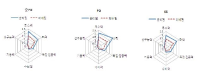
This study has been conducted to develop methods and techniques for the analysis of data related to baseball performance using the winning and losing games. The purposes of the study were to examine differences of athlete performance for semi playoff, playoff, and Korean professional baseball series and to develop optimal forecasting model for the short term series. Data used in the study were taken from Korean professional baseball association. Three data sets including semi play off from 1982 to 2012, play off from 1989 to 2012, and Korean series from 1982 to 2012 were used. To compare athlete performance by winning and losing games for short-term series t-test was applied. This study created new parameters by weighted value through the equalization process to calculate skill related variables as a predicted variable. Three predicted models such as discriminant, binary logistic regression and artificial neural network models were developed to clarify the suggested models. The results showed that the number of significant parameters increased as the series continued. In particular, a variable related to error was added as a significant variable at the Korean Series. A third base hit in the play-off and a second base hit were also added as significant parameters in the play-off and the Korean series, respectively. In addition, W/L a major variables affecting a given technology area, the pitching PO, PO, the inertia, KS, the pitching, respectively. An artificial neural network model was finally selected with the highest accuracy and lowest input of estimated parameters in the semi play-off. In the play-off, artificial neural network model that applied technical area parameters by specialist criteria had better accuracy rate than two others. In the Korean series, artificial neural network model that created estimation parameters by applying all parameters was chosen as the final model. When the overall accuracy level of semi-play off, play off and Korean series was figured out, binary logistic regression model had higher accuracy of classification than discriminant model, but artificial neural network model had the higher accuracy of classification than binary logistic regression model.

