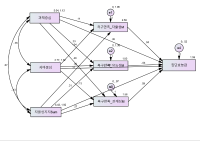
In sport context, the motivational climate created by significant others (e.g., coachs and peers) has been influences on the athletic-student's motivation, engagement, performance, and skill development. Collective efficacy is important for team performance because it influences a group's task choice, effort expenditure, persistence in the face of failure, and resistance to discouragement. This study was to examine the influence of peer motivational climate (i.e., task-involving and ego-involving motivational climate) and coach autonomous support for basic psychological need satisfaction and collective efficacy. In the study, participants were 289 athletic-students' of team sports. In the study then, questionnaire was assessed using by the correlation and path analysis. The results showed that task-involving motivational climate significantly predicted of collective efficacy, while ego-involving motivational climate were negatively predict to the collective efficacy. The results suggest the importance of considering peer influence in addition to coach influence when examining motivational climate in team sport.
