PURPOSE The purpose of this study was to examine the current status and pattern of exercise prescription. In particular, we analyzed exercise prescription trends according to the health-related physical fitness level of Korean adults, using large-scale data from the Korea National Fitness Award program. METHODS This study used healthrelated physical fitness and exercise prescription data collected from the Korea National Fitness Award between January 2018 and April 2023. A total of 475,555 adult participants were included in the analysis. Data processing involved frequency analysis, in which the frequency of each exercise prescription by fitness component was divided by the overall frequency of exercise prescriptions, allowing for the identification of exercise prescriptions specific to health-related fitness. Furthermore, association rules analysis was applied to examine prescription patterns across different fitness domains. RESULTS First, the most frequently prescribed exercises for Korean adults were core-centered activities such as the “sit-and-stand,” “prone hold,” and “sit-ups.” Second, although upper-body-focused muscle strength exercises were commonly prescribed, the overall prescription pattern was still dominated by core-based exercises. Third, exercises specific to muscular endurance and flexibility included “lying leg raises,” “lying arm and leg raises,” and the “lying sky bicycle.” Corecentered flexibility and endurance activities, such as “hip stretches,” “front thigh stretches,” and “abdominal stretches,” were also prevented. Fourth, in the domain of cardiopulmonary endurance, swimming emerged as a distinctive aerobic exercise, particularly prescribed for obesity management. The prescription pattern in this category was characterized by compound training, combining aerobic and resistance exercises. CONCLUSIONS These findings provide foundational evidence for the development of targeted exercise prescription manuals tailored to health-related physical fitness levels. Furthermore, they support the advancement of a personalized exercise prescription system designed to improve the effectiveness of the promotion programs for Korean adults.
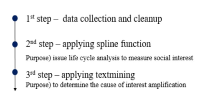
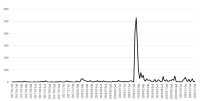
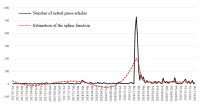
Purpose The purpose of this study is to analyze issues of sexual violence case in sports field reported in the press by using spline function model and text mining. In specific, spline function model is used to measure social interest level based on issue attention cycle theory and figure out the flow of issues by applying text mining. Methods Study material is 2,660 news articles reported from January 1, 2017 to December 31, 2019 and press DB(Big Kinds) of Korea Press Foundation is used to collect study material. Results Social interest level on sexual violence case in sports field is dramatically increased due to disclosure of Sim player starting from Me Too movement started from the culture and art world. Because of this, as structural problem in sports field arises, social interest level comes to a climax, and then it was founded that the government’s countermeasures establishment and special audits by the Ministry of Education were in progress. From the perspective of the issue attention cycle, it has the stages of latent-occurrence-rising-decision-decay-disappearance, but the period from rising to declining is short, so it corresponds to a breaking issue attention cycle. Conclusion This study examines the progress of sexual violence case in sports field from rising to disappearance in the perspective of the issue attention cycle. With this incident, the world of sports is establishing sports ethics center and proceeding policies such as Basic Sports Act, and the future studies need to review the effectiveness of this policy.

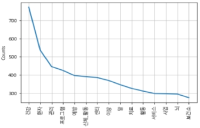
Purpose The purpose of this study is to introduce the basic concepts and procedures for topic modeling and to explain topic modeling to news articles about dementia-related physical activities. And it is also to discuss the possibility of using topic Modeling in the field of physical education. Methods In this study, the LDA algorithm of topic modeling is explained and the analysis procedure is summarized step by step by text preprocessing, text formatting, and topic number determination. The application cases were selected from 274 news articles about dementia-related physical activities reported in 13 major daily newspapers from 2000 to 2018. Results When the number of topics is 3, the Coherence Score figure is the highest. Topic 1 is about welfare services for dementia patients, Topic 2 is about prevention of dementia, and Topic 3 is about dementia research. The ratio by each subject is Topic 2 (46.0%), Topic 3 (33.2%) and Topic 1 (20.8%) in order of high ratio. Conclusion Topic modeling is an effective methodology to extract potential information excluding subjectivity of researchers. It is expected to be used when searching for information in massive texts in the field of physical education.


PURPOSE This study sought to establish obesity diagnosis criteria by using the Body Volume Index (BVI) by body part extracted through 3D BodyScanner. METHODS The body fat percentage was measured using Dual Energy X-ray Absorptiometer (DEXA) for 225 participants (male = 119, female = 106), and BVI for eight body parts was measured using 3D BodyScanner. Independent t-test and Receiver Operating Characteristic (ROC) analysis were conducted. ROC analysis calculated the Area Under the Curve (AUC), and the optimal cut-point by Youden's J index. Sensitivity, Specificity, Accuracy, Balanced Classification Rate (BCR), and F1-score (harmonic mean of recall and precision) values were calculated to verify the validity of the optimal cut-point. RESULTS A statistically significant difference was observed in BVI by body part according to whether obesity was present for both men and women, and the obese group higher than the normal group. The optimal cut-point for each body part to diagnose obesity was 7.96 for shoulder, 9.79 for chest, 7.15 for upper abdominal, 7.71 for lower abdominal, 14.89 for total abdominal, 9.79 for thigh, 5.70 for calf, and 74.96 for total body volume in men. In case of women, this was 6.04 for shoulder, 9.82 for chest, 4.96 for upper abdominal, 6.23 for lower abdominal, 11.63 for total abdominal, 8.88 for thigh, 4.05 for calf, and 58.15 for total body volume, and the accuracy was 0.6~0.9. CONCLUSIONS BVI is a useful indicator for diagnosing obesity. However, this can be applicable only to Asian adults since there may be differences depending on race or age.
PURPOSE The purpose of this study is to analyze the type of and interest in home training video contents using the YouTube platform. METHODS Web crawling was performed using Python and a total of 3,937 sets ofvideo information (title, content, number of views, upload date) were obtained, 3,155 of which were finally selected for the study material. Overlapping and unrelated content were excluded. The data of text underwent 3 stages of preprocessing, the TF and TF-IDF of the keywords were calculated to identify the main keywords, and the LDA algorithm was applied in the topic modeling to successfully identify the types. In order to understand the level of interest by type, the number of views was subdivided into the percentage of the assigned type. RESULTS First, the types of home training videos were classified into bare whole body exercise for aerobic and muscular power strengthening, Pilates exercise for core and upper body strengthening, upper body exercise using tools, lower body line exercise, posture correction and upper body stretching exercise for pain relief, hip-up exercise, dance and tabata exercise for diet, diet and lower body correction stretching exercise for diet, and bare body exercise for core and lower body strengthening. Second, it was found that the proportion and interest were high in the contents of bare whole body exercise for aerobic and muscular power strengthening, dance and tabata exercise for diet, diet and lower body correction stretching exercise for diet. CONCLUSIONS The findings of this study may provide baseline data about the development of the active online home training videos in the market.
