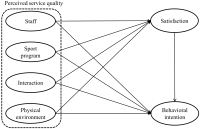
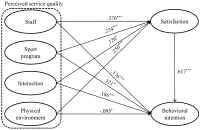
Purpose This study aimed to investigate the impact of perceived service quality on satisfaction, and behavioral intention in migrant members of German sport clubs. Methods The questionnaire was structured in four sections: perceived service quality (four dimensions and 12 items), satisfaction (two items), and behavioral intention (two items). With data from 438 members of 33 sport clubs in western Germany, SPSS 23.0 and AMOS 23.0 were utilized to conduct factor analysis, reliability, validity, and structural equation modeling analysis. Results The results of this study indicated that (1) staff, sport program, interaction, and physical environment in perceived service quality had a significantly influence on satisfaction, (2) staff, sport program, and interaction significantly affected behavioral intention, and (3) satisfaction was found to have significantly impact on behavioral intention. Conclusions The delivery of high-quality services can promote satisfaction, which in turn lead to behavioral intention. The empirical results suggest that the practitioners and sport club mangers should understand the importance of perceived service quality for the retention of members in sport clubs.
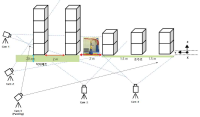
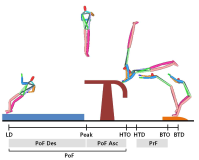
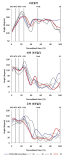
[Purpose] The purpose of this study was to compare Yeo 2 vault and YANG Hak Seon vault to verify the possibility of YANG Hak Seon vault. [Methods] The YANG Hak Seon vault and Yeo 2 vault performed by five Korean national gymnastic athletes, and the photographic images were collected using a high-speed camera and their kinematic characteristics were analyzed by 3D image analysis. [Results] The main variable of the post-flight phase S1, S4, and S2 were similar to YANG Hak Seon vault. S1 showed the largest at shoulder angle and the highest body center of mass at horse take-off. S4 showed the smallest shoulder angle at horse take-off, slow twisting at the post-flight ascending period, but faster femoral rotation during horse contact. S2 showed the slowest twist velocity in the ascending period of the post-flight and the smallest rotational distance and twist distance at the peak. S3 showed the slowest horse take-off velocity, the least time in the post-flight phase, and the hip joint was flexed at the peak. [Conclusions] S1 is required to increase the twist velocity by narrowing the shoulder angle during post-flight. S4 is required to strong push-up and an increase in the twisting velocity in the post-flight ascending period. S2 is required to shorten the horse contact time and increase the horse take-off angle through powerful femoral rotation after board take-off. S3 will have to get enough power from the preparation phase.