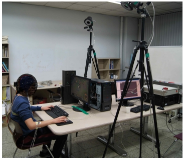
Purpose The purpose of this study was to compare the technique and power of the Korean national athletes and international athletes in the start phase of the 500 m speed skating to improve the performance and to understand the relationship between the biomechanical variables affecting the record. Method The subjects were 8 Korean national athletes (Korean athletes) and 6 international athletes (international athletes). For the three dimensional motion analysis, 5 high-speed cameras were used to capture the 40 m start phase of the athletes participating in the international competition. The variables selected for analysis were the kinematic chain, 100 m net time, time to 9 strokes, horizontal position of center of mass after 2.5 sec, range of motion of trunk, knee, push-off angle, net power output, total power loss. Results The correct kinematic chain ratio of Korean athletes was 61.2%, which was lower than 76.0% of international athletes. The time to 9 strokes was 2.82±0.25 sec for Korean athletes, which was significantly lower than 2.53±0.11 sec for international athletes (p=.001). The range of motion of the push-off angle was 60.15±2.75° for Korean athletes, which was significantly lower than 64.76±2.55° for international athletes (p=.001). The net power output was 887.2±269.9 W for Korean players and 1103±264.1 W for international players (p=.021). The variables related to the 100 m net time were the horizontal position of center of mass after 2.5 sec (r=-.956, p=.001), the net power output (r=-.931, p=.001), and the total power loss (r=-.904, p=.001). Conclusion In order to improve the start performance of Korean athletes, it is necessary to maximize the efficiency of skating through skill training to use the correct kinematic chain. Also power enhancement training is needed to improve leg power because the net power output related with 100 m net time.

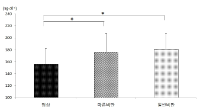
This study was designed to compare physical fitness, blood lipids, and insulin resistance according to body mass index (BMI) and percent body fat (%BF) in 20s females. Sixty women, aged 20-29 yrs, volunteered to participate in the study as subjects. There were three groups, i.e., normal group (BMI < 24 kg·m-2 and %BF < 25%; n = 25), normal weight obese group (BMI < 24 kg·m-2 and 28% < %BF < 40%; n = 22), and obese group (BMI > 26 kg·m-2 and 30% < %BF < 40%; n = 13). Physical fitness, blood lipid profiles, and surrogate indices of insulin resistance were measured and compared among three groups. Main results of the present study were as follows: 1) There were significant differences in all variables regarding body composition among three groups. All values were lowest in normal group and highest in obese group. 2) There was significant difference in sit-and-reach among three groups, whereas no significant differences were found in other variables regarding physical fitness among three groups. 3) There were significant differences in all variables regarding blood lipids among three groups. In particular, total cholesterol (TC), low density lipoprotein cholesterol (LDL-C), TC/HDL-C ratio, and LDL-C/HDL-C ratio were significantly higher in normal weight obese group than normal group. 4) There were significant differences in all variables regarding insulin resistance among three groups. Fasting plasma glucose and HOMA-IR were lowest in normal group and highest in obese group. It was concluded that there would be abnormal blood lipid profiles and insulin resistance in even normal weight obese individuals as well as general obese individuals in 20s females.

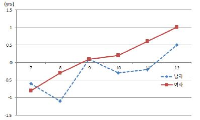
The aim of the study was to examine the tracking of body composition and physical fitness in boys and girls for 6 years. Thirty-seven boys and girls participated throughout the study. All measurements were performed annually. Body height, body weight, circumferences and skinfold thicknesses were measured and skeletal maturity was assessed. Body composition and bone mineral density were measured by DXA. Nine physical fitness tests were administered. Results of the study showed that there are significant interaction effects of time and group for body height(p<.01), waist circumference(p<.001), and skinfolds at triceps(p<.01), suprailiac(p<.01), thigh(p<.001) and medial calf(p<.01). All anthorpometric variables except skinfold thickness increased during the study period. Significant interaction effects of time and group were found for percent body fat(p<.05) and bone mineral density(p<.01). Percent body fat and fat tissue increased in boys from 7 to 11 years, then decreased in 12 years. Lean tissue(p<.001), bone mineral content(p<.001) and bone mineral density(p<.001) increased both in boys and girls throughout the study. There were significant interaction effect of time and group on sit and reach, standing long jump and sit-ups. In conclusion, percent body fat and fat tissue increased until 11 years, lean tissue and bone mineral density increased throughout the study both in boys and girls.
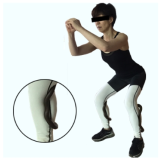
Purpose This study was designed to investigate the effects of weight-bearing exercise and CareRing treatment on cardiovascular responses, popliteal vein functions, and vascular elasticity of 30-40s women who had worked longer than eight hours a day in a standing position. Methods Thirteen subjects participated in 30 min of standing up treatment (STAND), weight-bearing exercise treatment (EX), and weight-bearing exercise with CareRing treatment (EX+RING). Each subject took part in the three trials repeatedly in a counter-balanced order and proceeded with a wash-out period of at least one week between the respective trials. Results The main results were as follows: 1) Significant reduction in EDV, no change in the diameter of popliteal vein, trend of reduction in blood flow of popliteal vein, and increased baPWV, indicating reduction of vascular elasticity of whole body, were shown in the STAND. 2) CO and EF increased significantly, and TPR decreased significantly in the EX. Blood flow velocity and blood flow volume of popliteal vein increased significantly, and baPWV decreased significantly from immediately after the treatment throughout the recovery phase in the EX. 3) HR, CO, and EF increased significantly in the EX+RING. Blood flow velocity and blood flow volume increased significantly in the EX+RING. Diameter of popliteal vein increased significantly immediately after the treatment and decreased significantly at 40 minutes of recovery. TPR and baPWV decreased significantly immediately after treatment compared to the STAND. Conclusions It was concluded that weight-bearing exercises would be effective in preventing venous or cardiovascular diseases occurred due to long-standing in 30-40s women, who are at high risk for such diseases. Furthermore, it would be more effective to combine pressure treatment with CareRing during weight-bearing exercises.
Purpose The purpose of the study was to determine difference of body composition, bone mineral density and health-related fitness by physical activity level in young women. Methods A total of 90 women aged 19-29 years participated in this study. The subjects were divided into three groups (low, middle, and high level) according to the physical activity level estimated by bone-specific physical activity questionnaire(BPAQ). Body height and weight were measured. Body composition parameters including four sites of bone mineral density(BMD) were estimated by DXA (Hologic, QDR-4500, USA). Health-related fitness tests was assessed using sit & reach, grip strength, sit-ups, and VO2max. Statistical analysis was performed using SAS version 9.4. All data were presented in terms of means and standard deviations. One-way ANOVA was applied to determine difference of dependent variables by physical activity level. Duncan's multiple range test was used as a post-hoc test. The statistical significance level was set at p < .05. Results There were significant differences on body weight(F = 4.867, p = .01), body mass index(F = 5.053, p = .008) and fat-free mass(F = 8.364, p = .0001) among the three groups. Significant differences were found on whole body BMD(F = 16.730, p = .0001), lumbar BMD(F = 11.480, p = .0001), femur BMD(F = 42.182, p = .0001) and forearm BMD(F = 5.560, p = .005) among the three groups. There were also significant differences on sit and reach(F = 11.433, p = .0001), sit-ups(F = 17.972, p = .0001), VO2max(F = 3.106, p = .05) and duration of GXT(F = 7.479, p = .001). Conclusions There were differences on body composition, bone mineral density and health-related physical fitness by physical activity levels. Nevertheless, the questionnaire used in this study was not able to judge participation in various exercise types including aerobic exercise or resistance exercise. Therefore, in the future study, longitudinal study considering various types of physical activity and dietary intake will be needed.
Purpose The aim of this study is to find how the pyruvate intake and aerobic exercise effect on the body composition, exercise performance ability, blood factor and obesity related hormone, and to verify the effect of pyruvate intake and aerobic exercise as an effective substance for obesity improvement. Methods This study selected 20 obese men in their twenties who has more BMI than 25kg/m2, and are applicable in 25% of the body fat, and randomly sampled group of 10 people for pyruvate intake and aerobic exercise (PYA), and 10 people for placebo intake and aerobic exercise (PLA). Intake of pyruvate and placebo was implemented for 10 weeks, 6 g a day, and aerobic exercise, treadmill exercise in the intensity of 50 ~ 60%’s target heart rate, was conducted for 10 weeks, 3 times a week, 60 minutes a day. To demonstrate the effect of pyruvate intake and aerobic exercise, all of the body composition, exercise performance ability, Lactate, and blood factor and hormone related to obesity were measured before and after the test in the same manner. Results The main results from this study are as follow; 1) In the case of body composition, in PYA, weight(p < .01), BMI(p < .05), body fat percentage(p < .01), and body weight without fat(p < .001) are reduced meaningfully. 2) In the exercise performance ability increased significantly in both PYA(p < .01) and PLA(p < .001) for V˙O2max, Also, in the case of distance during the exercise, PYA(p < .01) and PLA(p < .05) increased significantly in 15 minutes and PYA(p < .01) and PLA(p < .05) 30 minutes, but only in PYA from 45 minutes(p < .01) to 60 minutes(p < .05) 3) In case of Lactate, the significant decrease in PYA during stabilization and the significant increase in PYA after 30 minutes of exercise was not seen after 45 minutes 4) In the case of blood factor, HDL-C showed a meaningful decrease in PLA(p < .05) and Leptin showed a meaningful decrease in PYA(p < .001). Conclusions To sum up these results, it was more effective for the group of PYA which ingested pyruvate in improving obesity, even when the same aerobic exercise is conducted.
Purpose The current study reexamined the financial value of National Fitness Award. Methods To determine the economic value of National Fitness Award, we incorporated 6 willingness to pay(WTP) models using contingent valuation method(CVM). The data were collected from 250 members and 250 non-members of National Fitness Award(NFA) who were over 19 years old. Out of 500 completed questionnaires, total of 489 usable questionnaires were used for data analyses. Among 489, the WTP were calculated after 125 protest responses were discarded. The data were analyzed with SPSS 24.0 for frequency analysis, descriptive statistics, reliability test, and exploratory factor analysis. Stata 14.0 and R programs were used for calculating WTP. Results First, WTP was positively influenced by household income. Second, WTP was positively influenced by satisfaction level among members. Third, willingness to pay (WTP) for the National Fitness Award were 30,877won (Mean WTP), 29,455won (Median WTP), 25,829won (Truncated WTP). The average WTP was 28,720won. Conclusions Although National Fitness Award has been provided as free service to Korean people, previous study noted problems in facility and promotion. For the National Fitness Award to possess sustainability with proper service quality, it may need to be changed to fee based service. The current study suggested that, should it be changed to fee-based service, the proper price for the service is 25,000won.
Purpose The present study compared physical fitness, metabolic syndrome risk factors, and resting metabolic rate (RMR) according to body mass index (BMI) and percent body fat (%BF) in 20s females. Methods Fifty-one women in their 20s were recruited and assigned into three groups, i.e., normal group (n=18), normal weight obesity (NWO) group (n=18), and obesity group (n=15) according to BMI and %BF. Physical fitness, metabolic syndrome risk factors, and RMR were measured and compared among three groups. Results Main results were as follows: 1) Physical fitness were not significantly different among three groups. 2) Regarding 1-RM, arm curl and leg extension were significantly lower in normal group and NWO group than obesity group. Leg press was significantly lower in normal group than obesity group. 3) Regarding metabolic syndrome risk factors, there were significant differences in waist circumference, ordering from low to high such as normal, NWO, and obesity groups. Systolic blood pressure and diastolic blood pressure were significantly lower in normal group and NWO group than obesity group, while HDL-C was significantly higher in normal group than NWO group and obesity group. 4) Regarding RMR, absolute values of RMR such as VO2(㎖·min-1), RMR (Kcal·min-1), RMR (KJ·min-1), and RMR (Kcal·day-1) were significantly lower in normal group and NWO group than obesity group. On the other hand, relative value of RMR such as RMR (KJ·kg-1FW·h-1) was significantly higher in normal group than NWO group and obesity group. Conclusions It was concluded that obese women showed increased risk of metabolic syndrome and low relative RMR level, and NWO had similar problems. Active health management through physical activity and dietary control should be committed to NWO individuals because the NWO has possibility of high risk of metabolic syndrome and reduction of metabolic rate from 20s even though there was no problem in their external appearance.
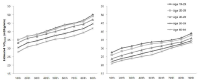
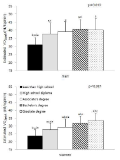
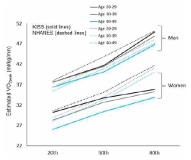
To provide the distribution of cardiorespiratory fitness including Bruce treadmill exercise time and estimated peak oxygen uptake (VO2peak) and investigate association with cardiorespiratory fitness and metabolic syndrome, sedentary lifestyle, or education level among Korean adults. Analysis of data on 2,006 adults (19-64 yr) who had completed a maximal grade treadmill exercise test, from the Sports Institute of Sports Science Fitness Standards (KISS FitS) project 2014-2015. The mean maximal exercise time was 11’26’‘, 11’18’‘, 11’06’‘, 10’03’‘ and 8’51’‘ (minutes and seconds) for men 19-29, 30-39, 40-49, 50-59 and 60-64 years of age, respectively, for women, it was 9’49’‘, 9’09’‘, 8’42’‘, 8’01’‘ and 7’33’‘ for the corresponding age groups. The mean peak oxygen uptake was estimated as 42.3, 41.8, 41.2, 37.6 and 33.6 ml/kg/minute for men 19-29, 30-39, 40-49, 50-59 and 60-64 years of age, respectively, For women, it was 34.0, 31.8, 30.3, 28.0 and 26.4 ml/kg/minute for the corresponding age groups. A positive association between cardiorespiratory fitness level and education level was observed for both men and women. Furthermore, participants with sedentary lifestyle had a significantly lower cardiorespiratory fitness than participants with activity lifestyle. Finally, Men with moderate and high fitness level had 50% and 87% lower odds for the metabolic syndrome, and women had 48% and 50% lower odds for the metabolic syndrome, respectively, than the ones with low fitness level after adjustment for age, smoking, alcohol intake, and sedentary lifestyle. These results can be used to track future Korean assessments and to evaluated interventions. The differences in fitness status by education level, sedentary lifestyle or metabolic syndrome can also be used to develop health policies, program and educational services.
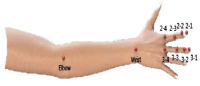
The purpose of this study was to determine how acute active pc-video game affects kinematic variables and muscle activities of adolescents. Fourteen middle school students(age: 15.9±0.7 yrs, height: 171.3±6.1cm, weight: 60.0±5.4 kg, right handed) who have no musculoskeletal disorder were recruited as the subject according to having experience in using the pc-video game for more than six months. Maximum angle, angular velocity, and muscle activity of the upper extremity were determined for each trial. For each dependent variable, a paired t-test was performed to test if significant difference existed between pre- and post a 60 minute active pc-video game(p<.05). This study found that one hour pc-video game hour may not affect on movement and ROM of the finger and the wrist, whereas it may have an effect on muscle activity of the upper extremity. It seems that repetitive movement pattern during an active pc-video game may hinder muscle activity of adolescents’ upper extremity. Part of the increase in musculoskeletal disorders is linked to the amount of time adolescents are allowed to play video games. This study found that an active pc-video game appears to have negative effects on the upper extremity muscles. Since wrist movements are continually repeated throughout the video game, carpal tunnel syndrome may possibly be caused by long-term exposure to video games.