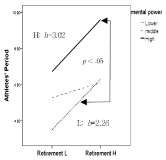
Purpose The purpose of this study was to compare the differences between the three simple control models of Hayes (2012) and to determine whether there were Moderating Effects depending on the level of self-esteem, willpower and belief that are psychological factors in the relationship between athlete's retirement and Athlete's period. Methods To achieve this objective, a total of 259 retirees were collected from data on retirement and psychological factors. The data processing method presented the reliability and feasibility of the measuring instrument through technical statistics, frequency analysis, confirmation factor analysis, and reliability analysis. In addition, we conducted a hierarchical regression analysis using the PROCESS command statement in IBM 20 to examine the regulatory effects. Results The results of the study are as follows: The first was the significant model of Hayes (2012)'s three simple control models. It is up to the researcher to choose which model to choose, but when selecting the model, the justification of the variables must be established on the basis of theoretical basis, and the reliability of the variables must be put in to produce reliable and reasonable results. The second was to verify that the relationship between the retirement factor(10) and the Athlete's period has an adjustment effect based on self-esteem, willpower and belief. Among the psychological factors, the Moderating Effects was greatest in the influence of belief on the Athletes' period, and the more reasons for retirement, the longer the Athletes' period than the weaker. The combined mental strength of all three psychological factors combined shows that the combined effect of control also significantly increases the player's ability to survive by combining with the retirement factor. In particular, sportsmanship has resulted in a better mix of retirement factors than the sense of Self-esteem and will, resulting in a longer increase in the capacity. Conclusions Therefore, players who long for a player always keep their dreams of becoming a big star in mind, and ask me to always keep the belief in hope that I will enjoy my career for a long time.



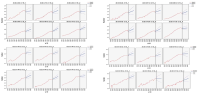
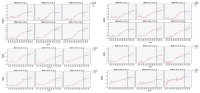
The present study has been carried out with a purpose of a long term estimation for the body size and BMI (Body Mass Index) of Korean children and youth using ARIMA, a time series model. In order to select an estimation model for the optimum time series, among the time series analysis method of SPSS22.0 statistic programs, a multivariate ARIMA (p,d,q) model has been selected that has an input series (physical education facility, time spent for physical education, animal source foods, GDP deflator, animal source food intake ratio), using annual average data of height, weight, and BMI data from 1965 to 2015. Among the several optimal measurements in ARIMA model with estimation variables, an optimal RMSE-based model (RMSE: Root Mean Square Error) has been selected. Using this model, the estimation model and estimated values of children’s height, weight, and BMI have been suggested for each age group. The results are as the following. The trend estimation of height follows a logistic curve, with both male and female groups showing increasing trends. The weight has a trend of increasing ratio higher than height. BMI also shows a trend curve similar to weight. The estimation model has been mostly ARIMA(0,1,0). In particular, the average BMI has been estimated as 22-23 for male students in 6th, 8th, 9th, 11th and 12th grade in 2030. This indicates the recent increasing obesity as children and youth occupy most of daily time for play culture that is far from physical activities, such as computer games, smartphone games, and video games at home.



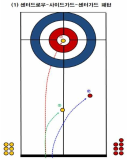
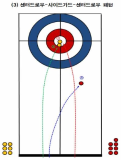
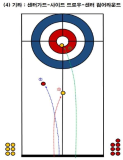
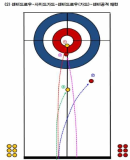
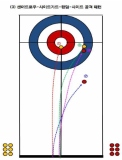
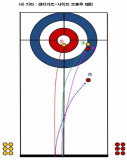
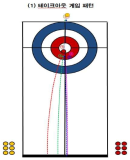
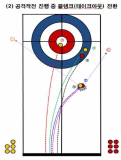
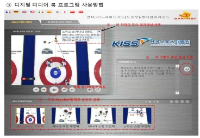
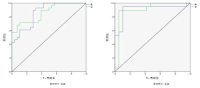
This study has analyzed 33 domestic games and 26 overseas games by targeting women curling teams of home and abroad, and looked into what main performance variables are, how level differences of domestic team appear, and from which variables differences between winning team and defeated team come out in overseas teams. Also, main strategies has been suggested that are used most commonly for kick-off offense and latter offense, blank strategy in order to prepare countermeasures, and digital media DB has been constructed that can utilize proper countermeasures easily and simply, and a model has been proposed for predicting victory/defeat. To accomplish such goal, a variance analysis has been carried out by dividing domestic teams into each level after calculating frequency and ratio with SPSS18.0, and t-test analysis has been carried out by overseas teams. Also, the accuracy of victory/defeat classifications has been suggested by using an artificial neural networks method. As a result, a lot of technical proficiency differences have appeared among Class A(upper rank), Class B(middle rank), and Class C(lower rank) in domestic teams. The ‘Guard’ which is an aggressive variable has turned out to be used more in upper and middle teams than in lower team, and the ‘Tab Back’ has been used more in upper rank than in lower rank. Furthermore, regarding the average comparison on victory/defeat in international games, victory teams have more significant difference(p<.05) than defeated teams in accuracy of shot techniques and strategy accomplishing abilities, and victory teams have been turned out to use less ‘Drew’ and more ‘Take’ than defeated teams significantly in Drew and Take’ technique variable. Finally, the accuracy of a prediction model has been 91.7% for learning and 92.9% for the test result to predict the victory/defeat in international games through the artificial neutral network analysis. The prediction accuracy of domestic games was 81.0% for learning and 71.4% for the test.