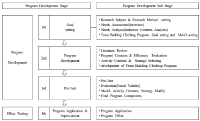
The purpose of this study was to examine the effects of team building climbing program on happiness, social development, self-esteem, stress, and depression of the youth. The participants consisted of 27 university students. The self-report instruments were compose of happiness scale, social development inventory, self-esteem scale, stress inventory, and depression scale. Qualitative data were participants’ perception about the effects of team building climbing program. Firstly, team building climbing program had positive effect on happiness of the youth, while climbing program had not significant effect on happiness of the youth. Secondly, both team building climbing program and climbing program had positive effect on social development of the youth, while team building climbing program was significant higher than climbing program in post-time. Thirdly, team building climbing program had positive effect on stress of the youth, while climbing program had not significant effect on stress of the youth. Fourthly, both team building climbing program and climbing program had positive effect on self esteem of the youth, while there were not significant between team building climbing program and climbing program in self esteem of post-time. Fifthly, both team building climbing program and climbing program had positive effect on depression of the youth, while there were not significant between team building climbing program and climbing program in depression of post-time. Limitations of this study and future implications were discussed.
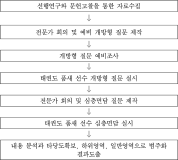
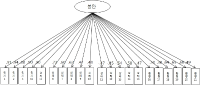
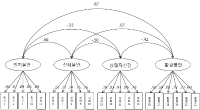
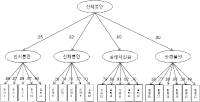
The purpose of this study was to develop and validity Competitive State Anxiety Scale for Taekwondo Form athlete(CSATF). The participants were composed of the 48 Taekwondo Form athlete to explore sub-factors of Competitive State Anxiety for Taekwondo Form athlete. The data were collected by an open-ended questionnaire and interview. The participants were composed of 257 national Taekwondo Form athlete to develop Competitive State Anxiety Scale for Taekwondo Form athlete. This 157 athlete data were used for items analysis, reliability analysis and exploratory factor analysis. And 100 athlete data were utilized for confirmatory analysis. Also convergent validity, discriminant validity, predictive validity latent mean analysis of CSATF were performed The results of this study were as follows. Firstly, the results revealed that the four general dimensions were identified such as cognitive anxiety, somatic anxiety, state of confidence, environmental anxiety. Secondly, CSATF comprised cognitive anxiety(5 item), somatic anxiety(5 item), state of confidence(5 item) and environmental anxiety(6 item). Thirdly, convergent validity, discriminant validity and predictive validity, the multi-group analysis according to gender examined validity of CSATF.