Purpose The purpose of this study was to investigate the relationship between physical activity and depression according to the presence of disease. Methods A survey and basic assessment were conducted for 2,754 (Male=1,025 and Female=1,729) aged 40 and over who participated in the rural-based cohort study. The survey included physical activity, depression scale and disease preservation. The basic assessment measured height, weight, and body fat percentage. The measured data were analyzed by using logistic regression to examine the relationship between physical activity and depression prevalence. Results First, physical activity reduced the prevalence of depression by 33% and 51%, respectively, in the general population and in patients with the disease. Second, physical activity once or twice per week reduced the prevalence of depression in patients with disease by 51%, and at least three physical activities reduced the prevalence of depression by 37% in the general population and 33% of patients with disease. Third, physical activity less than 150 minutes per week reduced the prevalence of depression in patients with disease by 43%, and physical activity of more than 150 minutes and less than 300 minutes per week reduced the prevalence of 43% of the general population and 52% of patients with disease. Physical activity over 300 minutes per week had a 38% reduction in the prevalence of depression in the general population. Conclusions This study suggests that the level of physical activity suggested by the ACSM guidelines is appropriate to reduce the prevalence of depression. In addition, the patients with the disease was found to be effective with less frequency and amount of physical activity than the general person.
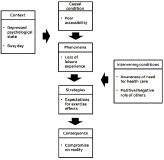
Purpose The purpose of this study is to investigate the alienation and the overcoming process of the physical activity participation of people with Adventitious Visual Impairment(AVI) Methods 21 Adults with AVI were recruited and one on one semi-structured interview was conducted. Ground theory was used to analyze the data. Member check, peer debriefing was conducted to enhance the trustworthiness of this study. Results As a result, a total of 203 concepts were derived. This consisted of 21 subcategories and the common themes of the subcategories were categorized into nine categories. Specific results are as follows. First, the physical activity of people with AVI was directly affected by the sports facilities, physical activity programs, and professional instructor. This causal condition resulted in the loss of leisure experience in the context of the busy daily life and the depressed psychological state. Second, due to the perceived need of health care and the positive involvement of others, people with AVI came to expect the effect of exercise. Third, people with AVI participated in physical activity again as a tool to achieve the purpose of health improvement. This type of physical activity has a limitation that it can not guarantee the continuity of physical activity due to the limitation that it does not contain autonomy and interest of people with AVI. Conclusions Based on these results, the following suggestions were made. First, it is necessary to improve the environment for ensuring participation in physical activity of people with AVI. Moreover education and promotion of the effects and values of the exercise should be carried out for people with AVI and their guardians. Second, it is necessary to diversify physical activity types and reconstruct existing exercise programs.
