Frailty in older adults is related to an increased risk for poor health outcomes including falls, disability, hospitalization and mortality. The purpose of this study was to determine the thresholds of a functional fitness associated with frailty for community-dwelling woman aged 65 or older. In this study, the National Fitness Award(NFA) items for elderly were utilized as the physical function and fitness testing for korean elderly women. The total of 444 community-dwelling woman completed the testings. Frailty status was classified by the Japan LTCI system ‘Kihon Checklist’ in the study. The prevalence of the frailty was 19.1% in the study. The frail elderly were older and showed higher obesity index such as weight, body mass index (BMI), percent body fat and waist circumference than the normal elderly. After adjusting for age and BMI which was related to frailty, fitness testing items were compared depending on frailty. As the result, the frail elderly showed significantly lower fitness levels in grip strength, 30-second chair stand test, timed up and go, figure-of-8 walk around two cones, and 2-minute step test than the normal elderly. When the fitness cut-off values were analyzed using the ROC curve, also, grip strength: 34.13%, 30-second chair stand test: 14 reps, timed up and go: 7.09 seconds, figure-of-8 walk around two cones: 30.88 seconds, and 2-minute step test: 93 reps. In addition, based on the cut-off values of each fitness item, the group with a low fitness level showed a 1.86 to 3.09 higher odds ratio of frailty than the group with a high fitness level, even after age and BMI were adjusted. In conclusion, these findings indicate that the fitness cut-off values in this study are fitness levels for preventing frailty of Korean elderly women and there will be a need for a large-scale study including subdivided fitness cut-off values for each age group and targets elderly men as well.
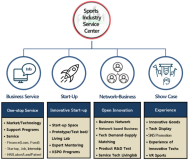
Purpose This study estimated the social value of the Sports Industry Support Center, which will be newly established and operated by the Ministry of Culture, Sports and Tourism, using the contingent valuation method. The survey designed a structured questionnaire for 480 households in 16 cities across the country to explain the necessity and major services of the Sport Industry Support Center and to investigate the willingness to pay for the social value of the center's sports industry support services. According to the NOAA panel's recommendation, the questionnaire survey consisted of dual dichotomous questionnaires and the form of payment in the form of income tax. As a result of analysis through logit model, statistically significant explanatory variables were payment amount, income level and gender. In particular, the higher the income level, the higher the willingness to pay, and the use of income tax as a means of payment was statistically significant. The social value granted to Sports Industry Support Center was 4,576.17 won per household per year, and it was estimated that there was a total of 469 billion won for the five years of income tax payment.
