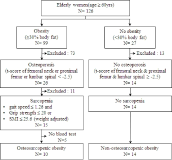
Purpose The purpose of this study were to assess physiological and biochemical characteristics in elderly women with osteosarcopenic obesity (OSO), and to analyze relationships among irisin, adipokines and bone metabolism markers. Methods 126 elderly women were selected and among them 10 women were classified into OSO group (76.9±5.2 yrs) and 14 women were classified as a NOSO group (72.9±5.6 yrs). Physique, body composition and bone mineral density were measured. Senior fitness tests were 30-s chair stand, 30-s arm curl, chair sit-and-reach, back scratch, 8-foot up-and-go, grip strength, and 2-min step test. Isokinetic muscle strength was measured by isokinetic dynamometer (Cybex 770, USA). Nutrition intake and physical activity were administered. Biochemical parameters including irisin, FNDC-5, leptin, adiponectin, CTx, 25(OH)D, osteocalcin, and PTH were measured. All data were analyzed by SAS 9.4. Independent t-test was applied to compare between OSO and NOSO groups. Multiple regression analysis was used. The level of significance was set at .05. Results The results of the study showed that there were significantly high for waist circumference, hip circumference, WHR, and BMI in OSO group compared to those of NOSO group. Higher results were also obtained for fat tissue and percent body fat but significantly low for lumbar bone mineral density. OSO group showed significant lower results for grip strength and 2-min step test compared to NOSO group. Peak torque, and relative peak torque at 60° were significantly lower for left and right knee flexion in OSO group. Protein intake was significantly low in OSO group, but no difference was obtained in level of physical activity between two groups. Irisin was significantly related to adiponectin, FNDC-5 and osteocalcin in explaining 35.2%, 81.5% and 92.1% of the variance, respectively. Conclusions This study shows that elderly women with OSO have higher results for physique and body composition parameters except body height. However, lower values were obtained for functional fitness, and isokinetic muscle strength. OSO may have more risks for metabolic syndrome, bone fractures, fall, lack of daily physical activity and limit of locomotion due to the imbalance of quadriceps and biceps femoris in non dominant leg. This study suggests that criteria and mechanism of OSO should be clarified by follow-up study.
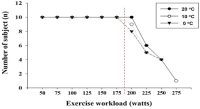
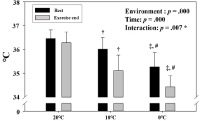
Purpose This study aimed to investigate the effects of acute cold stress (10℃, 0℃) compared with ordinary temperature (20℃) on exercise performance and physiological response at rest and during exercise. Methods A total of 10 healthy men (21.55 ± 2.16) were selected. In each environmental condition (20℃, 10℃, 0℃), the three testing order was randomly selected at crossover, and there was a week interval between the graded exercise test (GXT). On the testing day, they remained resting for 30 min in each environmental condition. Dependent variables (body temperature, energy metabolism parameters, skeletal muscle oxygenation profiles, and exercise performance parameters) were measured at rest and during GXT. Results In body temperature, at each environmental condition, there was a significant decrease (p<.05) at 10℃ and 0℃ compared with 20℃ after exercise, and in the difference depending on the environment at rest. After exercise, the body temperature significantly decreased (p<.05) in proportion to the decrease in temperature. There was no difference in heart rate and blood lactate level in energy metabolism, and the respiratory exchange ratio was significantly higher (p<.05) at 0℃ than 20℃. Minute ventilation (VE), oxygen uptake (VO2), and carbon dioxide excretion (VCO2) were significantly lower (p<.05) at 0℃ than 20℃ and 10℃ at various exercise load. All skeletal muscle oxygenation profiles did not show significant changes at rest and during exercise. In exercise performance, maximal oxygen uptake was significantly lower (p<.05) at 0℃ than 20℃, and exercise time to exhaustion was also significantly lower (p<.05) at 0℃ than 20℃ and 10℃. Conclusion Acute cold stress induces deterioration of exercise performance via a decreased body temperature and an increase in VE, VO2, and VCO2 during the same exercise load. In addition it was confirmed that this phenomenon was more prominent at 0°C than at 10°C when compared to 20°C.
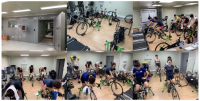
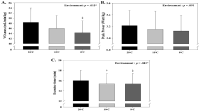
Purpose The purpose of the study was to determine difference of body composition, bone mineral density and health-related fitness by physical activity level in young women. Methods A total of 90 women aged 19-29 years participated in this study. The subjects were divided into three groups (low, middle, and high level) according to the physical activity level estimated by bone-specific physical activity questionnaire(BPAQ). Body height and weight were measured. Body composition parameters including four sites of bone mineral density(BMD) were estimated by DXA (Hologic, QDR-4500, USA). Health-related fitness tests was assessed using sit & reach, grip strength, sit-ups, and VO2max. Statistical analysis was performed using SAS version 9.4. All data were presented in terms of means and standard deviations. One-way ANOVA was applied to determine difference of dependent variables by physical activity level. Duncan's multiple range test was used as a post-hoc test. The statistical significance level was set at p < .05. Results There were significant differences on body weight(F = 4.867, p = .01), body mass index(F = 5.053, p = .008) and fat-free mass(F = 8.364, p = .0001) among the three groups. Significant differences were found on whole body BMD(F = 16.730, p = .0001), lumbar BMD(F = 11.480, p = .0001), femur BMD(F = 42.182, p = .0001) and forearm BMD(F = 5.560, p = .005) among the three groups. There were also significant differences on sit and reach(F = 11.433, p = .0001), sit-ups(F = 17.972, p = .0001), VO2max(F = 3.106, p = .05) and duration of GXT(F = 7.479, p = .001). Conclusions There were differences on body composition, bone mineral density and health-related physical fitness by physical activity levels. Nevertheless, the questionnaire used in this study was not able to judge participation in various exercise types including aerobic exercise or resistance exercise. Therefore, in the future study, longitudinal study considering various types of physical activity and dietary intake will be needed.
