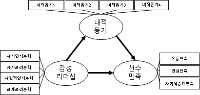
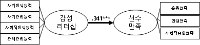
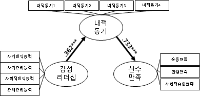
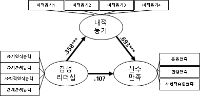
Purpose The purpose of this study was to examine the influence of coaches’ emotional leadership on athletic satisfaction and to investigate mediating effect of intrinsic motivation perceived by professional female basketball athletes in Korea and Japan. Methods 154 professional female basketball athletes in Korea and Japan participated in this study and responded to questionnaires which consisted of coaches’ emotional leadership, intrinsic motivation, and athletic satisfaction. The collected data were analyzed by frequency analysis, confirmatory factor analysis, reliability analysis, descriptive statistical analysis, correlation analysis, and structure equation analysis with using SPSS 23.0 and AMOS 23.0. Results The results of this study were as follows; Firstly, coaches’ emotional leadership had positive effect on athletic satisfaction. Secondly, coaches’ emotional leadership had positive influence on intrinsic motivation. Thirdly, intrinsic motivation had positively affect on athletic satisfaction. Lastly, intrinsic motivation completely mediated the relationship between coaches’ emotional leadership and athletic satisfaction. Conclusion In conclusion, these findings imply that coaches’ emotional leadership and intrinsic motivation are critical factors for improving athletic satisfaction.

Purpose This study was to explore construct of fear and courage behavior overcoming the fear and relationship between fear and courage in competition. Methods Total 65 national athletes of combat sports(Judo, Boxing, Taekwondo, Fencing) responded to open questionnaire about fear and courage behavior in competition. The data was analyzed by triangle verification and content analysis. Results Firstly, the fear of combat sports athletes consisted of five factors, which were negative consequences, lack of preparation for a game, concerns of performing one’s best, expectation of significant others, and internalized ego threat. Secondly, courage behaviors to overcome fear were self-effort, self-suggestion, self-conviction, selfish self-regulation, social self-control, self-analysis, and acceptance of experience. Finally, there were the relationship between fear and courage in competition. Conclusion These results will contribute to provide useful information for combat sport athletes and coaches in different level to cope with competition fear.
