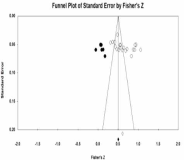
[Purpose] The purpose of this study is to analyze the effect size of the relationship between team identification and their intention to attend sport events and intention to purchase licensed team merchandise using a Meta-analysis. [Methods] To accomplish the purpose of the study, multiple databases were visited (e.g., RISS, KISS, Library of National Assembly) and studies were collected using the keyword of team identification. Through the search process, total of 92 studies were identified, among which 20 studies provided Pearson correlation coefficients between team identification and intention to attend and 13 studies between team identification and intention to purchase licensed team merchandise. The 33 studies were analyzed using Comprehensive a Meta Analysis(CMA) program. The analyses were done using random effect model assuming there were significant heterogeneity among the studies included. [Results] The overall effect size between team identification and intention to attend sport games was .567 and .403 for between team identification and intention to purchase licensed team merchandise, which can be classified as large effect size(Cohen, 2013). Sub-group analyses were done using types of publication(journal article vs. thesis). The results of the sub-group analyses indicated that the effect size differences were statistically insignificant. [Conclusions] As indicated in many previous studies, team identification was found to be a significant predictor of sport consumers’ behaviors. However, future studies need to find the reasons of heterogeneity in effect sizes.
Purpose The current study reexamined the financial value of National Fitness Award. Methods To determine the economic value of National Fitness Award, we incorporated 6 willingness to pay(WTP) models using contingent valuation method(CVM). The data were collected from 250 members and 250 non-members of National Fitness Award(NFA) who were over 19 years old. Out of 500 completed questionnaires, total of 489 usable questionnaires were used for data analyses. Among 489, the WTP were calculated after 125 protest responses were discarded. The data were analyzed with SPSS 24.0 for frequency analysis, descriptive statistics, reliability test, and exploratory factor analysis. Stata 14.0 and R programs were used for calculating WTP. Results First, WTP was positively influenced by household income. Second, WTP was positively influenced by satisfaction level among members. Third, willingness to pay (WTP) for the National Fitness Award were 30,877won (Mean WTP), 29,455won (Median WTP), 25,829won (Truncated WTP). The average WTP was 28,720won. Conclusions Although National Fitness Award has been provided as free service to Korean people, previous study noted problems in facility and promotion. For the National Fitness Award to possess sustainability with proper service quality, it may need to be changed to fee based service. The current study suggested that, should it be changed to fee-based service, the proper price for the service is 25,000won.
