[Purpose] It has been known that Korean Olympic Committee (KOC) was recognized by the International Olympic Committee (IOC) on June 20th of 1947, based on the fact that Korea National Olympic Committee (NOC) was recognized by the IOC session held in June of 1947. However, records and archives show that the recognition and the following conditions were somewhat different than what we have known. This study aimed to examine closely and explain how KOC was recognized in 1947, what was the conditions, and what was the role of Avery Brundage related to this agenda. [Methods] This study is a literature review. Brundage Collection, a package of records and letters which Avery Brundage has collected, and the archives of KOC in IOC Olympic Studies Center were examined. [Results] According to the records, Korean NOC was recognized provisionally with a condition of reviewing the situation of an independent nation and responsible for including the North Korean athletes. The unusual recognition appeared to be possible by the role and decision of Avery Brundage who defended the political and military situation of Korean peninsula. [Conclusions] The reviewed documents suggest a need of revision of KOC history as that KOC has been provisionally recognized in 1947 with some conditions. IOC viewed and recognized Korea as a single country and required KOC to include North Korean athletes. The role of Brundage should be revisited.
Purpose Incidence and prevalence of Korean teenager cheerleading injuries were surveyed. Methods A total of 769 junior cheerleaders who participated in National Sport Cheerleading Competitions responded to a questionnaire, and 435 reported experiences of injuries. Results Risk factors for injury included older age (p<0.001), increased experience (p<0.001), and higher BMI (p<0.05). The most frequent injury occurred at wrist, ankle, knee, shoulder and waist. And the most responded types of injury were muscular pain and contusion. Cheerleading experience affected on injury prevalence. They were injured when they perform Elevator (<0.5 yrs), Cradle (0.5-1 yrs), Cradle and Basket toss (1-2 yrs), Cradle and Pyramid (2-3 yrs). These techniques involved in bodily movements of going up and cradle. About 56% of injury was treated at home or not treated at all, and 60% of injury was either self-treated or not intervened. And only 32% of cheerleaders practiced on a formal mattress. Conclusion Safety measures for these youth cheerleaders are necessary and guidelines for securing safety and preventing and treating injuries for these population are urgent.
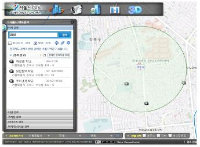
This study measured the accessibility of public exercise facilities within a residental area of a metropolitan community and examined how the accessibility can affect physical activity participation of residents. Initially, a total of 639 residents, who were aged between 19-70, visited Metabolic Syndrome Management Center of the Community Public Health Center, and registered for a Obesity Clinic Program, was listed as potential subjects. And those who responded to Physical Activity Questionnaire were selected for the analyses (n=92, 14.3% of 639). The relationships between physical activity level and accessibility to public exercise facilities were analyzed. Objective distance to public facility was related to ‘volume of participation to vigorous physical activity(r=.209)’, 'total volume of participation to physical activity(r=.206)’. And perceived distance to public facility was related to ‘volume of participation to vigorous-intensity physical activity(r=.235)’. perceived transport time to public facility was related to ‘duration of participation to vigorous-intensity physical activity(r=.239)’, ’volume of participation to vigorous-intensity physical activity(r=.306)’, and ‘volume of participation to total physical activity(r=.273)’. In contrast, the difference between objective distance to public facility and perceived subjective distance to the facility was negatively related to ‘duration of participation to moderate-intensity physical activity(r=-.221)’. The perceived numbers of public facility was positively related to ‘frequency of participation to vigorous-intensity physical activity(r=.237)’, ‘frequency of participation to walking(r=.273)’, ‘volume of participation to walking(r=.251)’ and 'total volume of participation to physical activity(r=.252)’. The predictor of 'total volume of participation to physical activity was perceived numbers of public facility(R2=.153, p=.046). The results revealed that the subjective accessibility to public health facilities was more influential to physical activity participation than the objective accessibility. Further research was warranted while using diverse populations as well as considering a inclusion of environmental factors.

