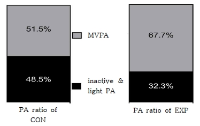
The importance of a health problem is emphasized in youth. Unfortunately, healthy activity physical education is not well utilized and is not popularly being researched. In order to improve these problems, this study attempted to explore the validity and applicability of SPARK program by designing and practicing the SPARK based P.E. classes. This study employed a mixed method research method based on a qualitative research strategy. Physical activity and physical fitness level were measured by accelerometers and FITNESSGAM. Additionally, empirical data were collected and analyzed by both Photovoice technique and recording. Findings of this study were divided into designing and practicing perspectives. First of all, the PE classes based on SPARK program was designed by 2009 national physical education curriculum and studies associated with the SPARK program. Further, I attempted to specify teaching strategy for enhancing physical activity level, power of execution and motivation. Second, PE class which has higher physical activity level, more participation and achievement, and successful fulfillment were emerged as consequences. Based on the study results, I discussed the validity and applicability of Physical Fitness based SPARK program and proposed suggestions for future studies.








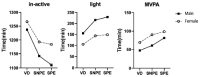
Purpose The purpose of this study is to measure the daily physical activity of male and female middle school students according to the period (VD: vaction day, SNPE: school day no PE, SPE: school day with PE) by using 3-axis accelerometer, and to compare the characteristics of adolescent physical activity according to gender and period. Methods The subjects were 130 middle school students (68 male, 62 female students). Data collection was performed using a 3-axis accelerometer(GT3X model, ActiGraph). Collected data were converted into time by intensity and rate using physical activity analysis program (Actilife v6.11.9) and analyzed by statistical program (SPSS 25.0). One-way ANOVA and independent sample t-test were used for statistical analysis. Tukey's HSD was used as a post analysis. The statistical significance level was .05. Results As a result, during each periods(VD, SNPE, and SPE), except for MVPA(moderate to vigorous physical activity) time on SPE, sedentary and MVPA time were significantly higher in female students, and low intensity and total physical activity time were significantly higher in male students. For male students, total physical activity time was higher in the order of SPE, SNPE, and VD, and for female students, physical activity time during the semester(SNPE and SPE) was significantly higher than VD. For male students, MVPA time was significantly high in order of SPE, SNPE, and VD, and for female students, it was high in order of SPE, SNPE, and VD but only significant difference occurred between SPE and VD. For both male and female students, sedentary time was high in the order of VD, SNPE, and SPE, but the sedentary time during vacation was significantly higher than during the semester. Conclusions When summarizing the results, first, it was confirmed that school and physical education classes as a physical activity space play a significant role in physical activity, especially MVPA, of male and female middle school students, second, the physical activity effect of physical education class was found to be more effective in male students. Based on the results of this study, it is necessary to conduct studies on various grades and to explore various factors affecting physical activity in a complex way.

Purpose The purpose of this study was to investigate characteristics of levels of physical activity in considering gender and different types of competition-oriented physical activity classes using three-dimensional accelerometers. Methods A total of 981 students(505 male students, 476 female students) in six different types of physical education classes were participated in this study. All of the six different types of physical education classes were competition-oriented classes, and levels of physical activity were accessed by three-dimensional accelerometers. Data were analyzed using t-test and ANOVA. Results First, descriptive analyses of participation time of levels of physical activity showed that MVPA of physical education classes is 10.26 mins (22.89%) on average, and, MVPA showed differently in different types of physical education classes in the order of T ball(14.61 mins), flying disk(12.61 mins), soccer(10.78 mins), volley ball(10.56 mins), basketball(9.64 mins), and table tennis(5.73 mins). Second, female students showed significantly lower levels of MVPA in all the different types of physical education classes. Third, post-hoc analyses showed that significantly higher levels of MVPA were found in T ball physical education classes and significantly lower levels of MVPA were found in table tennis physical education classes, compared to other types of physical education classes. Conclusions MVPA in physical education classes is not satisfied with recommended MVPA, and MVPA in Korean physical education classes is lower than MVPA in same types of physical education classes in other countries. In addition, significant mean differences of MVPA are found between male and female students, and new sports physical education classes show higher levels of MVPA compared to classic sports physical education classes. These results indicate that competition oriented physical education classes widely used in Korea need to find ways to increase MVPA and to overcome different levels of MVPA between male and female students.
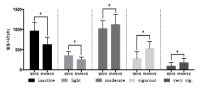
Active participation in Moderate to Vigorous Physical Activity(MVPA) is the indicator of healthy development for adolescents. However, Korean adolescents’ MVPA have continuously declined, and Korean adolescents have lower levels of MVPA compared to adolescents in other countries. Considering this issue, the purpose of this study is to examine the effectiveness of SPARK M-SPAN program to promote adolescents’ MVPA in P.E. classes and to understand how the promotion of adolescents’ MVPA occurs. To collect data, this study used Sequential Mixed Method and GT3X accelerometers. A total of 168 adolescents (84 in an experimental group and 84 in a control group) participated in this study for the quantitative data analysis, and six students and a teacher were interviewed for the qualitative data analysis. Paired t-test showed that students in SPARK P.E. classes experienced the significant decreases of sedentary behaviors(-339.6 sec) and low intensity P.A.(-96.9 sec) at p<.05 and the significant increases of moderate(+99.3 sec), vigorous(+252.4 sec), and very vigorous intensity P.A.(+84.7 sec) regardless of gender difference at p<.05 except for female students’ moderate intensity P.A.. The qualitative data analysis showed that SPARK classes gave students positive learning environments and led them to experience enjoyment and achievement-orientated learning Key teaching strategies of SPARK program and future research suggestions were provided in the discussion section.