Purpose The purpose of this study was (1) to analyze judges’ evaluation on rhythmic gymnastics performance by applying generalizability theory and (2) to suggest recommendations to improve judges' rating. Methods Data were 34 players’ scores from Senior Part at 29th KGA President’s Cup National Rhythmic Gymnastics Championship in Korea. Difficulty and execution scores in ball, clubs, hoop and ribbon event were analyzed. Analysis models containing components of area and reputation rank were designed and multivariate generalizability theory were used for analysis. Results The G-study results showed (1) that the error source about players has more significant impact to evaluation than other error sources in analysis model containing components of only player and judge, (2) that the error source about players has more significant impact to evaluation than other error sources in analysis model adding components of area, but the error source about area has more significant impact to evaluation of clubs event than other error sources, (3) that the error source about players has more significant impact to evaluation than other error sources in analysis model adding components of reputation rank, but the error source about reputation rank has more significant impact to evaluation of hoop event than other error sources in analysis model adding components of area. The D-study results showed generalizability coefficient was stable in analysis model without components of area and reputation rank, but generalizability coefficient in analysis model containing components of area and reputation rank not stable in some event. Conclusion Recommendations for improving judging were discussed.

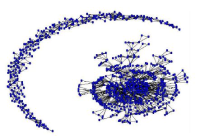
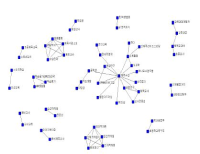
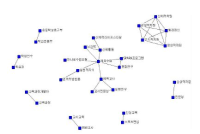
The purpose of this study was to identify the structure of knowledge in Sport Pedagogy field. Using bibliometric and social network analysis this study analyzed the keywords and citations appeared in Korean Journal of Sport Pedagogy and Korean Journal of Sport Science during 2006-2015 period. Total of 341 research papers which include 1301 keywords and 14826 citation were analyzed utilizing social network analysis as well as keywords frequency analysis, keyword co-occurrence, citation and co-ictation analysis. Results of this study showed that teaching, curriculum, and teacher education were three central theme in Sport pedagogy field. Key words such as physical activity, PE teacher, action research, and after school sport club activity were prominent research interests for scholard in the field. Quadradic Assignment Procedure analysis showed major research interests has not been changed between two periods of 2006-2010 and 2011-2015. Choi(2010)'s and You(2007)' books were most cited individual work and have influenced sport pedagogy researchers over the five years.

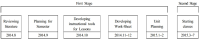
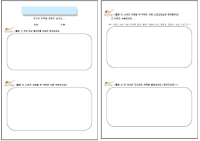
Researchers and teachers in physical education have emphasized sportsmenship in sport education setting. However, how to teach sportsmenship in physical education is not proposed yet. The purpose of this study was (1) to develop an instructional program for teaching and learning sportsmanship and (2) to examine its effects on sportsmenship. Participants were 7th middle school students(N=95). Data were collected using Sportsmanship Test(Park, 2014), open-ended questionnaire and in-depth interviews with students. The data were analyzed through paired samples t-test and qualitative content analysis. Results showed that significant difference was observed in students' sportsmanship test scores after instruction. Analysis of interview data showed that students experience the value of utmost effort, respect for opponents, respect for teammates, acknowledging results, respect for judgment, and valuable lessons related to character education. Implications for sportsmanship education using instructional program were discussed.