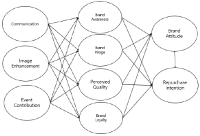
Purpose The purpose of this study was to provide title sponsorship marketing strategies by defining the relationship between professional volleyball title sponsorship, brand equity, brand attitude, and repurchase intention. Methods This study distributed 390 questionnaires to 2018-2019 V-League audiences and a total of 313 questionnaires were used as final validity sample. For data analysis, SPSS 21.0 and Amos 18.0 were used for frequency analysis, reliability analysis, confirmatory factor analysis, and structural equation analysis. Results First, title sponsorship had significant influence on brand equity, therefore hypothesis 1~3 were accepted, except for 1-3(perceived quality) and 1-4(brand loyalty). Second, among brand equity subfactors, hypothesis 4-1(brand awareness) and 4-4(brand loyalty) had significant influence on brand attitude which made hypothesis 4 partially accepted . Third, among brand equity subfactors, only brand image(hypothesis 5-2) had significant influence on repurchase intention which made hypothesis 5 partially accepted. Lastly, brand attitude had significant influence on repurchase intension, which made hypothesis 6 accepted. Conclusions It is anticipated that based on the result of the study, effective marketing strategy can be developed for title sponsorship companies in the future.
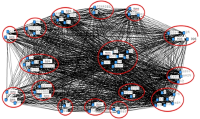
Purpose This study reviewed the seriousness of the Match-fixing through the mixed research methods of the big data analysis (quantitative) and the focus group interview (qualitative) using the keyword, ‘Match-fixing’ and discusses the cautious and comprehensive basic direction for coping with negative issues and preventing recurrence. Methods For the quantitative research method, Naver and Daum were used as the analysis channel and the main keywords selected for the data search were ‘Match-fixing’ and ‘Match-fixing+(measures/eradication/solution)’. The data collection period was limited from January 1, 2010 to December 31, 2016. In addition, for the qualitative research method, 6 homogeneous groups (experience, interest, knowledge) related to the research topic were constructed and interviewed using purposive(intentional) sampling. Results First, five factors (emotion, participant, cause, punishment, countermeasure) were categorized by big data analysis. Second, through Focus Croup interview, additional keywords for three factors (emotion, participant, countermeasure) were derived. Conclusions Therefore, it is required that various preventive measures such as emotional reward for negative emotion, preventive and ethical education, advancement of sports, establishment of Match fixing committee, Expert training are needed.