PURPOSE This study aimed to test the impact of sport consumers‘ self-construal levels on their responses toward an athlete scandal by conducting a cross-cultural experimental study. In particular, it focused on sport consumers’ subsequent responses toward an athlete scandal, such as the perceived target of responsibility and perceived the main agent for the public apology. METHODS Participants (total=151; KOREA=75, USA=76) were selected for a cross-national comparative study. MANCOVA and Descriptive Statistical Analysis were conducted using the SPSS Windows program version 26.0 to validate the research hypothesis. RESULTS The results indicate that sport consumers’ responses to an athlete scandal vary across the countries. Participants from Korea reported perceived responsibility to the athlete, team, and league. Conversely, those from the United States reported perceived responsibility only to the athlete. CONCLUSIONS There are cultural differences in sport consumers’ subsequent perceptions of an athlete scandal. The present study's findings are expected to provide stakeholders such as teams and leagues with practical implications to understand better sport consumers’ responses to athlete scandals in the globalized sports industry.
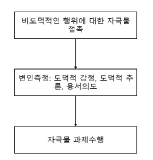
Purpose Drawing on Socioemotional Selectivity Theory, the present research aims to investigate how sport consumers’ moral reasoning strategies and forgiveness intent toward a sport organization’s misconduct depending on the consumers’ different time perspectives(expansive vs. limited). Methods An experimental study (total n = 129; Baby Boomer generation = 62, generation MZ = 67) was conducted by utilizing a fictitious scenario depicting a sport organization’s misconduct. The proposed hypotheses were tested by conducting T-test, correction analysis, and multiple regression analysis using SPSS 21.0. Results There were significant differences in moral reasoning and forgiveness based on different time perspective. Baby Boomer(MZ) group showed higher(lower) levels of moral rationalization, moral decoupling, and intent of forgiveness compared to MZ(Baby Bommer) group, while showing lower(higher) level of moral coupling. A result also revealed that negative moral emotions had moderating effect between a limited time perspective and moral coupling among MZ participants. Conclusion The results of this study indicated that sport consumers’ time perspective has a predictive function on moral reasoning strategies. Thus, it is necessary for sport organizations to establish strategies focusing on the consumers’ time perspective to effectively respond to an unexpected crisis.
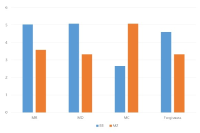
PURPOSE This study examines factors surrounding the work environment of Korean professional baseball coaches and provides implications from practical and policy perspectives. METHODS Data were obtained from 14 experts consisting of baseball coaches, front office staff, professors, and a sports journalist using Delphi technique and analytic hierarchy process analysis from September to October 2024 and were analyzed using SPSS WIN 24.0 and MS Excel 2019. RESULTS First, this study ranked the main factors “performance evaluation and contracts,” “workload,” “organizational culture,” and “support” in order of importance. Second, “enhancing job stability” was observed as the key subfactor under the “performance evaluation and contracts” domain, while “improving the work atmosphere” was prioritized in the “workload” category. Under “organizational culture,” the “elimination of nepotism and school-tiebased inequality” was the most significant, while “increasing staff and strengthening cooperation” was prioritized in the “support” domain. Third, analysis of the weighted priorities highlighted “enhancing job stability,” “raising salaries,” “increasing transparency in performance evaluation criteria,” “improving the work atmosphere,” and “elimination of nepotism and school-tie-based inequality.” CONCLUSIONS This study provides meaningful empirical data for developing the KBO League and is expected to help improve the working environment for professional baseball coaches.
PURPOSE This study aimed to verify the differences in anticipated regret and gambling discontinuance intent based on the fear appeal type and source similarity in different types of horse-racing gamblers. METHODS Using convenience sampling, 172 responses were collected from horse-racing participants who bought horseracing tickets within the last 6 months. After eliminating 30 insincere responses, descriptive, correlation, reliability, and two-way multivariate covariance analyses were conducted using SPSS Ver. 26.0. RESULTS Anticipated regret and discontinuance intent were higher under fear appeal using social compared with financial risk. Compared to recreational gamblers, problem gamblers had higher anticipated regret and discontinuance intent under fear appeal using social compared with financial risk. There were no differential impacts of source similarity on anticipated regret and discontinuance intent in both types of gambler. CONCLUSIONS Practitioners in charge of conducting messaging campaign to prevent addiction to horse-racing gambling may cause problem gamblers to expect regret and quit gambling by delivering preventive messages with relatively unfamiliar risks such as social risks, rather than familiar risks such as financial ones.
