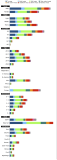
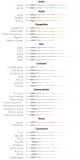
Purpose The purpose of this study is to identify the consistency and correlation of referee evaluation according to the judging characteristics in the preliminary and semi-final of the Latin event of dance sports, thereby deriving the problem of referee reliability and suggesting alternatives for improvement. Methods The method of study is Based on the performance data of 54 amateur Latin dances match organized by the Korea Dance Sports Federation for a total of three years 11,850(preliminary rounds & semi-final). Based on the Kappa statistics and the degree of agreement(pa), the difference in the group of examination characteristics was derived and the correlation between the five Latin events was analyzed. Results As a result of through this study, the consistency of the dance sports referee and the characteristics of the judging in the event were confirmed, and the number of judges tended to be higher when the number of judges was seven, the more the number of subjects was, and the highest level of agreement was more than 70 percent of the judges. In addition, the higher the concordance of each of the five detailed items, the higher the correlation tendency. Conclusion Differences in visual aspects between dance sports judges and the difference in the judges' ratings due to the revision of the rules, the decrease in the number of competitors participating in the competition, the number of people to be eliminated in each round, and the proportion of judges with experience in the competition are different, and these differences affect the judges and show up in the scores. The Latin dance sports events based on objectivity and reliability to improve the correct standards of judges to find the same raters, work will be required and an assessment element. With a systematic way in and to carry out the review curriculum and educational development is considered necessary.
Purpose Based on the match data of major judo world competitions in the last five years, this study identifies differences in general characteristics and environmental factors according to scoring technique and scoring times. And by exploring the factors associated with scoring technique, I would like to present a practical strategy that can be used to establish guided tactics. Methods 50,828 points were used for analysis of the entire men and women who competed from 2016 to 2020. Differences in the characteristics of the world's leading athletes according to their types of technique were used in conjunction with the chi-square test and the one-way ANOVA with Sceffe test to produce results. Results The results of this study showed that the type of skill by foot technique was the most common, and the ratio of hand skill to female player to push and foot skill was relatively high. The higher the weight class, the lower the ratio of hand technique, the higher the press rate, and the frequency of skill types also increased. At the Olympic Games, the ratio of hardening technique was higher than that of other competitions, and as the year progressed, the ratio of hand and waist technique increased, and the number of mat-hold decreased. The ratio of hardening technology was relatively high, and the ratio of hand-to-foot technology was relatively high as the semi-final and final rounds were higher. As for technical time, the male athlete's skill time appeared to be about 12 seconds longer on average, with the lowest in the heavyweight class and the longest in the lightweight class. Athletes from the Asian continent appeared to have the longest technical time, which is believed to have resulted from the characteristics of excellent physical strength, good endurance, and strong hardening technique. The skill time leading to the score by pressing and hand skill was the longest, and the waist skill and grip skill time were relatively short. Half of them appeared about 5 seconds shorter on average compared to the first round, and the more important the game (the 4th round, semi-final, and final) the longer the skill time. Conclusion In conclusion, through this study, the characteristics of the world judo players' skill types and time were confirmed, and based on this, it is necessary to analyze and systematize the technical types of the world's best athletes, including Korean athletes, in order to improve their judo performance.

Purpose The purpose of this study was to compare the official world records of UIPM in the last 3 years to find out the relationship between the score characteristics of fencing, swimming, equestrian, and laser-run events in the final rankings and to analyze the relative importance of each event. Methods For 3 years, from 2017 to 2019, a total of the data were collected, the final rankings, fencing conversion scores, swimming conversion scores, equestrian scores, and laser-run conversion scores for all male and female athletes who participated in the UIPM Level 1 World Cup and World Championships(1,197 finals and 2,173 qualifiers). The Multiple regression analysis was used to establish the relationship between the response(subjective) variable and the conversion score of the four explanatory(independent) variables. Results The results were compared by qualification (n = 2173) and final (n = 1197) by dividing into male (n = 1179) and female (n = 1591), and the fencing score was qualifications (male β= -.691, female β= -.533) and the finals (male β= -.632, female β= -.632), it showed the greatest influence in all. On the other hand, the swim score showed the lowest impact on both qualifications (male β=-. 021, female β=-.196) and finals (male β=-. 087, female β=-. 207). The fencing event plays a major role in passing the qualifiers and is a big variable for good performance in the finals. On the other hand, in the case of swimming scores, both men and women had the lowest impact on the final ranking, and there is a limit to the final performance of swimming scores in both qualifiers. Conclusion In conclusion, it is necessary to analyze and systemize the fencing skills of the world’s best athletes, including Korean athletes, to improve the Korean fencing athletes' performance, and through such scientific analysis, a system that enables fast and flexible responses to the upcoming Olympic. Additionally, even though the importance of all sports should be levelled due to the characteristics of modern pentathlon, relative importance is biased toward fencing and swimming events are neglected. Therefore, it is deemed necessary to conduct a follow-up study on whether the scoring system in modern pentathlon consists of a scoring system that supports the records of each event and the upper and lower scoring system.


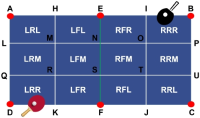
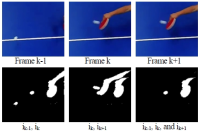
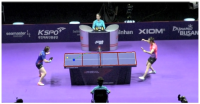
Purpose The purpose of this study was to develop algorithms and software that can track the trajectory of table tennis balls using image-processing algorithms to obtain information quickly for under and establish tactics used in table tennis. Methods The algorithms used in the field of computer vision were applied on two matches played by novice and two matches during international competitions by elite athletes. Reliability analysis was performed by comparing the table tennis ball bounce frequency in each zone obtained through the automatic method and the manual method. Results The mean reliability of the two novice games was only 85.1 ± 3.69%, total error was 14.9 ± 3.69%, overestimation error was 52.2 ± 9.78%, and underestimation error was 47.8 ± 9.78%. While the mean reliability of the two international tournaments was 71.8 ± 0.87%, the total error was 28.2 ± 0.87%, overestimation error was 82.0 ± 8.03%, and underestimation error was 19.2 ± 7.75%. Conclusions Although the target reliability of algorithms and software developed in this study was achieved only in novice competitions with 80%, the over-estimation errors were generally high in international competitions, showing the potential for further improvement.