PURPOSE This study investigated weight-class-related strength parameters during pulling performance in the ssireum. METHODS Elite ssireum athletes participated, 24 divided into four weight classes of six athletes each. They performed a pulling task while gripping a tube fixed to a three-axes load cell sensor, standing on force plate platforms. The test involved 30 repetitions at maximal force with the legs bent, the ssireum’s typical posture. Maximal force (Fmax), time to maximal force (TFmax), time difference between maximal forces (TDmax), and horizontal and vertical angles at maximal force (HAmax and VAmax, respectively) were analyzed from the load cell sensors. Ground reaction force (GRF) was collected, including peak force along the three axes, the resultant force, and the center of pressure (COP). One-way ANOVA tests were conducted to compare among weight classes (α=.05). RESULTS Fmax measured by load cell showed significant difference between classes (p<.05), indicating that the second weight group (Geumgang class) generated more pulling force than the heavier classes. In GRF results, lightweight classes demonstrated larger COP difference between the left and right plates. Specifically, the Geumgang class showed more movement in the anterior-posterior (AP) direction on the left plate. The peak GRF in the right plate of the AP (p<.001) and ML (p<.05) directions showed significant differences between lighter and heavier weight classes. CONCLUSIONS The Geumgang class generated greater pulling force, and the lighter classes demonstrated more leg contribution. Force generation did not solely depend on body mass; instead, lighter athletes often relied on the lower limbs to compensate for their limitations, a strategy commonly observed in competitions.

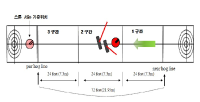
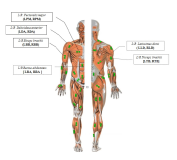
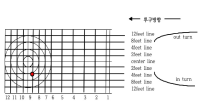
Purpose This is to provide essential data for training necessary for sweeping through the analysis of muscle activity generated at this time and how much sweeping and what trajectory moves the stone when the movement of the stone is controlled through sweeping. Methods To check and record the distance between the stones by checking the stop position of the stone made by sweeping each section, the length (progress distance) and width (progress direction) were recorded using a reference table and a record preparation table. With the EMG attached, a total of 60 sweeps were made 20 times each from the beginning of the section to the end of the section. Sweeping subjects were asked to sweep as much as possible under the same conditions in all three sections. Results As a result of the study, the muscle mobilization patterns of the 1st and 2nd sections of the stone with the faster speed and the 3rd section with the stone's slower speed appeared differently. It was confirmed that the sweeping motion of curling is a motion that is used evenly among the muscles of the upper extremity, and it can be verified that it is a suitable item for the development of upper body muscles. Also, the right deltoid's muscle activity rate during push and the right triceps brachii during pull was high. Conclusion Each section of the stone's sweeping effect is an exercise that has many variables, such as changes in atmospheric temperature and humidity, changes in ice temperature, temperature-size-number of pebbles, and the edge state-resilience of stones, etc. It is judged that experience can cope with these variables and requires training.
Purpose Based on the match data of major judo world competitions in the last five years, this study identifies differences in general characteristics and environmental factors according to scoring technique and scoring times. And by exploring the factors associated with scoring technique, I would like to present a practical strategy that can be used to establish guided tactics. Methods 50,828 points were used for analysis of the entire men and women who competed from 2016 to 2020. Differences in the characteristics of the world's leading athletes according to their types of technique were used in conjunction with the chi-square test and the one-way ANOVA with Sceffe test to produce results. Results The results of this study showed that the type of skill by foot technique was the most common, and the ratio of hand skill to female player to push and foot skill was relatively high. The higher the weight class, the lower the ratio of hand technique, the higher the press rate, and the frequency of skill types also increased. At the Olympic Games, the ratio of hardening technique was higher than that of other competitions, and as the year progressed, the ratio of hand and waist technique increased, and the number of mat-hold decreased. The ratio of hardening technology was relatively high, and the ratio of hand-to-foot technology was relatively high as the semi-final and final rounds were higher. As for technical time, the male athlete's skill time appeared to be about 12 seconds longer on average, with the lowest in the heavyweight class and the longest in the lightweight class. Athletes from the Asian continent appeared to have the longest technical time, which is believed to have resulted from the characteristics of excellent physical strength, good endurance, and strong hardening technique. The skill time leading to the score by pressing and hand skill was the longest, and the waist skill and grip skill time were relatively short. Half of them appeared about 5 seconds shorter on average compared to the first round, and the more important the game (the 4th round, semi-final, and final) the longer the skill time. Conclusion In conclusion, through this study, the characteristics of the world judo players' skill types and time were confirmed, and based on this, it is necessary to analyze and systematize the technical types of the world's best athletes, including Korean athletes, in order to improve their judo performance.
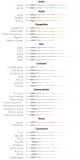
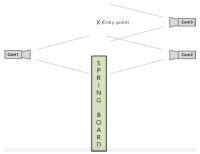
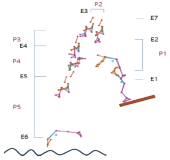
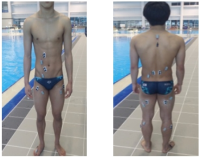
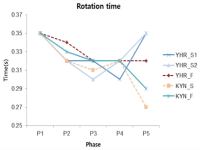
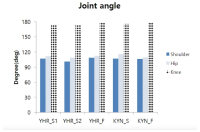
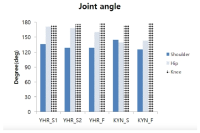
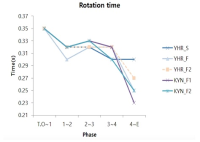
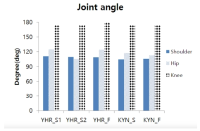
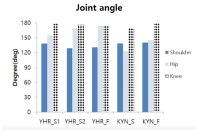
Purpose The purpose of this study is to overcome the shortcomings of 109C(Forward 4 ½ somersault) skill(Level 3.7) for two members of the men’s national diving team(YHR, KYN). Methods For qualitative analysis of the performed skill, three high-speed cameras and water-attached EMGs consisting of a total of ten placements were used. We instructed the two players to perform single-leg jump and double-leg jumps a total of three times each. Results The results of this study indicate that YHR and KYN appeared to increase their time or maintain the same time compared to the previous phase and displacement appeared higher when skill success occurred after the double-leg jump. The Shoulder & hip joints of YHR, KYN appeared larger in E2 and the hip joint of KYN appeared to increase in E1. Single-leg jump appeared similar or decreased the performed time of the previous phase in the last P5. YHR appeared larger only at a hip joint angle and KYN appeared smaller at the hip joint. The muscle activity(iEMG) of the two players appeared greater during skill failure than most of the muscles. Conclusions When perfectly performing 109C skills, the acquisition of medals in international competitions is possible. Therefore, in the future, it is necessary to study all of the variables that pertain to 109C.


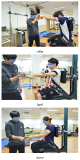
The purpose of this study was to explore and confirm Kumi-kata related factors of muscle strength by performance level in Korea elite female judoists. In order to achieve this purpose, 14 elite female judoists participated to this study. The subjects were divided to two groups (World Class Group and Non-World Class Group) according to their world ranking level(by ranked 30th). The analysis factors were repeated grip strength, Kumi-kata specific pulling strength and isokinetic strength of trunk joint. The results were as follows: Firstly, World Class Group had significantly higher repeated grip strength as compared to non-world class group (p<.001). Secondly, World Class Group had significantly higher specific Kumi-kata pulling strength as compare to non-world class group (p<.05). Finally, The differences between the two groups for isokinetic strength of trunk joint were non-significant. The results of this study indicates that a strong relationship exist between Kumi-kata related specific muscle strength and performance level in korea elite female judoists.
PURPOSE This study aimed to identify ACTN3 gene polymorphisms amongprofessional ssireum players by weight class and between elite and non-elite players,and to select genotype that matches the characteristics of the sport. METHODS The subjects of this study were 148 male athletes currently working as professionalssireum players. Chi-square test cross-tabulation analysis was conducted to examinethe differences in ACTN3 genotypes between weight classes and between elite andnon-elite players. RESULTS There were no significant differences in allele or genotypebetween ssireum players, but there were significant differences in R-allele and XXgenotype. CONCLUSIONS Players with the R-allele type of the ACTN3 gene weremore often classified as elite. Using this marker as a basis for organizing a playerselection and training programs would be more effective in training those that matchthe characteristics of elite players of the game.
PURPOSE The purpose of this study was to identify the scoring patterns of male and female Korean judo athletes by weight class, based on major international competitions from 2016 to 2021. METHODS We analyzed 1,508 scoring techniques, consisting of penalty, Waza-ari, and Ippon connected techniques, from male and female Korean athletes who participated in the Grand Prix, Grand Slam, Masters, World Championships, and Olympics. Chi-squared tests were conducted to examine differences in rounds, time, results, techniques, and continent by weight class. RESULTS In terms of differences in rounds, statistically significant differences were found in the men's lightweight and women's heavyweight categories. Statistically significant differences were found in the following: regarding differences in match time, in the men's heavyweight category; regarding match results, in the men's heavyweight category; and regarding differences in technique type, in the men's middleweight and heavyweight categories and in the women's lightweight and heavyweight categories. Finally, in terms of opponent continents, significant differences were found in both men's and women's lightweight categories. CONCLUSIONS In conclusion, this study confirmed the differences in wins and losses of male and female Korean athletes according to their weight classes. Based on this, it is necessary to analyze and systematize the technology types of the world's top athletes, including Korean athletes, to improve their judo performance.
