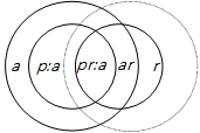
Purpose The purpose of this study was (1) to analyze judges’ evaluation on rhythmic gymnastics performance by applying generalizability theory and (2) to suggest recommendations to improve judges' rating. Methods Data were 34 players’ scores from Senior Part at 29th KGA President’s Cup National Rhythmic Gymnastics Championship in Korea. Difficulty and execution scores in ball, clubs, hoop and ribbon event were analyzed. Analysis models containing components of area and reputation rank were designed and multivariate generalizability theory were used for analysis. Results The G-study results showed (1) that the error source about players has more significant impact to evaluation than other error sources in analysis model containing components of only player and judge, (2) that the error source about players has more significant impact to evaluation than other error sources in analysis model adding components of area, but the error source about area has more significant impact to evaluation of clubs event than other error sources, (3) that the error source about players has more significant impact to evaluation than other error sources in analysis model adding components of reputation rank, but the error source about reputation rank has more significant impact to evaluation of hoop event than other error sources in analysis model adding components of area. The D-study results showed generalizability coefficient was stable in analysis model without components of area and reputation rank, but generalizability coefficient in analysis model containing components of area and reputation rank not stable in some event. Conclusion Recommendations for improving judging were discussed.


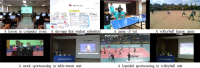
Purpose The purpose of this study was (1) to develop and to apply flipped learning strategies in Physical Education(PE) classes based on Sportscasting Model and (2) to examine the responses of students after PE lesson. Methods Participants were 10th high school students(N=216, male=115, female=101) in high school. Instruction strategies of flipped learning was developed after theoretical investigation, and the unit plans for curling and instructional materials were developed and applied. Open-ended questionnaires and in-depth interviews were used to collect the data. Qualitative content analysis combined with of structures in lesson was used to analyze the data. Results Results showed that (1) 11 instruction strategies of flipped learning were developed, (2) and the unit plan combining out-of class activities and in-class activities organically based on Sportscasting Model and instructional materials for unit of curling were developed and applied. In step of sportscasting, forcing relationship method-sportscasting based on the survey of students was developed and applied. (3) And 31 factors of Sportscasting Model and 15 factors of flipped learning were drawn from the analysis of questionnaires and interviews. Conclusion And to conclude, this research has a value of early study to develop and apply instruction strategies of flipped learning, the unit plan and instructional materials for combining Sportscasting Model with flipped learning organically. Discussions were provided in terms of the development of flipped learning applied in PE classes and responses of students.
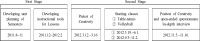
Purpose The purpose of this study was (1) to develop and to apply the PE classes based on Sportscasting Model on Creativity and Character and (2) to analyze the effects of PE classes on Creativity and Character. Methods Participants were 10th high school students(N=172) who had not experienced PE classes on Sportsasting Model. Data were collected using An Integrated Creativity Test(Lee & Lew, 2012), open-ended questionnaires and in-depth interviews with students. The data were analyzed through paired samples t-test and qualitative content analysis. Results Results showed that (1) Table-tennis and volleyball lessons on Sportscasting Model were developed and applied, and (2) significant differences were observed in creative thinking and creative personality of students’ creativity scores after lessons. And 14 creativity factors and 10 character factors were drawn from the analysis of questionnaires and interviews. Conclusion And to conclude, Sportcasting Model is efficient in developing creativity and character. Discussions were provided in terms of the development and application of PE classes based on Sportsasting Model and the effectiveness of Sportscasting Model.