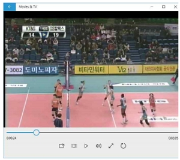
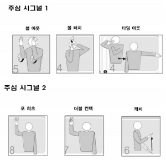
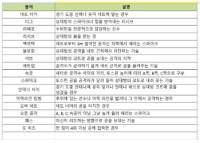
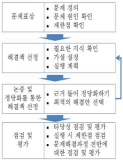
Sportscasting in Physical Education (Lee, 2011) is a class activity that students simulate sports broadcasting (e.g., students report, analyze, and comment on game play). It encourages problem solving (PS) learning for students. Scaffolding is the support with the intention of helping the student achieves his/her learning goals and contributes to problem solving. However, limited studies have examined if sportscasting with scaffolding is effective instructional strategies for PS. The purpose of this study was to examine effects of sportscasting with scaffolding on PS abilities, and on academic achievement. Participants were 46 college students. The static-group comparison design was used: an experiment group (N=26) with supportive scaffoldings (e.g., conceptual explanation, terminology dictionary, visual materials) and a control group (N=20) with reflective scaffoldings (e.g., organizing the environment, using appropriate cues to guide behaviors, and modeling). The results revealed that students in reflective scaffoldings had higher PS abilities than students in supportive scaffoldings. However, two groups were not statistically different in academic achievement. Sportscasting with instructional scaffolding promote a deeper level of cognitive skills and male students performed better than female students. The effective scaffolding types (Lewis, 2010) for sportscasting were discussed to help students to foster PS skills.
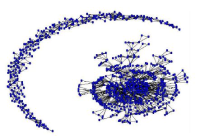
The purpose of this study was to identify the structure of knowledge in Sport Pedagogy field. Using bibliometric and social network analysis this study analyzed the keywords and citations appeared in Korean Journal of Sport Pedagogy and Korean Journal of Sport Science during 2006-2015 period. Total of 341 research papers which include 1301 keywords and 14826 citation were analyzed utilizing social network analysis as well as keywords frequency analysis, keyword co-occurrence, citation and co-ictation analysis. Results of this study showed that teaching, curriculum, and teacher education were three central theme in Sport pedagogy field. Key words such as physical activity, PE teacher, action research, and after school sport club activity were prominent research interests for scholard in the field. Quadradic Assignment Procedure analysis showed major research interests has not been changed between two periods of 2006-2010 and 2011-2015. Choi(2010)'s and You(2007)' books were most cited individual work and have influenced sport pedagogy researchers over the five years.