
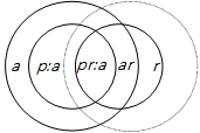
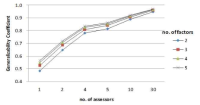
Purpose The purpose of this study was (1) to analyze judges’ evaluation on rhythmic gymnastics performance by applying generalizability theory and (2) to suggest recommendations to improve judges' rating. Methods Data were 34 players’ scores from Senior Part at 29th KGA President’s Cup National Rhythmic Gymnastics Championship in Korea. Difficulty and execution scores in ball, clubs, hoop and ribbon event were analyzed. Analysis models containing components of area and reputation rank were designed and multivariate generalizability theory were used for analysis. Results The G-study results showed (1) that the error source about players has more significant impact to evaluation than other error sources in analysis model containing components of only player and judge, (2) that the error source about players has more significant impact to evaluation than other error sources in analysis model adding components of area, but the error source about area has more significant impact to evaluation of clubs event than other error sources, (3) that the error source about players has more significant impact to evaluation than other error sources in analysis model adding components of reputation rank, but the error source about reputation rank has more significant impact to evaluation of hoop event than other error sources in analysis model adding components of area. The D-study results showed generalizability coefficient was stable in analysis model without components of area and reputation rank, but generalizability coefficient in analysis model containing components of area and reputation rank not stable in some event. Conclusion Recommendations for improving judging were discussed.


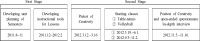
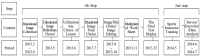
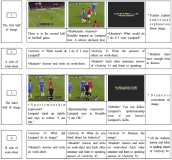
Purpose The purpose of this study was (1) to develop and to apply flipped learning strategies in Physical Education(PE) classes based on Sportscasting Model and (2) to examine the responses of students after PE lesson. Methods Participants were 10th high school students(N=216, male=115, female=101) in high school. Instruction strategies of flipped learning was developed after theoretical investigation, and the unit plans for curling and instructional materials were developed and applied. Open-ended questionnaires and in-depth interviews were used to collect the data. Qualitative content analysis combined with of structures in lesson was used to analyze the data. Results Results showed that (1) 11 instruction strategies of flipped learning were developed, (2) and the unit plan combining out-of class activities and in-class activities organically based on Sportscasting Model and instructional materials for unit of curling were developed and applied. In step of sportscasting, forcing relationship method-sportscasting based on the survey of students was developed and applied. (3) And 31 factors of Sportscasting Model and 15 factors of flipped learning were drawn from the analysis of questionnaires and interviews. Conclusion And to conclude, this research has a value of early study to develop and apply instruction strategies of flipped learning, the unit plan and instructional materials for combining Sportscasting Model with flipped learning organically. Discussions were provided in terms of the development of flipped learning applied in PE classes and responses of students.
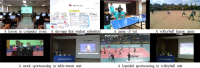
Purpose The purpose of this study was (1) to develop and to apply the PE classes based on Sportscasting Model on Creativity and Character and (2) to analyze the effects of PE classes on Creativity and Character. Methods Participants were 10th high school students(N=172) who had not experienced PE classes on Sportsasting Model. Data were collected using An Integrated Creativity Test(Lee & Lew, 2012), open-ended questionnaires and in-depth interviews with students. The data were analyzed through paired samples t-test and qualitative content analysis. Results Results showed that (1) Table-tennis and volleyball lessons on Sportscasting Model were developed and applied, and (2) significant differences were observed in creative thinking and creative personality of students’ creativity scores after lessons. And 14 creativity factors and 10 character factors were drawn from the analysis of questionnaires and interviews. Conclusion And to conclude, Sportcasting Model is efficient in developing creativity and character. Discussions were provided in terms of the development and application of PE classes based on Sportsasting Model and the effectiveness of Sportscasting Model.

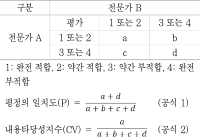
Purpose Common content knowledge(CCK) is composed of rules, techniques, and tactics. Such knowledge is a requirement for effective teaching of physical education (PE). There are, however, few validated tests of CCK. Thus, the purpose of this study was to develop a CCK test of soccer and evaluate the validity and reliability of the test using Rasch modeling (Rasch, 1980). Methods We developed thirty item common content knowledge test for soccer. Then, we used Rasch modeling to evaluate the validity and reliability of a test of soccer. Pre-service teachers (N=92) majoring in physical education and non-PE major (N=111) participated in this study. Results Thirty questions demonstrated good item-model fit. Moderately high internal consistency for person-ability and high internal consistency for item-difficulty are reported. Both Infit and Outfit statistics showed a good fit between the data and the Rasch model. Conclusions The analysis provides evidence to support the validity and reliability of this instrument as a CCK test of soccer. Limitations of the study were discussed and suggestions were provided to improve the test.
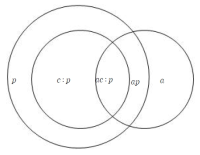
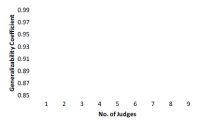
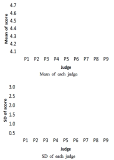
The purpose of this study was (1) to analyze judges’ evaluation on figure skating performance and statistical analysis and (2) to make recommendation to improve judges' performance. Data were 62 figure skaters’ scores from Senior Woman 1 Group Part at 2015 The National Figure Skating Championship in Korea. Data of presentation part in Short Program were analyzed. Presentation part consists of skating skills, transitions/linking footwork/movement, performance/execution, choreography/composition and interpretation. Nine judges evaluate skater's presentation with the score 10.0 for each factor. Generalizability theory, descriptive statistics and ANOVA were utilized. Results showed that generalizability coefficient of presentation part was over 0.9, therefore stable reliability was secured. The error source about players has more significant impact to evaluation than other error sources. Generalizability coefficient was stable when reducing the number of judges up to 2. Also, judges generally represented aspects of similar evaluation, but different aspects appeared on a few judges’ assessment in the components of presentation. Discussions were provided in terms of the reliability of the judging method for the presentation part of figure skating and the effective measurement condition.
The purpose of this study was (1) to develop instructional contents for teaching and learning sportsmanship and (2) to examine the perceptions of sports instructors on that contents. Instructional contents based on sympathy was constructed from Youtube clips. Final version was developed to apply situated learning in class and was comprised of twenty-sportsmanship video clips and worksheets. Participants were sports instructors (N=208) in elementary and middle schools. Open-ended question and interview on call were used to collect the data. Qualitative content analysis was used to analyze the instructors’ perception regarding instructional contents. Results of this study showed that sports instructors responded to the contents as thoughtful experience (1) making myself realize the value of opponent, (2) making myself realize the value of sports, (3) making myself realize the value of judge, (4) making myself realize the value of coach/athlete. This study concluded that instructional contents was touching and emotional. Implication of instructional contents for teaching and learning sportsmanship, pros and cons of the contents and teaching tips were discussed.


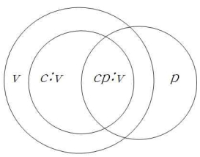
The purpose of this study which is follow up study of Lee and Kim(2015b)'s was to analyse error sources and estimation of reliability in peer review of forced connection method-sportscasting by applying generalizability theory. Generalizability theory quantify error sources of the data measured under certain specific situation set by the researchers. It is an analysis method that the relative influences of each error sources taking from score is determined(G-study), and the effective measurement condition future applicable is provided(D-study). Participants were 10th high school students(N=216). Data were collected from student's peer review results and analyzed using univariate and multivariate generalizability theory. Results showed that error source for video have a more significant impact than other error sources. But the result by analyzing the gender difference was that error source for the interaction of video and participants have a more significant impact than other error source in the case of girls. Peer review used in this study showed high generalizability coefficient and even when reducing the number of video or participants it can maintain the adequate reliability. But generalizability coefficient of boys was higher than girls and specific measurement conditions leading to enhanced reliability were different when analyzing by gender difference. Also, method of analysis which cannot reflect measurement conditions properly estimates the reliability excessive. Discussions were provided in term of the relative influences of each error sources, the effective measurement condition maintaining the Generalizability coefficient of a certain level, and the comparison the Generalizability coefficient with the way of estimation traditional reliability applying univariate and multivariate Generalizability theory taking from score in peer review of forced connection method-sportscasting.


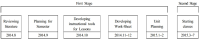
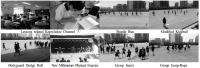
Researchers and teachers in physical education have emphasized sportsmenship in sport education setting. However, how to teach sportsmenship in physical education is not proposed yet. The purpose of this study was (1) to develop an instructional program for teaching and learning sportsmanship and (2) to examine its effects on sportsmenship. Participants were 7th middle school students(N=95). Data were collected using Sportsmanship Test(Park, 2014), open-ended questionnaire and in-depth interviews with students. The data were analyzed through paired samples t-test and qualitative content analysis. Results showed that significant difference was observed in students' sportsmanship test scores after instruction. Analysis of interview data showed that students experience the value of utmost effort, respect for opponents, respect for teammates, acknowledging results, respect for judgment, and valuable lessons related to character education. Implications for sportsmanship education using instructional program were discussed.

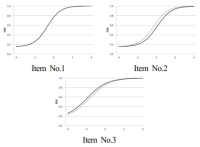
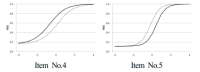
The purpose of this study was to analyze and confirm whether the items used in final paper and pencil test was determined to DIF when school sports clubs in each school operated by discriminatory curriculum in accordance with gender. Participants were 8th middle school students(male=135, female=141). They joined in school sports club every week from freshman to sophomore 1st semester. At that time, boys of them participated in soccer and basketball, and girls played dodge ball. They studied soccer unit at sophomore 1st semester, and had a final examination consisting of 5 soccer items. Using the data, differentially functioning item by the population difference between male and female were analysed quantitatively and qualitatively. The results showed that Mantel-Haenszel method(using classical test theory), comparison of item characteristic curve and likelihood ratio test(using IRT) determined item number 4 and 5 to differentially functioning item. Finally, item number 4 were identified differentially functioning item in favor of male students in intensive qualitative analyses. That item have low content validity and application-level of cognitive behavior classification. The result provides that application-level item can be functioning differentially to female students with little sports experience than male students in paper and pencil test of PE.
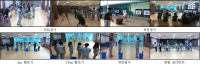
The purpose of this study was (1) to develop a archery lesson using forced connection method-sportcasting for cultivating collaborative problem-solving competencies, and (2) to apply and to examine the responses of students after physical education(PE) lesson. A archery lesson of Understanding-Performance-Appreciation step was developed according to LfPE(Lee, 2014) using backward curriculum design. Participants were tenth grade students (N=148) in a high school. Open-ended question used to collect the data. The analysis of data indicates that students expressed features in lessons. Six features are (a) 朋友信之, (b) 君子不器, (c) 能竭其力, (d) 觀其所由, (e) 溫故知新, (f) 思而不學. In-depth interviewers were carried out for further analysis of the answers to the questionnaires. The results are as follows. First, 朋友信之 means lesson cultivating collaborative problem solving competencies. Second, 君子不器 means pleasant and funny lesson. Third, 能竭其力 means lesson cultivating self management ability. Fourth, 觀其所由 means lesson cultivating appreciativeness for archery. Fifth, 溫故知新 means lesson improving the status of PE teacher and school. This study concluded that a archery lesson generated fun and interest for students. Implication for developing lesson using LfPE, utilize and transform forced connection method-sportcasting in PE were discussed.

