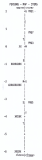
The primary purpose of the study was to identify the characteristics of Korean national youth soccer players’ functional movements. The secondary purpose was to examine whether certain tests of Functional Movement Screen (FMS) meaningfully achieve goodness-of-fit for the soccer-specific movements. Korean national youth soccer players (30 male players, 18.37 ± 0.67 yrs, 178.7±7.09 cm, 70.2±6.46 kg), performed FMS tests [deep squat (DS), hurdle step (HS), in-line lunge (IL), shoulder mobility (SM), active straight leg raise (ASLR), trunk stability push-up (TSP), and rotary stability (RS)]. The mean (±SD) FMS composite score and each test score were calculated. Rasch analysis, which was used to determine the goodness-of-fit for the tests, was applied to examine the item difficulty of the FMS tests. The mean FMS composite score was 10.2± 1.79; the mean DS, HS, IL, SM, ASLR, TSP, and RS score were 1.13±0.35, 1.27±0.45, 1.4±0.56, 1.6±0.77, 2.07±0.69, 1.43±0.82, and 1.3±0.47 respectively. According to the results of Rasch analysis, 4 tests (DS, IL, ASLR, and RS) were shown to be within the acceptable range (infit & outfit > 0.5 ~ < 1.5). The other 3 tests (HS, SM, and TSP) were shown to be out of acceptable range. The additional analysis revealed the DS (logit = 2.08) as the most difficult test and ASLR (logit = -3.16) the least. The results of the study showed that the players’ FMS composite score was lower (< 14) than the cut-off points used by previous studies for different athletes. The further study is warranted to examine the relationships between the scores of the tests appeared to be soccer-specific in the present study and the level of performance variables.
