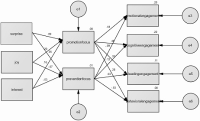
Purpose The purpose of this study was to find out the relationship between emotion and control focus and training involvement in games where elite shooters are late. Methods Thus, 228 elite shooters were selected and the research results were derived based on data analysis using discriminatory emotions, control focus, and training attendance scales. Results According to the analysis of the correlation between emotion, control focus, and training involvement, positive emotions of surprise, enjoyment, and interest showed a static relationship with improvement focus and training involvement, while negative emotions such as anger and guilt had a static relationship with prevention focus, but showed an inadequate relationship with training involvement. The multiple regression analysis between emotion and control focus showed that the improvement focus showed the most significant effect of enjoyment emotion, while the prevention focus showed that instability had the most effect on the prevention focus. Overall, the focus of improvement has been shown to be affected by training. Finally, it was found that positive sentiment had a positive effect on improvement focus and training involvement, while negative sentiment affected prevention focus and reduced cognitive involvement. Conclusions Positive sentiment toward the competition has been confirmed to enhance training participation by strengthening the focus of improvement, but negative sentiment has been shown to enhance the focus of prevention, reducing cognitive involvement.
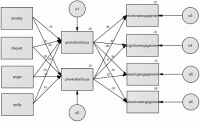
This study was to identify the structure of anger behavior that athletes illustrated in competitions. In order to achieve research purpose, 167 high school, college, and professional athletes responded to open questionnaires. Targeting 541 players, the structural validity of psychological measurement was verified. As a result of analyzing the sources of anger behaviors during matches, four factors of anger-out, anger-in, anger control, and anger-helplessness were deduced. Afterwards, the validity of 4 factor-model was verified through correlation analysis with trait anger and verification of group differences. That is, the level of trait anger had a positive relationship with expression of anger-out and anger-helplessness while it had a negative relationship with anger-in and anger-control. Especially, the behavioral aspect such as anger-helplessness is a structure that has not been found in other criteria of anger behavior and it reflects the uniqueness of sports situation. Based on such results, the significance of sport anger behavior and implications were discussed.
