PURPOSE Neuromarketing measures and analyzes the unconscious response of consumer brain waves to marketing stimuli in real time. This study examined how a sensational scene (accident) in a sport game influences the sponsorship effects through electroencephalography (EEG) analysis. METHODS The current study uses an experimental method. First, as an experimental stimulus, a video of F1 racing edited in a total of 9 min and 39 s was used, and an accident scene was inserted in the middle of the video. A total of 46 people participated in the experiment, and all participants watched the F1 video, including the accident scene. Participants' brain waves were observed in two prefrontal and two occipital lobes. The relationship between scene sensation and sponsorship effect was analyzed based on alpha waves and the sponsor brand recall measured by questionnaires. RESULTS First, the accident scene of the race caused the power of alpha wave to be abruptly reduced (i.e., alpha blocking). Second, the difference between the alpha power level of the group that recalled the sponsor brand and that of the group that did not recall was statistically insignificant; hence, the hypothesis was rejected. Third, the right-brain dominance (negative emotion) in the accident scene of the race was statistically insignificant; therefore, the hypothesis was rejected. Finally, the group that recalled the sponsor brand showed a left-brain dominance (positive emotion), which was statistically significant. CONCLUSIONS This study confirmed the marketing communication and neuromarketing theories on the sponsorship effects created by stimulation, attention, and memory in a sport sponsorship setting, observing alpha blocking phenomena in a sensational scene (accidents). In addition, it was revealed that the group that watched the same accident scene relatively positively and exited remembered the sponsor brand better than the group that did not watch it. The result implied that sport fan’s personal trait (e.g., sensation seeking) to sensation in sponsorship activities affects the sponsorship effect. The results also emphasized the importance of selecting target customers of sports fans in sponsorship to maximize sponsorship effects.
Purpose The purpose of the study was to determine difference of body composition, bone mineral density and health-related fitness by physical activity level in young women. Methods A total of 90 women aged 19-29 years participated in this study. The subjects were divided into three groups (low, middle, and high level) according to the physical activity level estimated by bone-specific physical activity questionnaire(BPAQ). Body height and weight were measured. Body composition parameters including four sites of bone mineral density(BMD) were estimated by DXA (Hologic, QDR-4500, USA). Health-related fitness tests was assessed using sit & reach, grip strength, sit-ups, and VO2max. Statistical analysis was performed using SAS version 9.4. All data were presented in terms of means and standard deviations. One-way ANOVA was applied to determine difference of dependent variables by physical activity level. Duncan's multiple range test was used as a post-hoc test. The statistical significance level was set at p < .05. Results There were significant differences on body weight(F = 4.867, p = .01), body mass index(F = 5.053, p = .008) and fat-free mass(F = 8.364, p = .0001) among the three groups. Significant differences were found on whole body BMD(F = 16.730, p = .0001), lumbar BMD(F = 11.480, p = .0001), femur BMD(F = 42.182, p = .0001) and forearm BMD(F = 5.560, p = .005) among the three groups. There were also significant differences on sit and reach(F = 11.433, p = .0001), sit-ups(F = 17.972, p = .0001), VO2max(F = 3.106, p = .05) and duration of GXT(F = 7.479, p = .001). Conclusions There were differences on body composition, bone mineral density and health-related physical fitness by physical activity levels. Nevertheless, the questionnaire used in this study was not able to judge participation in various exercise types including aerobic exercise or resistance exercise. Therefore, in the future study, longitudinal study considering various types of physical activity and dietary intake will be needed.
Purpose The purpose of this study was to investigate the effect of a 10-week aerobic exercise training on cardiovascular function, atherosclerosis, and vascular endothelial function in elderly women. Methods Twenty impaired fasting glucose (IFG) and normoglycemic elderly women volunteered to participate in the study. The participants in aerobic exercise training group (TR: n=9) completed 20-40 minutes of aerobic exercise program at 30-50% HRR for 3 times per week during 10 weeks. The participants in control group (CON: n=11) were asked to maintain their normal life pattern during the same intervention period. Results Main results of the study were as follows: 1) There were no significant main effect or interaction in body weight, fat-free mass, fat mass, percent body fat, and body mass index. 2) There were no significant main effect or interaction in heart rate, stroke volume, cardiac output, total peripheral resistance (TPR), systolic blood pressure, diastolic blood pressure, mean arterial blood pressure, pulse pressure, and rate pressure product. However, interaction between group and test in TPR was close to statistically significant level (P =.054), and it tended to be decreased in TR group. 3) There was a significant main effect of test in high sensitivity C-reactive protein(hs-CRP), it tended to be decreased in TR group. There were no significant changes in total cholesterol(TC)/high density lipoprotein-cholesterol (HDL-C) ratio, triglyceride/HDL-C ratio, and low density lipoprotein-cholesterol/HDL-C ratio. 4) There were significant main effect of group, main effect of test, as well as interaction between group and test in % flow mediated dilation(FMD), and it increased significantly (P<.01) in TR group. Nitric oxide tended to be increased in TR group, even though it did not change significantly in both groups. Conclusions It was concluded that the 10-week aerobic exercise training would be beneficial for improvement of vascular endothelial function, resulting from the decrement of total peripheral resistance.

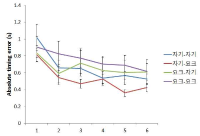
Purpose The present study was set up to investigate the effect of self-regulated learning and selection of feedback on learning of the relative and absolute timing. Methods 48 university student volunteers participated in the experiment and were randomly assigned four groups (n=12 for each) depending on practice task and feedback, namely: 1) self-regulated practice task - self-controlled feedback (self-self), 2) self-regulated practice task - york-controlled feedback (self-york), 3) york-regulated practice task - self-controlled feedback (york-self), and 4) york-regulated practice task - york-controlled feedback (york-york). The task was to examine the temporal timing error and the task goal was to press a computer keyboard 'J' and 'K' alternatively corresponding to time set. Prior to the experiment, the participants had a pre-practice session and then practiced one of three timing tasks provided by an experimenter in the acquisition phase. There were two transfer test to assess adaptability aspects of performing changes related to learning after 24 hours of the acquisition phase. Serial practice was applied in the transfer 1 and an effector transfer was examined in the transfer 2. The dependent variables were a relative timing error that is susceptible to discrepancy between the participant’s key press and the goal patterns and an absolute timing error that is susceptible to discrepancy in the time required to perform the sequence compared to the goal absolute time. Results The results showed that in the pre-test there was no significant difference in both the relative and absolute timing error across four groups. However, in acquisition phase there was a significant difference in both the relative and absolute timing error across block. The relative timing error was different across the group in the transfer test 1, however it was different only between the self-self and york-york group. Lastly, the absolute timing error was not different across the groups in the transfer test 2. Conclusion The findings revealed that the self-regulated strategy is effective to learn the relative timing in the effector transfer.





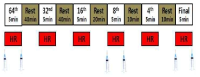
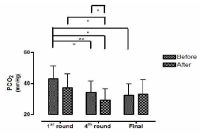
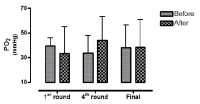
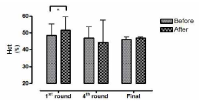
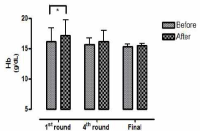
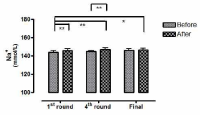
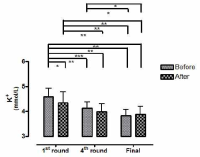
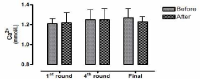
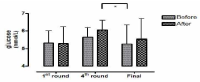
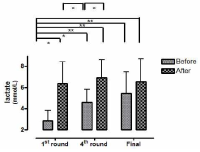
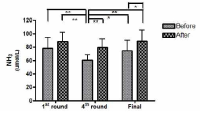
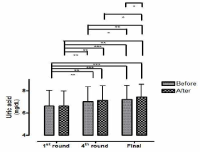
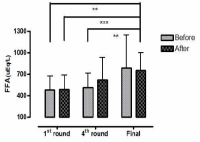
This study aimed to examine the change of the indices in blood gas, ions, and by-products of fatigue substances and components in collegiate elite Kumdo competitors, who carry out a number of competitive games during one day tournament event. Subjects were carried out total 6 simulated, but followed same conditions and rules of actual competition, with providing similar inter-game break time. Eight well trained male competitors, who had awarded from national wide competitions, voluntarily participated in this study and revealed 51.5(±8.8) mL·kg-1min-1 of maximal oxygen consumption and 12.4(±5.1) % body fat. TWOWAY ANOVA (tournament round vs. pre & post each game) was adopted to test whether the mean differences were existed, and the interaction between individual factors and main effect within each factors were analyzed. Statistical significance was set at Alpha (α) = .05. While there were no significant changes in blood hydrogen ion concentration (i.e., pH) and partial pressure of oxygen (PO2), partial pressure of carbon dioxide (PCO2) significantly decreased as the tournament games were repeated. The level of hemoglobin and hematocrit were significantly elevated only during the 1st round of tournament. Na+ was significantly increased but K+ was decreased. Ca2+ concentration however, was not significantly altered. Although the changes of blood glucose level did not show any consistent patterns, free fatty acid (FFA) concentration was increased after completed each game compared to prior to initiate the each game. Blood NH3, lactic acid, and uric acid concentration increased at immediately after each game, and the pattern was maintained throughout the tournament round continued. These results reflected that the repeated participation of the tournament may cause the accumulation of the by-products of fatigue substances in blood and alteration of various ion components and energy substrates. Accordingly, the ways of reducing the physical fatigue and providing adequate energy source inter-tournament games needs to be necessarily considered for successful Kumdo competition. Data obtained from this study could valuable for searching the effective training and management methods to improve the performance and reduce the fatigue of the professional elite Kumdo competitors.
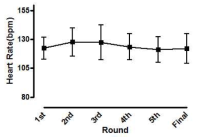
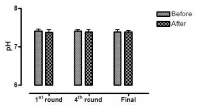
PURPOSE In university, student-athletes are expected not only to enhance their athletic performance but also to engage in academic pursuits that prepare them for future careers. This study aimed to classify the perceived academic performance constraints of collegiate student-athletes and to identify the characteristics and implications of each type. METHODS Drawing from prior studies on academic performance constraints and responses to open-ended questions from 40 studentathletes, 50 initial Q-sample statements were extracted. Following content validation, a final set of 25 Q-sample statements was selected. The P-sample consisted of 30 third-year student-athletes enrolled in the athletic department of A University in Seoul. Q-sorting was conducted, and data were analyzed using the QUANL program. Principal component analysis with Varimax rotation was applied for Q-factor analysis. RESULTS Three distinct types and one overarching common type of academic performance constraints were identified. Type 1 (n = 15): “Lack of Academic Competence,” characterized by poor study habits and insufficient foundational knowledge. Type 2 (n = 10): “Lack of Time for Academics,” highlighting limited academic engagement due to intensive training and competition schedules. Type 3 (n = 5): “Lack of Academic Motivation,” reflecting weak academic drive and the absence of clear educational goals. Common type: “Lack of Academic Interest,” indicating that across all types, student-athletes commonly experience low intrinsic motivation toward academic pursuits. CONCLUSIONS The academic success of student-athletes depends not only on individual effort but also on an integrated support system that addresses institutional, environmental, and socio-cultural factors. To foster meaningful academic engagement, universities and governments should establish tailored policies, including early-stage academic support, flexible course scheduling, and career planning aligned with the demands of athletic participation.
PURPOSE This study investigated the effects of 12 weeks of clubbell and stepbox training on physical fitness, badminton skills, and fatigue in male badminton, grade A (top grade) club members aged 20–30s, with over 5 years’ experience. METHODS Participants in a training group (TR: n=15) engaged in 12 weeks of clubbell and stepbox circuit training involving maximum 8–12 reps of clubbell exercises and stepbox exercises at over 77% of HRmax for 50–55 min/sessions three times a week. Participants in a control group (CON: n=15) maintained their normal lifestyle pattern during the same intervention period. Dependent variables were measured and compared using repeated measures two-way ANOVA. RESULTS The main results were as follows: 1) The groups showed no significant differences in body composition. 2) Regarding physical fitness, VO2max, relative peak power, relative average power, grip strength, push ups, repeated jump squats, SSPT (seated single-arm shot-put test), 10 m sprint, and hexagon agility increased significantly in the TR, while push ups decreased significantly in the CON. 3) As for badminton skills, forehand clear accuracy, badminton agility, badminton endurance, and smash speed increased significantly in the TR. Forehand clear accuracy decreased significantly in the CON, but badminton agility and smash speed increased significantly. 4) The groups showed no significant differences in fatigue. CONCLUSIONS In male badminton club members aged 20–30s, 12 weeks of clubbell and stepbox circuit training effectively improved physical fitness and badminton skills. However, lack of any improvement in body composition and fatigue warranted further research in these areas.
PURPOSE This systematic review and meta-analysis aimed to assess the effectiveness of exercise programs in improving physical fitness among middle-aged adults in Korea. METHODS A literature search was conducted using KCI-registered databases on DBpia, RISS, and KISS up to September 21, 2023. The review followed the PICOSD framework (population: middle-aged adults; intervention: exercise program; comparison: did not participate in exercise program; outcome: physical fitness; study design: randomized controlled trials). Two researchers independently evaluated bias using the Cochrane Risk of Bias tool for randomized trials (RoB 2). The data was synthesized using the CMA 3.0 program, applying a random effects model to estimate the overall effect size using Hedges’g. RESULTS Out of 914 screened documents, 15 studies were selected, comprising 405 participants. The overall effect size for improving physical fitness was significant (g=0.994, 95% CI: 0.712–1.276). Sub-analysis indicated significant improvements in various components, including muscle strength (g=1.295, 95% CI: 0.909-1.682), muscular endurance (g=0.972, 95% CI: 0.637-1.308), cardiorespiratory endurance (g=1.092, 95% CI: 0.453–1.731), flexibility (g=0.883, 95% CI: 0.555–1.210), muscle power (g=1.421, 95% CI: 0.656– 2.186), and agility (g=1.854, 95% CI: 0.347–3.361) compared to the control group. An additional analysis focusing solely on women revealed a slight increase in effect size, although the order of effect sizes remained consistent across fitness components. CONCLUSIONS This meta-analysis confirms the effectiveness of exercise programs in enhancing physical fitness in middle-aged adults. The systematic review also highlights key considerations for designing exercise programs for this demographic. Future studies should aim to minimize bias and enhance the quality of reporting to ensure more robust results.
PURPOSE This study aimed to investigate the effects of continuous exercise and the accumulation of short-duration exercise for 12 weeks on body composition, physical fitness, and lifestyle disease indices in overweight men in their 30s. METHODS Participants in the continuous exercise group (CE; n=13) performed a circuit exercise program of 30 min/session, 3 sessions/week for 12 weeks. Participants in the accumulation of short duration exercise group (ASE; n=12) performed the same exercise time of 30 min per day, divided into three sessions of 10 min. Body composition, physical fitness, and lifestyle disease indices were measured pre- and post-test and were compared by utilizing a repeated two-way ANOVA. RESULTS 1) Regarding body composition, body weight, body mass index, skeletal muscle mass, waist circumference, and fat mass decreased significantly, while hip circumference increased significantly in the CE group. Waist circumference and skeletal muscle mass decreased significantly, while hip circumference increased significantly in the ASE group. 2) Regarding physical fitness, right grip strength, sit and reach, sit up, and maximal oxygen uptake increased significantly in both groups. 3) Regarding hypertension indices, there were no significant differences in both groups, but they showed a tendency to improve. 4) Regarding hyperlipidemia indices, triglycerides (TG) decreased significantly in both groups, and total cholesterol (TC) decreased significantly in the CE group. 5) Regarding diabetes indices, there were no significant differences in both groups, but a tendency to improve was noticed. 6) Regarding arteriosclerosis indices: TG/high density lipoprotein-cholesterol ratio decreased significantly in both groups, and the TC/high density lipoprotein-cholesterol ratio decreased significantly in the CE group. CONCLUSIONS We concluded that both the accumulation of short duration exercise and continuous exercise can be effective in improving body composition, physical fitness, and lifestyle disease in overweight men.
PURPOSE This study aimed to investigate the effect of an ankle strap on kinetic variables of the lower limb during forward jump landing. METHODS Twelve healthy adult men (mean age, 23.58±2.22 years; mean height, 177.83±5.37 cm; mean weight, 75.00±7.72 kg) participated. The participants stood barefoot on both legs at a horizontal distance of 40% of their body height from the center of the force plate, then jumped forward and landed on the force plate with their dominant or non-dominant leg over a 30-cm hurdle while wearing or not wearing an ankle strap. Joint angle, peak vertical force, loading rate, and leg stiffness were calculated. Paired t-test and repeated-measures two-way analysis of variance with Bonferroni’s post hoc tests were used to compare the characteristics of both lower limbs and the effect of wearing an ankle strap. The significance level was α < .05 RESULTS Our results showed significant differences in kinematic variables between the dominant and non-dominant legs without the ankle strap. With the ankle strap, the inversion angles at the ankle joints of both lower extremities were significantly decreased, and an interaction effect between both legs and the ankle strap occurred in the internal rotation angle of the ankle joint. Kinetic variables did not differ significantly. CONCLUSIONS The ankle strap did not completely compensate for ankle instability in the non-dominant leg, but it significantly reduced the angle of internal rotation at the ankle joint. Thus, we recommend that correct wearing of the ankle strap in sports since it reduces the possibility of lateral ankle sprains to some extent.
