Purpose The purpose of this study was to develop a psychic energy management scale that construct a concept and based on extracted contents of structural validity and reliability of university athlete psychic energy management inventory. Methods To develop the scale, the researches were completed <research ⅰ; constructing sub-factors of Psychological Energy Management, ⅱ; developing scales of psychic energy management, ⅲ; verifying validity of psychic energy management>. The results shown are a follows. Results The psychic energy management inventory contents of the university athlete were categorized into five categories ; team energy, game energy, environment energy, leisure energy and body energy. Through statistical procedures and factor analysis, the psychic energy management inventory was developed with 4 factors 18 items (coach energy 4 question items, game/environment energy 6 question items, colleague energy 4 question items, body energy 4 question items). Conclusion Convergent validity and discriminant validity was demonstrated through the external validity, the multi-group analysis confirmed the structural equivalence of the scale between the school grades.
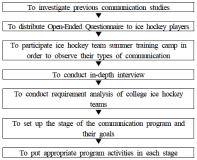
This study was designed to develop a communication training program for college ice hockey teams and examine the effects of this program. College ice hockey players and coaches participated in this study. The various types of data were collected and analyzed to assess the needs of the program and to develop the program with expert meetings. To analyze the effects of the developed program, questionnaires, experience reports, and in-depth interviews were conducted as measures. The results of this study are as follows. First, ice hockey team communication consisted of eight factors (i.e., sympathy, respect, trust, two-way verbal communication, firm expression of opinion, training program communication, developing rapport, and cohesion). Thus, the program developed based on eight factors and consisted of three stages of total 12 sessions which was 90 min to 100 min long. Second, this program increased communication satisfaction, coach-athlete interaction, group cohesion and exercise effectiveness, and these quantitative results were statistically significant. Moreover, qualitative analysis revealed that this program enhanced sympathy, social cohesion, and task cohesion among participants as well as positively changed their communication skills better than before. The communication training program which was developed through this study could provide basic information of a communication training program in the sports domain and positively influence overall sports team effectiveness and performance.
