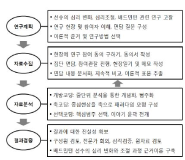
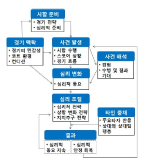
This study was purposed to explore psychological change and regulation process during badminton competition. The data were conducted using group interviews and participation observations who 18 K college badminton players. The data were analyzed using open, axial, and selective coding based on grounded theory method (Strauss & Corbin, 1998). The results were as follows: Open coding results, 89 concepts, 44 subcategories, and 18 categories emerged as psychological change and regulation process during badminton competitions. Axial coding results, the categories are showed structural relationships such as performance, score, psychological momentum, the importance of competition, court environment, physical condition, competition strategy, psychological preparation, past experience, outcome expectation, psychological disturbance, psychological skills, game situation-changing strategy, support-seeking strategy, significant others' behavior, the opponents' behavior, psychological resilience, and maintenance psychological disturbance. Selective coding results, core category of this study was revealed to maintain psychological homeostasis. Environmental context during badminton competitions causes specific situations and events that evoke psychological disturbance. In turn, a player seeks mental and behavioral strategies to maintain psychological homeostasis. There is psychological homeostasis mechanism during badminton competitions for peak performance. Development of proper interest for psychological homeostasis will be improved through this research approach in sport psychology.

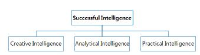
This study was to analyze the hierarchical importance of successful intelligence in Football coaches and players. In order to explore the hierarchical importance of successful intelligence 24 football coaches(under AFC A course) and 20 Korea Football Association U15 Players were responded to analytic hierarchy process questionnaires. In the Analytic Hierarchy Process, football coaches and players completed the AHP Questionnaire with creative intelligence, analytical intelligence and practical intelligence. The hierarchical importance order of successful intelligence for coach and player were analytical intelligence, practical intelligence, and creative intelligence respectively. Evaluation of hierarchical importance of successful intelligence for coach is analytical intelligence(.542), practical intelligence(.278), creative intelligence(.181) in order. Evaluation of hierarchical importance of successful intelligence for coach was analytical intelligence(.684), practical intelligence(.161), creative intelligence(.155) in order. The hierarchical importance of successful intelligence for coach and player were similar each other. Analytical intelligence, was evaluated most important factor for coach and player in successful intelligence. Successful intelligence is important issue for sport performance. More consider needs to Successful intelligence for sport psychology researchers.