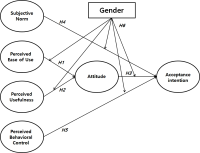
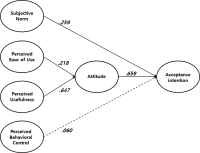
Purpose The current study was aimed to examine acceptance intention of sports wearable smart device using the Technology Acceptance Model and Theory of Planned Behavior. Methods Data were drawn from 357 consumers who had experience purchasing sports products. Data were analyzed through frequency analysis, reliability analysis, confirmatory factor analysis, correlation analysis, and structural equation modeling using SPSS 20.0 and AMOS 20.0 program. Results First, perceived ease of use had a positive effect on attitude. Second, perceived usefulness had a positive effect on attitude. Third, attitude had a positive effect on acceptance intention. Fourth, subjective norm had a positive effect on acceptance intention. Fifth, perceived behavioral control did not affect acceptance intention. Sixth, differences of path coefficients between attitude and acceptance intention, subjective norm and acceptance intention were significant according to gender. Conclusion The significance of this research is to provide the basis of positioning strategy for domestic companies of sports wearable smart device.
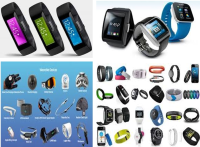

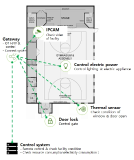
Purpose This study aims to suggest the application of IoT-based integrated management system to public sports facilities(PSF) in order to improve the utilization and management of PSF by analyzing the actual state of PSF empirically. Methods A survey was administered to managers(n=279) and users(n=500) of PSF in order to identify problems of current management and collect suggestions for improving the utilization and management of PSF. Previous research on establishing IoT-based system was also reviewed for considering the effectiveness of IoT technology. Results Generally, PSF are in low utilization and operate in a deficit. The deficit operation is caused by high labor costs and management expenses. The survey result shows that there are many problems in management and utilization such as lack of equipment, deteriorated facilities, shortage of manpower and funding, limited programs, difficulties in promotion. The result also shows that PSF need to consider developing local demand-based programs, reducing management costs, extending opening hours, improving online booking system. Conclusion To solve the problems of PSF in utilization and management, this study suggests that IoT-based integrated management system needs to be applied to PSF. It is expected that applying IoT-based integrated management system to PSF would improve operational effectiveness, ease of facility management, and user convenience.

Purpose The purpose of this study is to deeply understand what high school student athletes are doing as athletes and how they are transformed into student athletes from studying and exercising simultaneously. Through this, to understand the life of student wrestlers and to provide basic data for rational improvement of school athletic department. Methods Participants of the study selected one student in the second grade and two students in the third grade at Woosu high school in metropolitan. Data was collected through in-depth interviews, participant observation, and document analysis. The collected data was analyzed using Domain Analysis and Taxonomic Analysis by Spradley(1979). To assure the credibility of the data, additional checks and analysis were conducted with the participants, and the research process was examined by experts. Moreover, the common contents of the data were included in the research results with multilateral verification. Results Woosu high school wrestling student athletes were recognized as athletes as a training life to lose their dreams, a school life to stop their work. However, since student athletes have been studying and exercising together, they have been transformed from a trainee to a motivated active, a student who is reborn in the school community, and transformed a reflective student athlete to an immature player on a daily life. Conclusion The policy of the school athletic department to study and exercise together has a positive effect on student athletes and has a good effect. The introduction and practice of this system can expect true student athletes and establish elite physical education right away.
Purpose This study examines the regional differences in fall-related physical fitness and fall experience characteristics between Korean and Japanese elderly people. Methods The study includes 176 elderly residents of Gifu(35 male, 73.5yrs; 141 female, 72.4yrs) and 147 residents of Ulsan(46 male, 75.6yrs; 101 female, 75.6yrs). One-legged stance, hand grip strength, knee extension strength, 10 m gait, timed up and go test, 30-s chair stand, sit and reach, and reaction time were measured to examine the fall-related physical fitness. A questionnaire survey was also conducted to investigate the characteristics of the fall experiences. Results The elderly in Ulsan experienced a lot of falls compared to those in Gifu. Many of the fallers in Ulsan have fallen forward due to tripping, and they have often fallen backwards by losing balance. In addition, 14% of them suffered a bone fractured. The one-legged stance, hand grip strength, 10m gait, timed up and go, 30-s chair stand, and reaction time of the elderly in Gifu were superior to those in Ulsan. Conclusion In order to reduce the fall rate through improvements to fall related physical fitness and the awareness of fall prevention, various professional fall prevention programs and policies should be proposed, and they should be implemented systematically for community living elderly people.

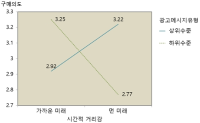
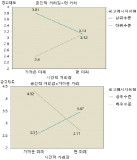
Purpose The purpose of this study was to examine the effects of temporal and spatial distance and types of advertising messages on sport consumer’s attitudes toward and advertising and purchase intentions, based on the construal level theory. Methods Toward this end, 253 usable data were conducted using frequency analysis, exploratory factor analysis, reliability analysis, correlation analysis, MANOVA, and ANOVA with SPSS 24.0. Results and Conclusion The study obtained the conclusion that when using different types of messages, the consumer’s attitudes and purchase intentions are influenced by temporal distance, by spatial distance, and by the interaction between both factors.




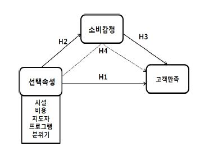
The purpose of the study was to provide managers and owners of fitness center with new marketing strategies for distinction strategies of quite competitive Korean fitness industry with analysis of mediating effects of consumption emotion within the relationship of fitness selection attribute and customer satisfaction. This paper chose fitness center customers as population of this study who registered in each 5 fitness centers in Seoul and Gyeonggi using convenience sampling. For this study, 400 questionnaires were given fitness center customer. For the analysis of data, 376 questionnaires were used using SPSS 15.0 Windows and Amos 7.0. To examine respondents demographics traits, frequency analysis was processed and reliability analysis, confirmatory factor analysis and correlation analysis for relationship among the variables were conducted. For the verification of model suitability and research hypotheses, the mediating effects were tested by using Bootrapping method and Aroian-test through structure equation modeling. The significance level was set at α=.05, and the results are as follows. First, Among fitness selection attribute variables, structural strategy, cost, a trainer and program had significant influence on customer satisfaction, but, atmosphere and facilities had not significant on customer satisfaction. Second, Among fitness selection attribute variables, structural strategy, cost, a trainer and atmosphere had significant influence on consumption emotion, but, facilities and program had not significant on consumption emotion. Third, consumption emotion had significant influence on customer satisfaction. Fourth, consumption emotion fully mediated in the relationship between fitness selection attribute and customer satisfaction.

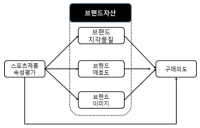
The purpose of this study was to examine competitiveness of sport product companies by brand origin in the Korean market by analyzing attribute evaluation of sport products, brand equity, and purchase intention and their causal relationship. Competitive sport brands were selected in global, Japanese, and Korean brands by a pilot survey. Then, this study selected a population participating in sports for all, elite sports, professional sports, and leisure sports and 498 effective questionnaires were secured. As a result, Korean consumers for sport products evaluated global sport brands in the highest level, Japanese sport brands in the moderate level, and Korean sport brands in the lowest level in the evaluation of attribute evaluation of sport products, brand equity, and purchase intention. Moreover, the evaluation of participating types in sports for all, elite sports, professional sports, and leisure sports showed the same result in the order of global, Japanese, and Korean sport brands. Global sport brands had a sequential causal relationship from attribute evaluation of sport products to brand equity and purchase intention and formed a consumption behavior model that attribute evaluation of sport products led to purchase intention. On the other hand, while Korean sport brands had a sequential causal relationship from attribute evaluation of sport products to brand equity and purchase intention, attribute evaluation of sport products did not lead to purchase intention. Finally, it was confirmed that global brands such as Nike and Adidas had a high market position and Korean sport consumers’ purchase behavior was determined based on information of product attributes and brand equity.
PURPOSE This study aimed to investigate the effects of accelerated rehabilitation exercise on physical fitness, lower extremity isometric strength, and blood variables in older adult women diagnosed with degenerative osteoarthritis. METHODS A total of 29 older adult women diagnosed with degenerative osteoarthritis residing in G city participated in the study, and 19 participants, excluding dropouts, took part in the experiment. They underwent exercise twice a week for 60 minutes per session over a period of 12 weeks. Pre- and post-experiment, the older adult fitness assessment (SFT), lower extremity isometric strength, and blood variables were measured. Data analysis was performed using SPSS 25.0, and paired sample t-tests were conducted to examine the effects before and after exercise. RESULTS The study results showed significant differences in body mass index (BMI) before and after exercise (p<0.05), and the older adult fitness assessment (SFT) showed significant differences in all items (p<0.01). Lower extremity isometric strength showed significant differences in absolute (Nm) and relative (%BW) values of 20° right flexion muscle (p<0.01). In terms of blood variables, significant differences were observed in creatine and ESR before and after exercise (p<0.01). CONCLUSIONS This study’s results suggest that regular physical activity and rehabilitation exercise programs can positively impact the muscular strength, cardiovascular endurance, exercise function, and blood composition of older adult women diagnosed with degenerative osteoarthritis. It is indicated that conducting future research, including periodic exercise programs, could be beneficial in promoting sustained exercise participation.
Purpose The study was designed to investigate the effects of 12 weeks of circuit training and L-tryptophan supplementation on physical fitness and metabolic syndrome. Methods Forty-one menopausal women were randomly assigned to one of three groups. i.e., combined circuit training and L-tryptophan supplementation group (CT+T: n=14), L-tryptophan supplementation group (T: n=14), and control group (CON: n=13). The subjects in CT+T exercised three sessions per week and took 3g of L-tryptophan per day for 12 weeks. The subjects in T took 3g of L-tryptophan per day for 12 weeks. The subjects in CON were asked to maintain their life pattern for the same period of intervention. Physical fitness and metabolic syndrome-related variables were measured at pre- and post-test. The data were compared by utilizing a repeated two-way ANOVA. Results Main results of the study were as follows: 1) Standing long jump, one leg standing with eyes closed, sit-and-reach, sit-up, and maximal oxygen uptake increased significantly in CT+T. 2) Body weight, body mass index, waist circumference, waist-hip ratio, fat mass, and percent body fat decreased significantly in CT+T. 3) Total cholesterol decreased significantly in CT+T. 4) Fasting plasma glucose (FPG), fasting plasma insulin, and HOMA-IR decreased significantly in CT+T. FPG and HOMA-IR decreased significantly in T. 5) Systolic blood pressure, diastolic blood pressure (DBP), mean arterial pressure (MAP), and rate pressure product decreased significantly in CT+T. DBP and MAP decreased significantly in T. 6) Number of metabolic syndrome risk factors decreased significantly in CT+T and T. Conclusion It was concluded that the circuit training and L-tryptophan supplementation would have positive effects on physical fitness and metabolic syndrome, and that L-Tryptophan supplementation would have positive effects on metabolic syndrome by improving insulin resistance and hypertension in menopausal women.
Purpose The purpose of this study was to examine the effects of 16 weeks’ combined exercise training on insulin resistance, inflammatory markers, oxidative stress, leukocyte telomere length, body composition, and daily living fitness in elderly women with type 2 diabetes mellitus (DM). Methods Twenty-eight participants were randomly assigned into one of two groups, i.e., exercise training group (EX: n=14) and control group (CON: n=14). Subjects in EX participated in 3 sessions of 60 min-combined exercise for 16 weeks, whereas subjects in CON were asked to maintain their normal life pattern during the same period. The variables regarding insulin resistance, inflammatory markers, oxidative stress, leukocyte telomere length, body composition, and daily living fitness were measured and compared between two groups as well as between pre-post test utilizing a repeated two-way ANOVA. Results Main results were as follows: 1) Fasting plasma insulin and HOMA-IR tended to decrease in EX, whereas increased significantly in CON. 2) IL-6, TNF-α, hs-CRP decreased in EX, but the changes were not statistically significant. 3) MDA increased significantly and GPx decreased significantly in both EX and CON. 4) Leukocyte telomere length increased significantly in EX. 5) Fat-free mass increased in EX, whereas fat mass and percent body fat decreased significantly in EX. 6) Arm curl, chair stand, sit & reach, tandem test, 10m walking speed, and up & go improved significantly in EX. Conclusion It was concluded that the combined exercise for 16 weeks had a positive effect on improving insulin resistance, increasing leukocyte telomere length, as well as enhancing body composition and daily living fitness in elderly women with type 2 diabetes.
