The purpose of this study was to examine the effects of happiness improvement program on psychological variables which were happiness feeling, self-esteem, interpersonal relationship, internal-external locus of control, stress, coping, perceived performance and physiological variables such as cortisol and serotonin of collegiate badminton players. The participants consisted of 10 collegiate badminton players. Happiness improvement program for collegiate badminton players was developed by previous literatures, in-depth-interview, psychological test data, and consultation of happiness improvement experts. The happiness improvement program consisted of 12 intervention program: orientation, rapport development and the understanding happiness, self-esteem enhancement techniques, interpersonal relationship strategies, stress and coping management, peak performance methods, and action plan of happiness improvement program. Each program was applied to participants in about 90-120 minute a session(2-3 times session a week). The instruments of this study were made up of three broad categories: (a) psychological data, b) physiological data, and (c) qualitative data. Firstly, happiness improvement program significantly increased happiness feeling, self-esteem, internal-external locus of control, interpersonal relationship capability, coping skills of collegiate badminton players. Secondly, happiness improvement program significantly decreased stress of collegiate badminton players. Thirdly, participants positively perceived the effects of happiness improvement program on psycho-physiological variables. The limitations of this study and future implications were discussed.
The purpose of this study was to analysis of moving distance during games, time and heart rate for hockey games using GPS (global positioning systems) by positions in Korea national female athletes. The subjects were Korea national female hockey players (n=13) including 4 forwards, 4 midfields, and 5 fullbacks that participated in five Korea vs. Japan international games. All subjects were wearing GPS throughout the games. The results were as follows: Firstly, the average total travel distance per game was approximately 5.7km and higher in the second half. Physical movement in the games was not different from positions where 70% of physical movement was performed at low intensity and 30% at moderate and/or vigorous intensity, suggesting that the subjects; physical movement was performed at the appropriate level of exercise intensity. Secondly, during the game, the subjects performed physical movement faster than 11km/h for 22 minutes, indicating that the subjects could maintain their physical movement at a relatively faster speed throughout the games. In particular, midfields showed a greater amount of physical movement at moderate speed. Thirdly, the average exercise heart rate was 145bpm, which was equivalent to 60% of HRmax. The subjects maintained their average exercise heart rate greater than 150bpm (above 60% of HRmax) for 40 minutes during the games, indicating that the players had an ability to maintain physical movement at high intensity throughout the games. In conclusion, in spite of the fact that Korea national female hockey players have an ability to maintain physical movement at a relatively faster speed and higher intensity, their physical movement and performance are often affected. Therefore, it is necessary to develop and apply the specific interval training program for national female hockey players that can facilitate the faster recovery from the repetitive physical movement requiring power and speed at high intensity.
The purpose of this study was to investigate the effects of National Fitness Award program group exercise classes on daily fitness and balance-confidence among the elderly participants(n=496, 80.2% women). This study investigated body composition, daily fitness, and balance-confidence, and quality of life among the subjects who participated in the combined exercise program of improving physical fitness class for 8-week in the 10 national physical fitness certification centers by the demonstration project for the elderly of 2013 Korean National Fitness 100 project. Body composition and physical fitness for daily living were defined by Korean National Fitness 100 project for elderly, also the balance-confidence and health-related questionnaires were added. The following results were obtained by comparing the pre-test and post-test. In body composition body weight (p<.05), body mass index (p<.05), fat mass (p<.01), and percent body fat (p<.05) were significantly decreased, but muscle mass was not. Except for walking-around-two-cones-in-a-figure 8, all other daily fitness items such as relative grip strength (p<.001), chair sit to stand, two minutes place to walk, and sit-and-reach significantly increased (p<.01), and timed up and go were significantly decreased (p<.01). In balance confidence rating ABC tests (p<.001) were shown significantly increased. Although, quality of life measured by EQ-5D was not significantly improved, self-health status measured by EQ-VAS (p<.001) showed significant increase. Therefore, the group exercises of National Fitness Award program improved body composition, daily fitness and balance confidence in Korean elderly participants.

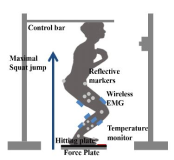
The human foot is only part that directly contact between the body and the external environment, and is ideally positioned to provide sensory information to the Central Nervous System (CNS) during static and dynamic tasks. Through cutaneous mechanoreceptors located in the dermis, the foot is able to recognize touch pressure and vibration stimuli, which provide important feedback information used for the fine coordination of movements. The purpose of this study is to quantitatively examine the effect of changing the foot cutaneous sensory by temperature stimulus on maximal performance and muscle activation using wavelet technique. Sixteen healthy subjects volunteered to participate in this study (Male: Age 21.4±2.4years; Height 174.7±5.3츠; Weight 70.6±5.2kg; Female: Age 20.5±0.6years; Height 163.2±3.1cm; Weight 55.6±4.8kg). Sensory pressure thresholds were determined for the plantar surface of the foot using monofilament. Kinematic, kinetic and EMG data which relative to maximal performance were collected while squat jumping in each temperature condition(cool 12-15℃ normal 28-30℃ hot 45-48℃). Maximal jump height was significant higher in normal condition. Vertical GRF in normal condition showed higher peak value the other conditions. And then EMG signal were significant different between temperature conditions during maximal performance. By changed sensory feedback on temperature, one can alter maximal performance and muscle activation pattern. Cutaneous feedback is important in performance and neuromuscular control, and temperature changes significantly influence on lower extremity during maximal squat jump performance of healthy subjects.


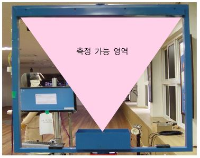
The purpose of this study was to investigate basal physical fitness and smash speed of elite national badminton players. To perform this study, total forty six korea national badminton player were participated : twenty two male players(age : 20.90±2.24years, height : 179.30±5.40cm, weight : 73.80±7.12kg, career : 11.27±1.88years) and twenty four female players(age : 19.45±1.95years, height : 167.83±4.36cm, weight : 61.39±3.60kg, career : 9.50±2.47years). Each subjects performed the 6 basal physical fitness trials : agility, muscular endurance, muscular strength, flexibility, balance and cardiorespiratory endurance. And the speed of badminton smash were analysis by using radar gun when players were standing smash success. To determine the difference between two groups, independent samples test was used. As a result, we found that there was a large difference male players and female players in basal physical fitness and smash speed. First, male players were significantly strong in agility(side step 10%), muscular endurance(repetitional jump 12%), muscular strength(left grasping power 3%, right grasping power 31%) and cardiorespiratory endurance(20m suttle run 31%). On the other hand, female players were relatively strong in flexibility(sit and reach 27%) and balance(standing on one leg with eyes closed 51%). Second, maximum smash speed show that male players were about 57km/h(24%) faster than female players(male : 247.72km/h, female : 190.37km/h). Based on the findings, we shall be applicable training program to improve flexibility, balance of male athletes and agility, muscular endurance, muscular strength, and cardiorespiratory endurance of female athletes. our results will be appliable to improve the athletic performances of national badminton players by the coaches in the future.
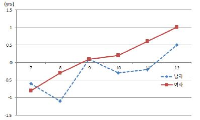
The aim of the study was to examine the tracking of body composition and physical fitness in boys and girls for 6 years. Thirty-seven boys and girls participated throughout the study. All measurements were performed annually. Body height, body weight, circumferences and skinfold thicknesses were measured and skeletal maturity was assessed. Body composition and bone mineral density were measured by DXA. Nine physical fitness tests were administered. Results of the study showed that there are significant interaction effects of time and group for body height(p<.01), waist circumference(p<.001), and skinfolds at triceps(p<.01), suprailiac(p<.01), thigh(p<.001) and medial calf(p<.01). All anthorpometric variables except skinfold thickness increased during the study period. Significant interaction effects of time and group were found for percent body fat(p<.05) and bone mineral density(p<.01). Percent body fat and fat tissue increased in boys from 7 to 11 years, then decreased in 12 years. Lean tissue(p<.001), bone mineral content(p<.001) and bone mineral density(p<.001) increased both in boys and girls throughout the study. There were significant interaction effect of time and group on sit and reach, standing long jump and sit-ups. In conclusion, percent body fat and fat tissue increased until 11 years, lean tissue and bone mineral density increased throughout the study both in boys and girls.
