Purpose The purpose of this study lies in: 1) clarifying what constitutes coaching ethics; 2) providing a theory to set up a coaching ethics in Korea; 3) and offer a direction to coaching ethics based on its normative traits. Methods In order to achieve this purpose, the following has been done: 1) a review of existing literature has been done to analyze the relationship between professionalism and ethics in coaching and explicate the concept and necessity of coaching ethics; 2) an effort has been made to answer such questions as “why and how much should a coach be ethical?”; “How should a coach be ethically evaluated?”; 3) An analysis of ethical responsibility embedded in coaching has been done, focusing on four ethical theories: Kantian categorical imperative, Aristotelian phronesis, Simon’s broad internalism, and Morgan’s conventionalism. Results This study reviews prior literature considering the relationship between professionalism and ethics in coaching and offers theoretical evidence to explain coaching ethics and its normative aspect. This will help resolve complicated ethical predicaments arising in the field. Conclusions This study emphasizes the role of coaches to improve fairness and wholesomeness in the field of sport, as well as suggests a coaching ethics required of a profession with internal regulations. Coaching ethics not only increases a sense of responsibility on the part of coaches but helps create a virtuous circle in which coaches’ ethical sensibility is reproduced in athletes as well. All in all, coaching ethics can stop important qualities of sport from deteriorating due to commercialism and the winner-takes-all attitude prevalent in sport today and contribute to a fair and wholesome sporting culture.
Purpose This purpose of this study was to understand how physical education can contribute to healthy emotions and activities of human beings. Methods We analyze Eva Illouz's emotional capitalism theory, the position and role of emotions in Spinoza, and Durkheim's theory of religious sociology. Results Illouz shows that emotions are coordinated by rationality through the analysis of emotional capitalism, and that expressions of natural emotions are restricted and controlled even in the area of intimacy. In Spinoza, emotions are divided into three emotions: joy, sadness, and desire as concepts of body movements. Emotions reveal that they are closely related to human activity, and emotions of joy are calculated for human emotional development Emphasize the need to organize meetings of possible bodies. Durkheim argues that while society is placed in a religious position, society is the subject of individual praise and the reality of baptizing individuals into morality. At this time, festivals and rituals reveal individuals to be a powerful mechanism that leads to devotion to society and strengthens individual’s sense of community and morality. Conclusions Making physical education classes as festivals enhances students' sense of community. It can also be an activity that allows students to have healthy moral and emotional energy.
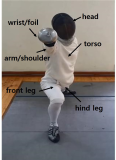
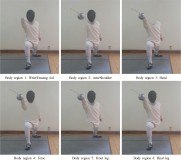
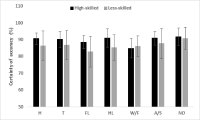
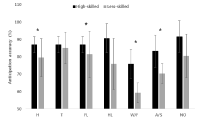
Purpose The purpose of this study was to establish the differences of anticipating accuracy and confidence according to fencing expertise and spatial occlusion region. Methods For the purpose of this study, the anticipation ability of 6 high-level fencing players and 6 low-level fencing players were analyzed. All subjects performed the 60 tasks of anticipating the attack positions(thorax, thigh, toe) from observing the fencing video screen using spatial occlusion technique. The spatial occlusion technique was used in 6 particular body of opponent’s movement. For statistic analysis, data was analyzed through independent T-test measure. Moreover, Paired t-test were used as follow-up analysis. Results The results of the study were as follows: In terms of accuracy anticipation, the main effect of expertise was significantly different. Specifically, when the spatial occlusion technique was applied in head, left leg, arm, and a foil, the accuracy of anticipation was significantly different. Moreover, comparing with no-occlusion condition, anticipation accuracy decreased when spatial occlusion technique was applied in arm and foil. In terms of confidence, there was no significant difference between level of expertise. Conclusions In order to effectively anticipate the opponent’s movement in fencing sports, it is necessary to focus on the visual cues of arm/shoulder, and the foil. Especially, focusing on the foil movement might provide the core informations on anticipation ability.