Purpose The purpose of this study was to analyze the research topics of the articles which were published through European Sport Management Quarterly(ESMQ) from 2009 to 2018. The prior topic analysis studies of the ESMQ classified topics based on the key words using NASPE-NASSM SMPS categories. Therefore they couldn't fully reflect the content of the articles. Methods The topic modeling of the current study was conducted with the Latent Dirichlet Allocation(LDA) which generates topics based on the word usage in the article. A total of 265 articles were converted from 'pdf' format to 'txt' ANSI format for topic modeling analysis. The whole topic modeling process was done using R program and the model was set to generate 10 topics from the article. Results The 3 sport management experts were hired to label the name of the topics and the name of the topics are as follow : (1) Impact of mega sport event, (2) Cause-related marketing, (3) Factors affecting the results of the competition, (4) Managing sport organization, (5) European sport leagues, (6) Strategic management, (7) Sport economics, (8) Sport in communities, (9) Sport consumers, (10) Elite sports. It is not quite possible to compare the results of the current topic modeling results with the previous ones because of the methodological differences. However, even though the standards are different, Sport marketing topic showed the largest growth among the 10 topics extracted. Conclusions This study used the LDA probabilistic algorithm to analyze research topics, which made the analyses more objective and wholistic. However, the insights of the researchers were still needed to interpret and labeling the topics.
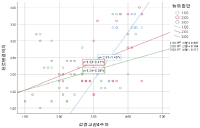
Purpose This study has four objectives. First, the study attempted to see if trainee teachers in PE experienced a higher level of burnout as their experience as trainee teacher accumulated. Second, the current study explored whether female trainee teachers experienced a higher level of burnout than their male counterpart. Third, the study examined whether self-efficacy of trainee teachers had a significant causal relationship on the level of burnout. Forth, the study looked into the possible moderating effect of motivation in the relationship between burnout and intention to change their career path. Methods The data for the study were collected from 112 trainee PE teachers of middle and high schools in Seoul and its vicinity. The data were analyzed with the SPSS statistical package. Results First, the trainee teachers’ level of burnout increased between 2nd week and 4th week and the increase was statistically significant except in the sub-dimension of depersonalization. Second, female trainee teachers showed a higher level of emotional exhaustion than their male counterpart. However, male trainee teachers showed a higher level of diminished personal accomplishment than their female counterpart. Depersonalization did not show any statistical mean difference between male and female groups. Among the four teacher self-efficacy sub-dimensions, only teaching competence showed statistically significant negative influence on emotional exhaustion. Lastly, trainee teachers’ level of motivation worked as a significant moderator in the relationship between emotional exhaustion and intention to change their career path.
PURPOSE This study presents policy implications drawn from a factual survey on the sports services industry in Korea, aiming to understand its current status and provide systematic support for high growth sectors. METHODS The research involved 600 companies across 18 sports service industry sectors, with growth potential assessed using standardized Compound Annual Growth Rate (CAGR) scores based on indicators such as the number of businesses, employees, sales, business productivity, and labor productivity. RESULTS Results revealed that high-growth sectors were more prominent in the Incheon/Gyeonggi regions, while general sectors showed higher proportions in the Seoul area. Satisfaction with government support programs was above average in high-growth sectors, contrasting with lower satisfaction in general sectors, depending on the criteria. Both high-growth and general sectors faced difficulty securing liquid assets, expressing expectations for government financial support, such as expanded loans. CONCLUSIONS Therefore, a policy for achieving regional balance for sports service industries concentrated in the metropolitan area and differentiation in regional sports service industries is necessary. Through a paradigm shift in business support, the competitiveness of the sports services industry can be enhanced, and comprehensive policies for the domestic sports service industry must be formulated.
