
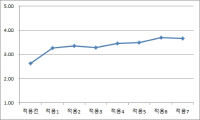
Purpose This study was to investigate the systematic application of the life skills program and its effects in a sport setting. Methods Participants were 14 college students(8 males and 6 females) majoring in Taekwondo. Survey tools were utilized to measure items of life skills and journals. Data analyses were conducted by using Excel program and inductive content analysis. Results First, life skills in this study consisted of goal setting, self-talk, imagery, cognitive restructuring. Life skills program has undergone a procedure, such as the introduction, training, development, application, and evaluation. Second, the average scores of life skill variables have been changed according to measured points. Specifically, the average scores of goal setting and self-talk were highly increased over time and the average score of imagery indicated gradual rising line. The average score of negative thought was slightly reduced over time. Third, regarding effects of this program, participants’ responses were categorized into six components; performance enhancement, positive thoughts, chances of change, goal setting, struggling efforts, and motivation formation. Further, participants stated this program was a great opportunity to develop these components. Conclusion The application of life skills program in sport settings will contribute to participants’ life span developmental change in cognitions, emotions, and behavior.


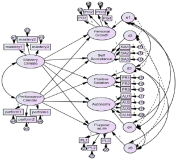
Purpose This study identified the influence of perceived motivational climate on psychological well-being in ballet majors. Methods Participants were 211(male=25, female=186) collegiate students enrolled in ballet department. Measures were The Perceived Motivational Climate in Sport Questionnaire(PMCSQ) and Psychological Well-being Questionnaire. Data were analyzed by using descriptive statistics, reliability test, correlation, and structural equation modeling. Results Results were as follows. First, mastery climate who ballet majors perceive significantly influenced on the five subscales of their psychological well-being: Mastery climate was positively related to personal growth, self-acceptance, positive relation with others, autonomy, and purpose in life. Second, performance climate who ballet majors perceive significantly influenced on the five subscales of their psychological well-being: Performance climate was negatively related to personal growth, self-acceptance, positive relation with others, autonomy, and purpose in life. Model fit indices were acceptable(RMSEA=.070). Conclusion In conclusion, this study indicated that motivational climate who ballet majors perceive was a important situational factor on their psychological well-being.
PURPOSE This study examined the effect of sports life skills and life skills transfer of student-athletes and coaches, applying Actor-Partner Interdependence Model (APIM). METHODS Korean student-athletes and coaches from middle and high school sports teams participated in this study. There were 300 student-athletes (Mage=15.44, SD=1.64; male=218, female=82), with an average of 5.46 (SD=2.40) years of athletic career. Meanwhile, 33 coaches were (Mage=39.70, SD=8.36; male=26, female=7), with an average of 13.52 years of coaching career (SD=10.01). Measures included the Life Skills Scale for Student-Athletes (LSSSA; Jang et al., 2020) and Korean Life Skills Transfer Survey (KLSTS; Lim et al., 2018). Descriptive analysis, correlation, and APIM were undertaken by using the SPSS and AMOS programs. RESULTS First, the correlation between athletes’ and coaches’ life skills was not significant. Second, athletes’ life skills significantly affected their life skills transfer, similar to coaches’ life skills significantly affecting their life skills transfer. Fourth, coaches’ life skills did not significantly influence athletes’ life skills transfer, and the converse was not true either. CONCLUSIONS This study verified the effect of life skills development for two groups of athletes and coaches, on transfer in sports, and attempted statistical verification of whether it affects sports life skills and transfer between athletes and coaches. Although no statistically significant results were found in the partner effect, it is meaningful in that, it provided important implications for conducting a follow-up study on the relationship between athletes and coaches. In other words, it is expected to be a cornerstone for research on building a new model, along with investigating the interactive relations between athletes and coaches on life skills in the sports field.
