This study classified and analyzed groups of spectators of professional baseball through market segmentation and predicted the sports consumer behavior by using artificial neural networks model and logistic regression model. The results of hierarchical cluster analysis, K-means cluster analysis, cross-tabulation analysis and one-way ANOVA using PASW 18.0 and AMOS 18.0 suggest five clusters of consumer segments and by using Modeler 14.1, artificial neural networks model was made to predict the data. By using artificial neural networks model and logistic regression model, hit ratio was grasped about the spectator satisfaction and future consumption behavior. The results are as follow: The hit ratio were high in ‘cluster 5’ for artificial neural networks model(spectator satisfaction: 71.3%, future consumption behavior: 99.3%) and logistic regression(spectator satisfaction: 71.8%, future consumption behavior: 96.5%). Furthermore, cross-tabulation and one-way ANOVA was performed to understand the cluster's characteristic which had highest hit ratio about the spectator satisfaction and future consumption behavior. And through this marketing strategy was suggested.
Purpose The purpose of this study was to provide basic data for spectators group of Taekwondo performance efficient marketing activities through market segmentation from characteristics, perceived values of the Taekwondo performance spectators. Methods The subjects of this research were Kukkiwon, Taekwondowon and 1,021 questionnaires were finally used for the analysis. The results of this research were drawn by frequency analysis, CFA(confirmatory factor analysis), reliability analysis, cluster analysis (hierarchical and K-means), cross-tabulation analysis and One-way ANOVA were used for data processing through SPSS 22.0 and AMOS 22.0. Results As results of the analysis, It was subdivided into three clusters (such as group of male college students, man group of low perceived value and high degreed women group of low pragmatism). Conclusions The significant differences of the characteristics and perceived value appeared from each cluster. Cluster 1: A group of male college students, and the highest perceived value for Taekwondo performance. Cluster 2: A group of male, and a low perceived value for Taekwondo performance. Cluster 3: A group of high degreed women and a low pragmatism of perceived value. Therefore, a practical marketing strategy was needed for each groups.
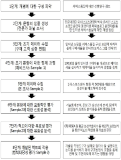
The purpose of this study was (a)to clearly define the concept of service quality as it relates to the online sports shopping mall, and (b)to develop and validate a psychometrically sound measurement scale, (c)examine the relationship among service quality and shopping satisfaction and intention of recommendation for marketing strategy internet sport shopping mall management. Following Churchill’s(1979) suggestions, the author developed internet Sports Shopping Mall Service Quality(E-SSMSQ). For the development E-SSMSQ (1)literature review, (2)focus group interview, (3)in-depth interviews (4)pilot test(n=97), (5)first data collected(n=459), (6)Frequency analysis, descriptive analysis, exploratory factor analysis(EFA) and reliability analysis for items evaluation, (7)confirmatory factor analysis(CFA) and correlation analysis for scale validation, (8)CFA, correlation analysis and structural equation model(SEM) test for predictive validity used second data collected(n=471). The current study conceptualized the service quality in the context E-SSMSQ by incorporating interaction, efficiency, order processing, information, security, and design. The authors also developed 20 items E-SSMSQ. The results of SEM support the psychometric property of the scale. First, interaction, efficiency and order processing of E-SSMSQ had significantly influence on internet shopping mall satisfaction. Interaction, efficiency, security, and design of E-SSMSQ had significantly influence on internet shopping mall intention of recommendation.