PURPOSE This study examines changes in sport-team employees’ job satisfaction over their tenure and how these are moderated by their organizational identification and team identification, formed through their concurrent roles as fan and employee. METHODS A total of 292 sport-team employees participated in a survey, and their self-reported tenure length served as the time variable. This study estimated the nonlinear pattern of job satisfaction and tested the moderating effects of dual identification using generalized additive mixed models with random effects at the individual level. RESULTS Job satisfaction followed a honeymoon–hangover–rebound curve, rising during the first 0–29.4 months, declining between 29.4 and 76.8 months, and increasing again after 76.8 months. Higher levels of organizational and team identification positively moderated this pattern. CONCLUSIONS Applying a time-based job satisfaction model from organizational behavior to the sport management setting extends the model’s generalizability. This study empirically demonstrated that the fan–employee dual identification can significantly amplify or attenuate the job satisfaction pattern, highlighting the need for sport organizations to develop human resource strategies specific to one’s tenure phase.

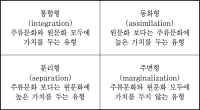
The purpose of this study is to examine acculturation strategies of expatriates in Korea in relation to spectator sport involvement. Berry's(1997) bi-dimensional model of acculturation was used as a theoretical framework to categorize the type of acculturation strategies of expatriates in Korea. Acculturation strategies of expatriates were classified into four types: integration, assimilation, separation, and marginalization. To be specific, there were 79 participants using the integration strategy, 28 using the assimilation strategy, 53 using the separation strategy, and 20 using the marginalization strategy. Research hypotheses were established to analyze differences on spectator sport involvement of expatriates between Korean spectator sport and their original cultural sport. There were significant differences in spectator sport involvement among foreigners in Korea. Firstly, the spectator sport involvement of the participants using the integration strategy was higher than that of marginalization. Second, participants categorized as using assimilation strategy were found to have lower sport involvement with Korea's spectator sport and had a higher involvement with their original cultural sport. Third, participants categorized as using separation strategy were found to have higher involvement with their original cultural sport than Korea's. Fourth, participants categorized as using separation strategy did not show significant differences with assimilation participants in comparing original cultural spectator sport. In conclusion, the result of the research indicated that expatriates living in Korea showed similar characteristics of Berry's (1997) acculturation strategies. Thus, It indicated that Berry's (1997) acculturation strategies are useful theoretical tools predicting psychological preference of expatriates in Korea. However, participants showed little difference in that all expatriates of four categories showed higher involvement with their original cultural spectator sport. Therefore, unlike Berry's (1997) theory, people with high level of acculturation showed higher levels of involvement with their original cultural spectator sport. It may provide useful information for Korean sport marketers regarding s foreign sport consumers in order to develop a market.